
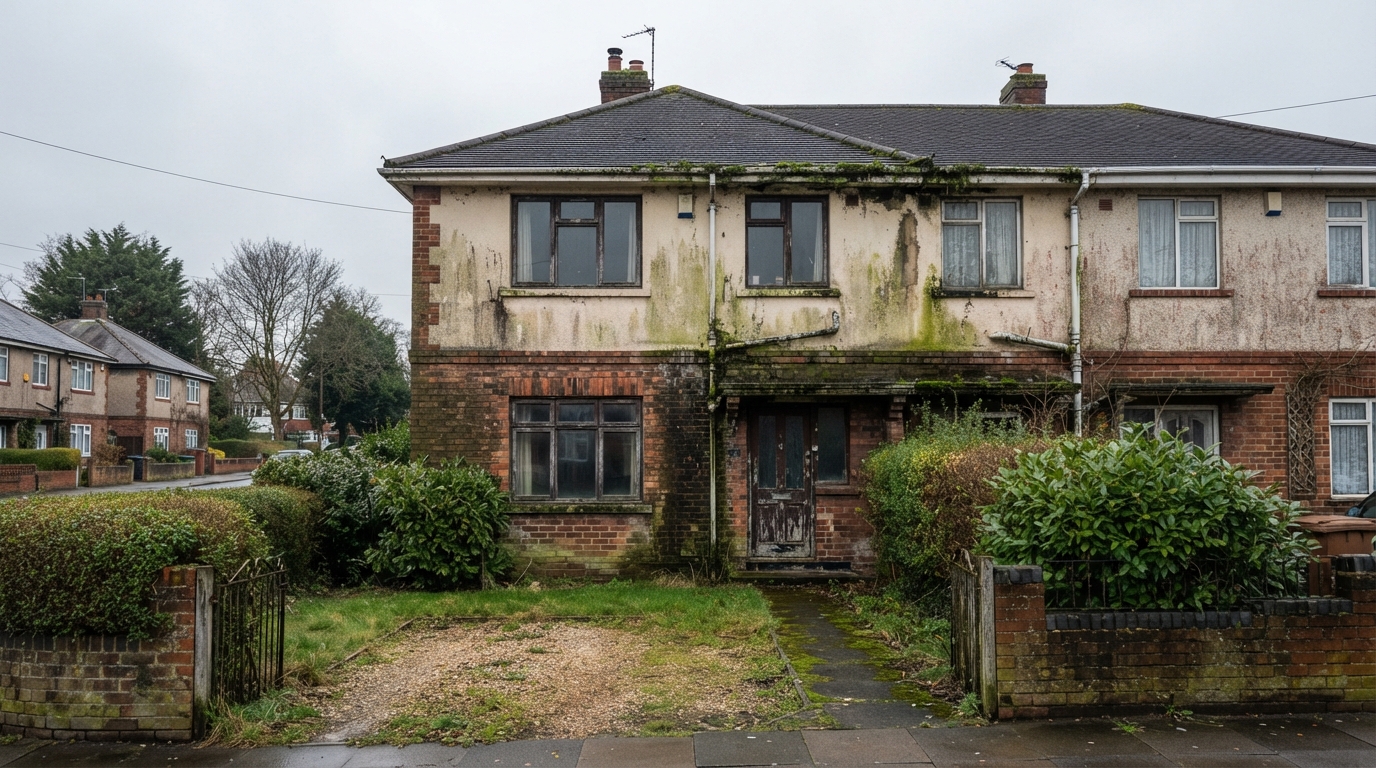
Render is one of the most striking features of many homes across Sussex and Surrey. A crisp, clean finish can make a property look modern, well cared for and inviting. But because render is constantly exposed to the elements, it gradually picks up algae, dirt and atmospheric staining over the years.
The change is often so slow that many homeowners do not realise how much their render has altered until they compare it with a neighbouring property or look back at old photographs. Recognising the early signs that your render needs professional cleaning can help you restore its appearance before staining becomes more established and harder to remove.
In this guide, we walk through the ten most common signs your render would benefit from professional render cleaning, explain why each one matters, and outline how the safest cleaning method is chosen for your property.
Why Recognising the Signs Early Matters
Render discolouration rarely happens overnight. Algae, mould, mildew and airborne pollution build up gradually, layer upon layer, until the original colour and texture of the finish is obscured.
Catching the signs early usually means:
- Contamination is less deeply embedded and easier to remove.
- The render finish is in better condition and less likely to have suffered prolonged moisture retention.
- Cleaning can be carried out using gentler methods.
- The overall cost and disruption are typically lower.
Waiting until the entire elevation is green or black does not make cleaning impossible, but it often means a more intensive process is required and the results may take longer to achieve. Recognising the warning signs early keeps maintenance straightforward and preventative rather than reactive.
1. Green Algae Is Spreading
Green staining is the most common sign that render needs attention. Algae thrives in damp, shaded conditions, which makes north-facing elevations, walls beneath mature trees and properties in sheltered locations particularly susceptible.
Across Sussex and Surrey, the damp climate and abundance of mature trees create ideal growing conditions. A faint green tinge on one elevation can spread steadily over several seasons until large sections of the render are visibly discoloured.
If you notice green patches developing, particularly on the shaded side of your property, it is a clear sign that organic growth has taken hold. For a deeper explanation of the causes, see our guide on why render turns green.
2. Black Staining Is Becoming More Noticeable
Not all render discolouration is green. Black or dark grey staining is also common and can be caused by mould, mildew, airborne pollution or a combination of these factors.
Properties located near busy roads, junctions or in built-up areas of Surrey and Sussex often pick up atmospheric pollution that gradually darkens the render surface. In other cases, mould and mildew develop where moisture lingers on the facade.
Black staining can be more stubborn than green algae because it often combines organic and environmental contamination. Identifying the cause is the first step towards selecting the correct cleaning approach. Our article on why render turns black explores this in more detail.
3. One Side of the House Looks Dirtier Than the Other
If one elevation of your home is noticeably dirtier than the others, the most likely explanation is orientation. North-facing walls receive far less direct sunlight than south-facing elevations, which means they stay damper for longer and provide a more hospitable environment for algae and mould.
This uneven pattern is extremely common across Sussex and Surrey. A property may have a clean, bright south-facing facade while the north elevation is heavily stained with green algae—yet the render itself is in perfectly good condition.
Recognising this pattern helps explain why cleaning is needed on one side of the property even when the rest looks acceptable. It also reassures homeowners that the discolouration is an environmental issue rather than a problem with the render itself.
4. The Render No Longer Looks Its Original Colour
One of the most telling signs that render needs cleaning is a gradual loss of its original colour. Through-coloured renders such as K Rend and Weber are designed to maintain their appearance for many years, but a layer of algae, dirt and pollution can dull the finish until it looks several shades darker or greener than intended.
Because the change happens slowly, many homeowners forget how bright their render once looked. It is often only after professional cleaning that the true colour is revealed again.
If your render looks consistently dull, grey or green compared with when it was first applied, professional cleaning is likely to restore the original appearance without the need for repainting.
5. Rainwater Leaves Streaks Down the Walls
When dirt, algae and organic matter build up on render, rainwater running down the facade can leave visible streaks and tide marks. These streaks often appear below window sills, down pipe outlets and along natural water run paths.
Over time, the repeated movement of water across a contaminated surface can create uneven staining that becomes increasingly difficult to ignore. Streaks are particularly noticeable on lighter coloured render, where contrast is greatest.
If rainwater is leaving visible marks on your render, it is a sign that the surface has accumulated enough contamination to affect how water behaves. Professional cleaning removes this layer and helps the render shed water more evenly.
6. The Property Has Lost Its Kerb Appeal
Kerb appeal is the first impression your home makes from the street, and render plays a significant role in shaping that impression. When large sections of the facade are green, black or generally dull, even a well-maintained property can look tired and neglected.
This is particularly relevant for homeowners considering selling. Estate agents across Sussex and Surrey frequently advise addressing visible exterior maintenance before marketing photographs are taken. A clean rendered exterior can dramatically improve how a property presents in listings and viewings.
If your home no longer looks as sharp from the kerb as it once did, render discolouration may be a significant contributing factor. For more on this, see our guide on whether render cleaning increases kerb appeal.
7. You Are Thinking About Repainting
When render becomes heavily discoloured, many homeowners assume the only solution is to repaint. However, repainting is often unnecessary—and in some cases can cause problems if applied over contaminated surfaces.
Through-coloured renders such as K Rend, Weber and silicone render are designed to be self-finished. They do not require paint and are formulated to maintain their appearance through cleaning rather than recoating. Repainting over algae or mould traps the contamination beneath the new coating, which can lead to premature failure.
Before committing to the cost and disruption of repainting, it is worth having the render professionally assessed. In many cases, specialist cleaning restores the original appearance at a fraction of the cost. See our guidance on cleaning render yourself versus hiring a professional.
8. The Staining Returns After Basic Cleaning
Some homeowners attempt to clean render using a hose, domestic pressure washer or household products. If the staining returns quickly afterwards, it usually means the root cause has not been properly addressed.
Algae and mould produce spores that are not always visible to the naked eye. Simply rinsing the surface removes the visible growth but leaves behind the microscopic spores that allow contamination to return. Specialist render cleaning products, including biocidal treatments, target these remaining spores to slow regrowth.
If your render looks clean for a few weeks after basic cleaning but then discolours again, it is a sign that a more thorough, professional approach is needed. For more detail on the methods involved, see our article on whether pressure washing is suitable for render.
9. You Cannot Remember the Last Professional Clean
If you cannot recall when your render was last professionally cleaned, it is probably overdue. Render does not need cleaning as frequently as driveways or patios, but periodic maintenance helps prevent organic growth from becoming deeply established.
Most rendered homes benefit from professional cleaning every few years, though the ideal interval depends on factors such as orientation, tree cover and local environment. For guidance on timing, see our guide on how often render should be cleaned.
Preventative cleaning is typically quicker, gentler and more cost-effective than waiting until the entire facade is heavily stained. Treating render before contamination becomes severe helps preserve the finish and keeps maintenance straightforward.
10. You're Preparing to Sell Your Home
If you are preparing to put your property on the market, the exterior is the first thing prospective buyers see. Green algae and black staining on render can create the impression of poor maintenance, even when the interior is immaculate.
Professional render cleaning before marketing photographs are taken can:
- Restore the original colour and brightness of the facade.
- Improve the quality of listing images and virtual tours.
- Reduce the likelihood of buyers raising maintenance concerns during viewings.
- Help the property stand out against comparable homes that have not been maintained.
Whilst no cleaning service can guarantee a higher sale price, improving kerb appeal can positively influence how quickly a property attracts interest and how buyers perceive its overall condition.
Can Every Render Be Professionally Cleaned?
Most rendered surfaces can be professionally cleaned, but every property should first be individually assessed. Different render systems require different cleaning methods, and applying the wrong approach can cause unnecessary damage.
Before cleaning, a professional assessment considers:
- Render type — silicone, monocouche, acrylic or painted.
- Age and condition — older or fragile render requires gentler methods.
- Existing staining — algae, mould, pollution or mixed contamination.
- Previous repairs — patched areas may require a different approach.
- Manufacturer guidance — where available, following the render manufacturer's recommendations.
- Access — height, obstacles and whether access equipment is needed.
Skyhawk Exterior Cleaning professionally cleans all major render systems, including:
- K Rend
- Weber render
- Silicone render
- Monocouche render
- Acrylic render
- Painted render (where appropriate)
For specific guidance on individual render systems, see our guides on cleaning K Rend safely, cleaning Weber render safely and cleaning silicone render safely.
Warning Signs at a Glance
| Warning Sign | Why It Matters |
|---|---|
| Green algae | Indicates organic growth thriving in damp, shaded conditions |
| Black staining | May be caused by mould, pollution or mixed contamination |
| Rain streaks | Shows surface contamination is affecting water run-off |
| Uneven appearance | Often caused by north-facing orientation and reduced sunlight |
| Loss of kerb appeal | Affects first impressions and perceived maintenance |
| Persistent staining | Suggests spores remain after basic cleaning |
| Faded appearance | Dirt and algae obscure the original render colour |
Common Mistakes Homeowners Make
- Assuming render needs repainting before considering cleaning. In many cases, professional cleaning restores the appearance without the cost and disruption of repainting.
- Using excessive pressure. High-pressure washing can damage render surfaces, particularly silicone and monocouche systems. See our guide on pressure washing render.
- Applying patio cleaner or strong bleach. Household chemicals can discolour render, leave residue and harm surrounding planting.
- Leaving algae untreated for years. The longer organic growth remains, the more deeply embedded it becomes and the harder it is to remove.
- Cleaning without identifying the render type. Different render systems require different cleaning methods—what suits one may damage another.
Key Takeaways
- Green algae, black staining and uneven discolouration are the most common signs render needs cleaning.
- Render discolouration develops gradually, so many homeowners do not notice the change until comparing with neighbouring properties or old photographs.
- Professional cleaning can often restore the original appearance without the need for repainting.
- Different render systems require different cleaning methods, so professional assessment is essential before any cleaning begins.
- Preventative cleaning is typically quicker, gentler and more cost-effective than waiting until staining becomes severe.
- Cleaning render before selling can improve kerb appeal and create a stronger first impression for prospective buyers.
Frequently Asked Questions
How do I know if my render needs cleaning?
Common signs include green algae, black staining, uneven discolouration between elevations, rain streaks and a general loss of the render's original colour. If you cannot remember the last professional clean, it is usually overdue.
Can green render be restored?
Yes. Green staining caused by algae can usually be safely removed using specialist render cleaning products and soft washing techniques. The original colour is often fully restored.
Can black staining be removed?
Black staining can often be significantly improved, though results depend on the cause and how deeply the contamination has penetrated. Identifying whether the staining is organic, environmental or mixed helps determine the most effective cleaning approach.
Can render cleaning avoid repainting?
In many cases, yes. Through-coloured renders such as K Rend and Weber are designed to be self-finished. Professional cleaning frequently restores the original appearance without the cost and disruption of repainting.
How often should render be cleaned?
Most rendered homes benefit from professional cleaning every few years, though the ideal interval depends on orientation, tree cover and local environment. See our guide on how often render should be cleaned.
Can render cleaning damage the finish?
When carried out by a professional who assesses the render type and selects the correct method, cleaning should not damage the finish. Using excessive pressure or unsuitable chemicals is what typically causes problems.
Can I clean render myself?
Light maintenance may be possible for some homeowners, but heavily stained render, specialist render systems and high-level work usually require professional knowledge and the correct products. See our guide on cleaning render yourself.
Does render cleaning improve kerb appeal?
Yes. Removing algae, dirt and staining can dramatically improve the appearance of a property and create a stronger first impression. See our guide on render cleaning and kerb appeal.
How long do the results last?
Results vary depending on the render type, surrounding environment and weather exposure. A biocidal treatment applied after cleaning helps slow regrowth. See our guide on how long render cleaning lasts.
When should I book professional render cleaning?
The best time to clean render is when it needs cleaning. If you have noticed any of the signs in this guide, arranging a professional assessment is the logical next step. You can book a free video call with our team.
Conclusion
Render is one of the most visible features of your home, and keeping it clean is an important part of maintaining both appearance and condition. Recognising the early signs—green algae, black staining, uneven discolouration, rain streaks and a faded finish—allows you to address contamination before it becomes deeply established.
Professional render cleaning is preventative maintenance. It restores the original appearance of the finish, removes the organic growth that retains moisture against the surface, and helps keep your property looking its best for years to come.
If your render is showing any of the signs in this guide, the simplest next step is to arrange a free video quotation. We will assess your property individually, identify the render type and recommend the safest and most effective cleaning method. Book your free video call today.