
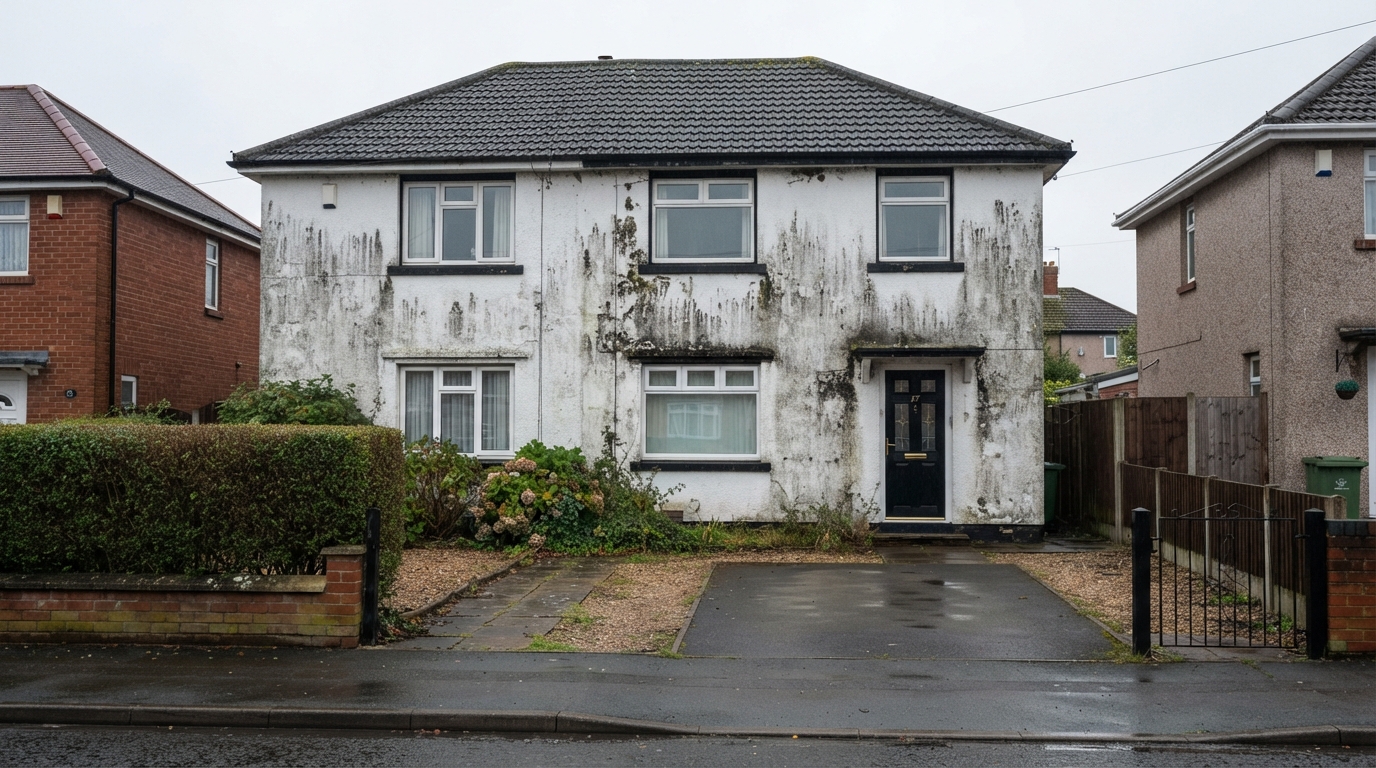
Black staining on render is a common issue for homeowners across Sussex and Surrey. Unlike green algae, which is clearly visible and easy to identify, black marks can be caused by several different factors—and the correct treatment depends on identifying the cause before choosing the cleaning method.
Black staining on render is commonly caused by airborne pollution, organic growth, mould, mildew or a combination of environmental factors. The correct treatment depends on identifying the cause before choosing the cleaning method.
In this guide, we explain what causes black staining on render, how it differs from green algae, why some properties are affected more than others, and how black marks can be safely removed without damaging the render surface.
What Causes Black Staining on Render?
Black marks on render can develop for several reasons. The most common causes include:
- Organic growth: Mould, mildew and certain types of algae can appear as dark or black patches on render.
- Airborne pollution: Dirt, soot and particulate matter from traffic and industry can settle on render over time.
- Atmospheric staining: General exposure to the elements can cause a gradual darkening of the surface.
- Water runoff: Streaking from gutters, downpipes or overflowing water can leave dark trails down the render.
- Organic debris: Decomposing leaves, pollen and plant material can leave dark stains as they break down on the surface.
Because black staining has multiple potential causes, identifying the source is the first step towards selecting a safe and effective cleaning method.
Is Black Staining the Same as Algae?
No. Green staining on render is almost always algae, which thrives in damp, shaded conditions. Black staining, however, can be caused by a wider range of factors.
Some black marks are indeed organic—mould and mildew can appear as dark patches—but others are caused by environmental pollution or atmospheric dirt. This distinction matters because the cleaning approach may differ depending on whether the staining is organic or inorganic in origin.
Organic growth typically responds well to specialist biocidal treatments, which break down the biological matter at a cellular level. Pollution-based staining may require different cleaning products designed to lift embedded dirt without damaging the render surface.
In many cases, black staining is a combination of both organic and environmental factors, which is why professional assessment is valuable before selecting a treatment.
Why Some Properties Are Affected More Than Others
Not every rendered property develops black staining at the same rate. Several factors influence how quickly marks appear:
- Location: Properties beside busy roads are more exposed to traffic pollution and airborne dirt.
- Orientation: North-facing and shaded walls dry more slowly, creating conditions where organic growth can develop.
- Tree cover: Overhanging trees deposit organic matter and reduce airflow, contributing to dark staining.
- Render type: Textured and more porous renders can hold onto staining more readily than smoother silicone finishes.
- Drainage: Overflowing gutters or leaking downpipes channel water—and the dirt it carries—down specific areas of the wall.
Understanding these factors helps explain why two neighbouring properties can look very different despite being exposed to similar weather conditions.
Does Traffic Pollution Make a Difference?
Yes. Properties located near busy roads, junctions or urban centres are more likely to develop black staining from airborne pollution. Vehicle emissions, brake dust and general particulate matter settle on external surfaces over time, creating a dark layer that rainfall alone cannot remove.
This type of staining is particularly common on rendered homes along main roads through towns across Sussex and Surrey. The fine particles become embedded in the surface of the render, and over time they build up into visible black marks.
Pollution-based staining typically requires specialist cleaning products rather than biocide alone. A professional assessment helps determine whether the marks are organic, pollution-based, or a combination of both.
Can Trees and Shade Contribute?
Trees and shade play a significant role in the development of black staining, particularly when the cause is organic. Overhanging branches deposit leaves, pollen and sap onto the render, whilst also reducing airflow and sunlight.
This combination creates a damp, sheltered environment where mould, mildew and algae can thrive. As organic matter decomposes on the surface, it can leave dark stains that become more ingrained over time.
Properties in wooded or rural areas of Sussex and Surrey—where mature trees surround many homes—often experience this type of staining on shaded elevations. Trimming back vegetation can help reduce the rate at which staining returns after cleaning.
Can Pressure Washing Remove Black Staining?
Pressure washing is not always the best approach for removing black marks from render. In some cases, carefully controlled low-pressure rinsing may be appropriate, but many modern render systems are better suited to specialist soft washing techniques.
The risk with high-pressure cleaning is that it can force water and dirt deeper into the render, damage the surface texture, or even remove the top layer of the finish. This is particularly true of silicone and acrylic render systems, which are designed to be relatively low-maintenance but can be sensitive to aggressive cleaning.
For black staining, the most effective approach is usually to apply specialist cleaning products that break down the staining at the surface, followed by a gentle rinse. This method targets the cause of the discolouration rather than simply blasting the surface.
You can learn more about when pressure washing is appropriate in our guide on whether you can pressure wash render.
How Professionals Clean Black Marks Safely
Professional render cleaning is not a one-size-fits-all process. At Skyhawk Exterior Cleaning, we assess every rendered property individually before deciding on the most appropriate cleaning method.
Factors we consider include:
- Render type: Monocouche, K Rend, Weber, silicone, acrylic and painted render all have different properties.
- Cause of staining: Organic growth, pollution, or a combination of both.
- Cleaning products: Specialist render cleaning solutions selected for the specific staining.
- Cleaning method: Soft washing, low-pressure rinsing, or a combination.
- Access requirements: Height, obstacles and safe access to the affected elevations.
Professional cleaning may involve specialist cleaning products, soft washing, and low-pressure rinsing where appropriate. The aim is always to remove the staining safely without damaging the render surface.
Soft Washing for Black Staining
Soft washing involves applying specialist cleaning solutions to the render surface, allowing them to break down staining, and then gently rinsing the surface. This method is particularly effective for organic growth and many types of pollution-based staining.
The advantage of soft washing is that it targets the cause of the discolouration rather than relying on physical force. This makes it a safer option for delicate render systems that could be damaged by high-pressure cleaning.
How to Reduce Staining Returning
Whilst no cleaning method can permanently prevent staining from returning, there are practical steps homeowners can take to reduce the rate at which marks reappear:
- Trim nearby trees: Reduce shade and organic debris by cutting back overhanging branches.
- Fix drainage issues: Repair overflowing gutters and leaking downpipes that saturate the render.
- Monitor shaded elevations: Check north-facing and shaded walls regularly and arrange cleaning before staining becomes deeply established.
- Don't wait years between cleans: Regular maintenance is more effective than attempting to clean heavily stained render after years of neglect.
- Consider a biocidal treatment: For organic staining, a biocide application after cleaning helps tackle remaining spores and slow regrowth.
These steps help reduce the conditions that contribute to black staining, keeping your render looking cleaner for longer.
Common Causes of Black Staining on Render
| Black Staining Cause | Typical Appearance | Typical Cleaning Approach |
|---|---|---|
| Organic growth (mould/mildew) | Dark patches, often on shaded walls | Biocidal treatment and soft washing |
| Pollution | Even darkening, common near roads | Specialist render cleaning products |
| Mould | Black spots or patches in damp areas | Biocidal treatment and gentle rinsing |
| Mildew | Grey-black staining on shaded surfaces | Soft washing with specialist products |
| Mixed contamination | Combination of streaks and patches | Assessment and tailored cleaning approach |
Common Mistakes Homeowners Make
When dealing with black staining on render, several common mistakes can make the problem worse or cause permanent damage:
- Assuming all black stains are mould: Different causes require different treatments. Pollution-based staining will not respond to biocide alone.
- Using household bleach: Bleach can discolour render, damage surrounding plants, and leave residues that attract further growth.
- Pressure washing aggressively: High pressure can damage render surfaces, force water into the structure, and remove the protective finish.
- Ignoring stains for years: The longer staining is left, the more deeply it becomes embedded and the harder it is to remove safely.
Professional assessment helps avoid these pitfalls by identifying the cause and selecting the safest cleaning method for your specific render system.
Key Takeaways
- Black staining on render can be caused by organic growth, pollution, mould, mildew or a combination of factors.
- Identifying the cause is essential before selecting a cleaning method.
- Soft washing and specialist cleaning products are often safer and more effective than pressure washing.
- Different render systems require different approaches—there is no single method that suits every property.
- Regular maintenance and addressing drainage or tree cover issues help reduce staining returning.
- Professional assessment ensures the safest and most effective cleaning approach for your render.
Frequently Asked Questions
Why is my render turning black?
Black staining is usually caused by organic growth (mould or mildew), airborne pollution, or a combination of both. Identifying the cause helps determine the correct cleaning approach. Learn more in our guide on why render turns green.
Can black render be cleaned?
Yes, in most cases black staining can be significantly improved or removed using specialist cleaning products and soft washing methods. The success depends on the cause, the render type and how long the staining has been present.
Is black staining mould?
Not always. Some black marks are caused by mould or mildew, but others are caused by pollution or atmospheric dirt. Professional assessment helps identify the cause before treatment begins.
Can pollution stain render?
Yes. Properties near busy roads can develop dark staining from airborne particulate matter. This type of staining typically requires specialist cleaning products rather than biocide alone.
Can pressure washing remove black marks?
Pressure washing is not always suitable for render. In many cases, soft washing with specialist products is safer and more effective. Learn more in our guide on pressure washing render.
Does render need repainting?
Not usually. Professional cleaning can often restore the original appearance of render without the need for repainting. However, if the render has been damaged by aggressive cleaning in the past, repainting may be considered.
Can professionals restore white render?
Yes. Professional render cleaning can significantly improve the appearance of white render by removing organic growth, pollution and staining. The results depend on the render type and the severity of the discolouration.
How often should render be cleaned?
This depends on the property. Shaded walls and properties near busy roads may need cleaning more frequently. Regular inspection helps determine the right schedule. See our guide on how long render cleaning lasts.
Can I clean black render myself?
DIY render cleaning carries risks, particularly if the wrong products or methods are used. Professional cleaning ensures the correct method is selected for your render system. Explore our render and cladding cleaning services.
When should I call a professional?
If black staining is spreading, if you are unsure of the cause, or if the render is a modern silicone or acrylic system, professional assessment is recommended before any cleaning is attempted.
Final Conclusion
Black staining on render is a common issue, but it is not a single problem with a single solution. The cause of the discolouration must be identified before the safest and most effective cleaning method can be selected.
Whether the staining is organic, pollution-based, or a combination of both, professional assessment ensures the correct approach is taken for your specific render system. Attempting to clean render without identifying the cause can lead to disappointing results or even permanent damage.
Skyhawk Exterior Cleaning assesses every rendered property individually to determine the safest and most effective cleaning process. If you are dealing with black staining on your render, explore our render and cladding cleaning services or learn more about when pressure washing is appropriate.
To get an accurate, upfront price, book a free video call quote or call our expert team on 01293 922 243. You can also view our frequently asked questions for more information.
Skyhawk Exterior Cleaning Ltd
9 Hylands Close, Crawley, RH10 6RX
Phone: 01293 922 243
Website: skyhawkexteriorcleaning.co.uk
Serving 130+ locations across Surrey & Sussex
Skyhawk Exterior Cleaning – A Hawk Eye for Detail.