
Render is one of the most striking exterior finishes you can apply to a home. Whether it's a crisp white silicone render on a modern new-build or a warm ochre monocouche finish on a period conversion, clean render gives a property a fresh, well-cared-for appearance. But unlike a painted wall indoors, render sits outside year-round, exposed to everything the British climate throws at it.
Most rendered homes benefit from periodic professional cleaning, but there is no fixed schedule that suits every property. The ideal cleaning frequency depends on the render type, surrounding environment, weather exposure and how quickly algae or other staining develops.
In this guide, we explain what influences how often render should be cleaned, why no two properties are the same, and how to tell when your home is ready for professional attention.
Does Render Need Regular Cleaning?
Yes, but "regular" means something different for every property. All render systems—whether silicone, monocouche, acrylic or painted—are external surfaces exposed to the elements. Over time, they collect algae, mould, airborne pollution and organic debris. Left untreated, these contaminants build up and can become more difficult to remove.
Regular cleaning is not about maintaining a factory-fresh appearance every month. It is about preventing organic growth from becoming established and removing staining before it becomes deeply embedded in the surface.
Periodic professional render cleaning helps:
- Maintain the original colour and appearance of the render.
- Remove algae, mould and organic growth before they spread.
- Prevent staining from becoming permanently embedded.
- Keep the surface looking well maintained.
What Affects How Often Render Should Be Cleaned?
There is no single answer to how often render should be cleaned because every property is exposed to different conditions. The main factors that influence cleaning frequency include:
- Render type: Some systems are more resistant to staining than others. Silicone render, for example, repels water more effectively than traditional cement renders, but it can still develop algae in shaded areas.
- Orientation: North-facing walls receive less direct sunlight, dry more slowly and are more prone to algae and mould.
- Shade: Walls shaded by trees, neighbouring buildings or extensions stay damp for longer, creating ideal conditions for organic growth.
- Nearby trees: Overhanging branches drop organic debris onto the render, and the shade they create reduces drying time.
- Weather exposure: Properties exposed to driving rain or coastal winds may accumulate dirt and salt more quickly.
- Local pollution: Homes near busy roads or in urban areas may attract atmospheric staining from traffic and industry.
- Previous maintenance: A render that has been cleaned and treated with a biocide will typically stay cleaner for longer than one that has been neglected for years.
Does the Render Type Matter?
Yes. Different render systems have different properties, and these affect how quickly staining develops and how the surface should be cleaned.
- Silicone render is highly water-repellent and tends to stay cleaner for longer, but it can still develop algae in shaded areas. See our guide on how to clean silicone render safely.
- Monocouche render is through-coloured and durable, but its textured surface can hold organic growth. Our K Rend cleaning guide explains more.
- Weber render is similar to other monocouche systems and benefits from soft washing. Read our Weber render cleaning guide.
- Acrylic render is paint-based and can be more susceptible to staining and damage from aggressive cleaning.
- Painted render may require gentler methods to avoid damaging the paint finish.
The render type does not dictate a fixed cleaning interval, but it does influence how the surface should be assessed and which cleaning method is safest.
Why North-Facing Walls Become Dirty Sooner
One of the most common questions we hear from homeowners across Sussex and Surrey is: "Why is one side of my house green and the other side fine?" The answer is almost always orientation.
North-facing walls receive little or no direct sunlight, particularly during the autumn and winter months. Without sunlight to dry the surface, moisture from rain, dew and humidity lingers on the render for longer. Algae and mould thrive in these damp conditions, so a north-facing wall can develop visible green staining months or even years before a south-facing wall on the same property.
This does not mean the whole house needs cleaning at the same interval. In some cases, only one or two elevations require attention.
How Nearby Trees Affect Render
Trees are one of the biggest factors influencing how quickly render becomes dirty. Overhanging branches shade the render, slow drying and drop organic debris such as leaves, pollen and sap onto the surface. As this material decomposes, it creates a food source for algae and mould.
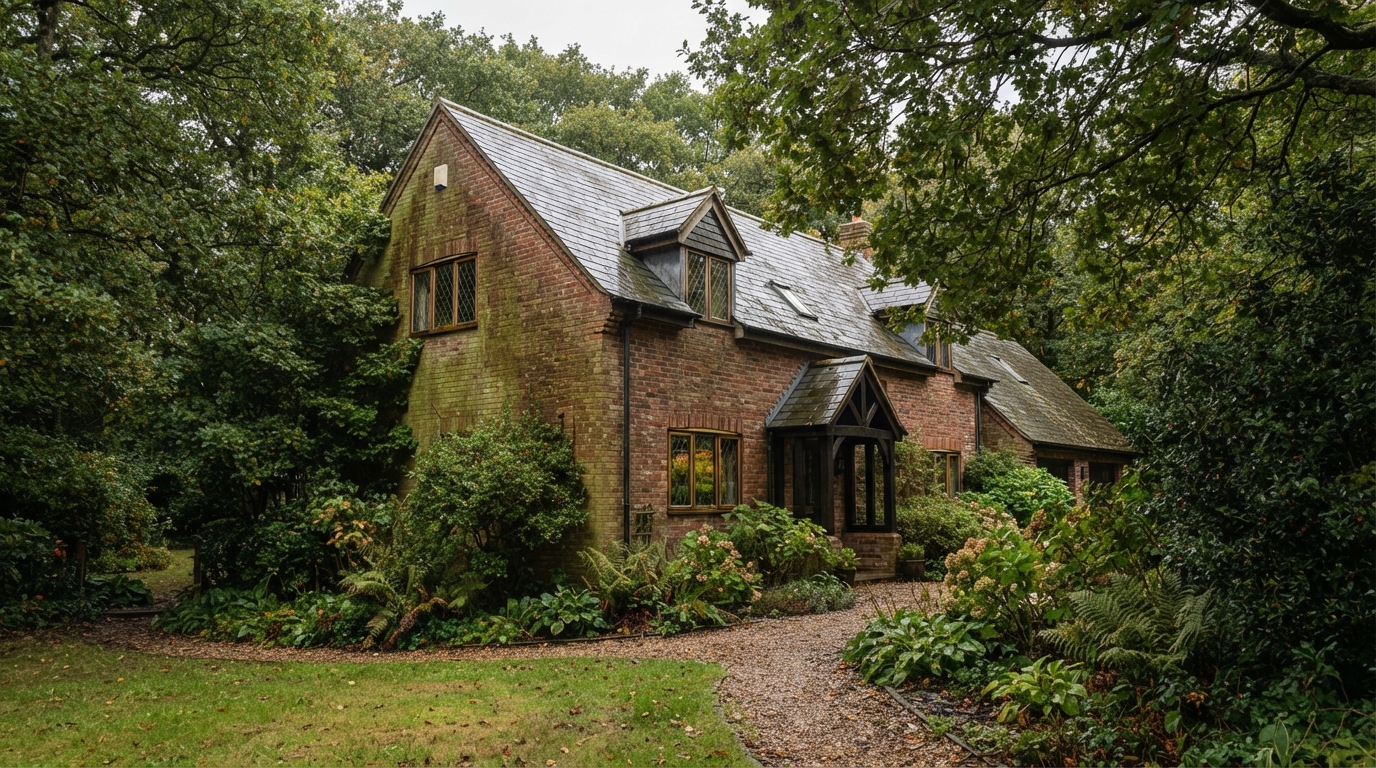
Properties surrounded by mature trees—common in rural and semi-rural areas of Sussex and Surrey—often need cleaning more frequently than homes on open, exposed estates. Even a single large tree on a boundary can make a noticeable difference to one elevation.
Coastal vs Inland Properties
Location matters too. Coastal properties are exposed to salt-laden air, which can leave a fine residue on render and contribute to staining. Inland properties may be more affected by agricultural dust, pollen or traffic pollution depending on their surroundings.
Neither environment is inherently worse, but they create different cleaning demands. A coastal home in Shoreham-by-Sea may face different challenges to a rural property near Horsham, even if both have the same render system.
Property Type and Cleaning Frequency
The table below summarises how different property types and environments can affect how often render needs cleaning. These are general considerations, not fixed rules—every property should be assessed individually.
| Property Type | Typical Cleaning Frequency Considerations |
|---|---|
| North-facing home | May need cleaning sooner due to reduced sunlight and slower drying; algae develops more quickly |
| South-facing home | Typically stays cleaner for longer thanks to regular sunlight and faster drying |
| Heavy tree cover | Shaded elevations beneath trees often need more frequent cleaning due to organic debris and damp |
| Open countryside | Generally less shaded, but exposed to pollen and agricultural dust; moderate cleaning frequency |
| Coastal location | Salt-laden air can leave residue; staining may develop differently to inland properties |
| Modern housing estate | Often less tree cover and more open exposure; render may stay cleaner for longer |
A Realistic Homeowner Example
Consider two similar rendered homes in Sussex. The first is a detached property surrounded by mature oak and birch trees. Its north-facing wall is shaded for most of the day, and organic debris regularly settles on the render. Within three years of the last clean, a visible green layer of algae had returned, particularly on the shaded elevation.
The second property is on a modern open estate with few mature trees and good exposure to sunlight. The render on this home remained largely clean five years after professional cleaning, with only minor discolouration on one sheltered section near a side passage.
Both homes had the same type of render, but their environments created very different cleaning demands. This is why we do not recommend a fixed cleaning interval for every property.
Signs Your Render Needs Cleaning
Rather than waiting for a set number of years to pass, it is more useful to watch for the warning signs that your render is ready for cleaning:
- Green patches appearing on shaded or north-facing walls.
- Black or grey streaks running down the render.
- A generally dull or tired appearance compared to when the render was new.
- Visible mould or mildew in sheltered areas.
- Localised staining beneath leaking gutters or downpipes.
If you notice any of these signs, it is worth arranging a professional assessment. For more detail, see our guides on why render turns green and why render turns black.
Can Regular Cleaning Extend the Appearance of Render?
Yes. Periodic professional cleaning helps maintain the appearance of render and prevents staining from becoming deeply embedded. A surface that is cleaned every few years is typically easier to restore than one that has been neglected for a decade.
Applying a biocidal treatment after cleaning also helps. Biocide targets remaining spores and slows the rate at which algae and mould return, helping the render stay cleaner for longer between cleans. You can read more in our guide on how long render cleaning lasts.
Common Mistakes Homeowners Make
- Waiting until the whole house is green: By the time every elevation is visibly stained, organic growth may be deeply established and harder to remove.
- Assuming render is maintenance-free: Even silicone render, which is marketed as low-maintenance, can develop algae in the right conditions.
- Using domestic pressure washers: High pressure can damage render finishes. See our guide on whether you can pressure wash render.
- Ignoring early staining: Small patches of algae are easier to treat than extensive coverage.
Key Takeaways
- There is no fixed cleaning schedule for render. The best time to clean render is when it needs cleaning.
- Cleaning frequency depends on render type, orientation, shade, tree cover, weather exposure and local pollution.
- North-facing walls and shaded elevations usually need cleaning sooner than sunny, exposed walls.
- Different render systems require different cleaning methods. Professional assessment ensures the safest approach.
- Regular cleaning helps maintain appearance and prevents staining from becoming embedded.
- A biocidal treatment applied after cleaning helps slow the return of organic growth.
Frequently Asked Questions
How often should render be cleaned?
There is no fixed schedule. Most rendered homes benefit from cleaning every few years, but shaded elevations or properties surrounded by trees may need cleaning sooner. The best approach is to monitor the render and arrange cleaning when staining becomes visible.
Can render stay clean permanently?
No. All external surfaces are exposed to the elements and will eventually develop some level of staining or organic growth. Regular cleaning helps maintain the appearance and prevents build-up from becoming established.
Why is one wall dirtier than another?
Orientation is the most common reason. North-facing walls receive less sunlight, dry more slowly and are more prone to algae. Walls shaded by trees or neighbouring buildings are also affected.
Does tree cover affect render?
Yes. Trees shade the render, slow drying and drop organic debris onto the surface. Properties surrounded by mature trees typically need cleaning more frequently than those on open estates.
Should render be cleaned every year?
Not necessarily. Many properties do not need annual cleaning. The correct frequency depends on the render type, environment and how quickly staining develops. Annual cleaning may be appropriate for heavily shaded properties, but it is not required for every home.
Can I clean render myself?
Basic rinsing with a hose can help remove loose dirt, but specialist cleaning is best left to professionals. Using the wrong products or pressure can damage the render finish. See our FAQs page for more guidance.
Will algae always come back?
Algae can return, particularly on shaded walls, but a biocidal treatment applied after cleaning helps slow regrowth significantly. The rate of return depends on the property's environment.
Does soft washing last longer?
Soft washing combined with a biocidal treatment typically provides longer-lasting results than pressure washing alone, because it targets the cause of the staining rather than just removing surface growth.
Can render cleaning damage the finish?
When carried out by a professional using the correct methods, cleaning should not damage the finish. The risk arises when unsuitable pressure or harsh chemicals are used without first assessing the render system.
When should I book professional render cleaning?
If you notice green or black staining, or if the render has not been cleaned for several years, it is worth arranging a professional assessment. A specialist can identify the render type and recommend the safest cleaning approach.
Conclusion
How often render should be cleaned is not a question with a single answer. Every property is different, and the best cleaning frequency depends on the render type, the surrounding environment and how quickly organic growth develops.
Rather than waiting for a fixed number of years to pass, the most effective approach is to monitor your render and arrange professional cleaning when staining becomes visible. If you would like honest advice about your property, book a free video quotation with Skyhawk Exterior Cleaning and we will assess your render and recommend the most appropriate cleaning plan.