
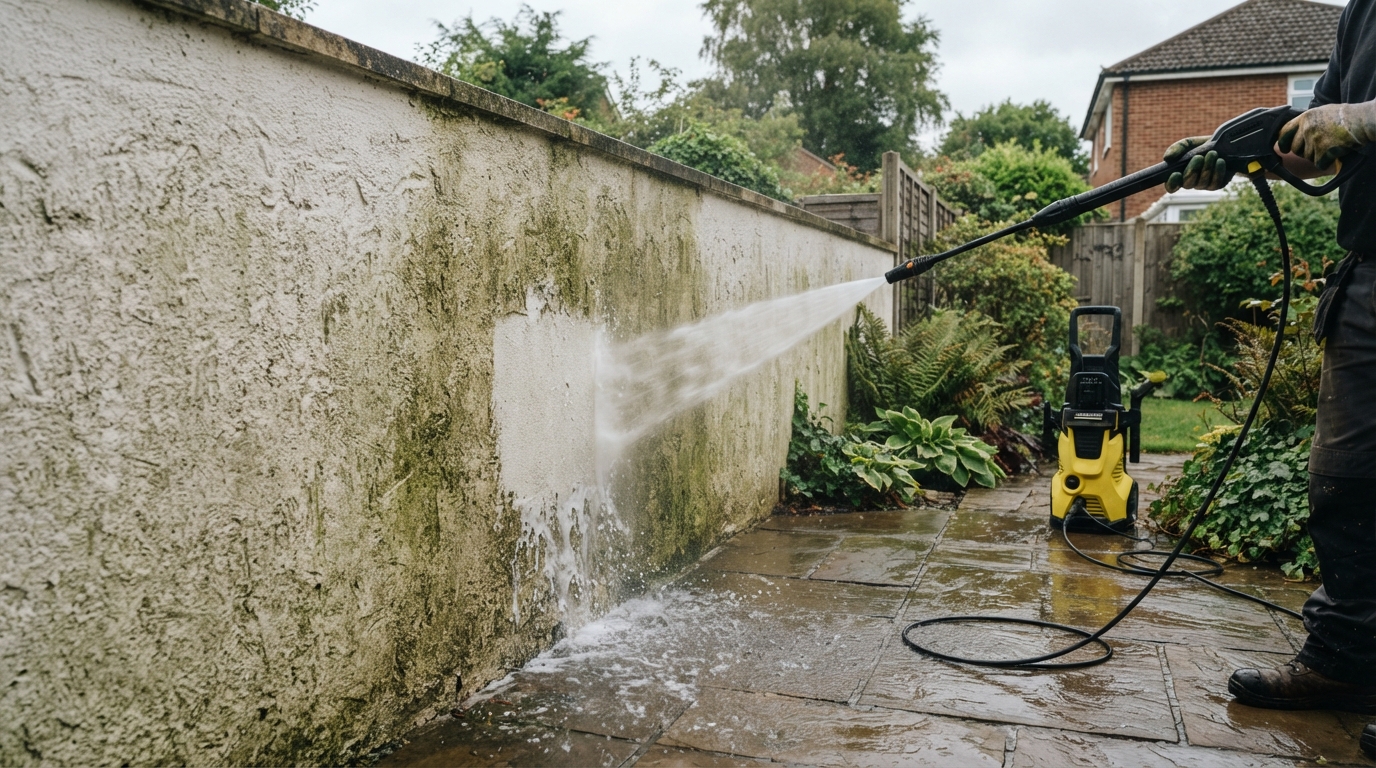
Render is one of the most striking features of many homes across Sussex and Surrey. Whether it's a crisp white silicone finish on a modern build or a warm monocouche render on a period conversion, clean render gives a property a fresh, well-cared-for appearance. But when algae, dirt and atmospheric staining begin to appear, many homeowners wonder whether they can tackle the job themselves.
Yes, homeowners can often carry out light cleaning of render themselves, but the safest approach depends on the type of render, the level of staining and the products and equipment being used. In many cases, professional cleaning achieves better results whilst reducing the risk of accidental damage.
In this guide, we explain what can realistically be cleaned yourself, where DIY cleaning becomes risky, and how to decide when professional render cleaning is the better option.
Can You Clean Render Yourself?
The short answer is yes—up to a point. Light rinsing of a rendered surface to remove loose dirt, dust or pollen is achievable for many homeowners using a garden hose. Small patches of green algae on a low garden wall may also respond to gentle cleaning with appropriate products.
However, render cleaning becomes more complicated when dealing with:
- Established algae and mould that has been present for months or years.
- Black staining caused by pollution, mildew or mixed contamination.
- Specialist render systems such as silicone, K Rend or Weber render.
- High-level elevations that require ladders or access equipment.
- Heavily textured surfaces where organic growth is embedded in the finish.
In these situations, the risk of using the wrong method or product often outweighs the benefit of attempting the job yourself.
Why Identifying the Render Type Matters
Before attempting any cleaning, it is essential to identify the type of render on your property. Different render systems have different properties, and what is safe for one surface may damage another.
The main render types found on homes across Sussex and Surrey include:
- Silicone render — highly water-repellent but can still develop algae in shaded areas. See our guide on how to clean silicone render safely.
- Monocouche render (e.g. K Rend) — through-coloured and durable, but its textured surface can hold organic growth. Our K Rend cleaning guide explains more.
- Weber render — similar to other monocouche systems and benefits from soft washing. Read our Weber render cleaning guide.
- Acrylic render — paint-based and more susceptible to damage from aggressive cleaning.
- Painted render — requires gentler methods to avoid damaging the paint finish.
If you are unsure which render system is on your property, it is worth seeking professional advice before attempting to clean it. Applying the wrong method to an unidentified render is one of the most common causes of accidental damage.
Which Types of Staining Are Suitable for DIY Cleaning?
Not all staining requires professional attention. Some lighter contamination can be improved with careful DIY cleaning, including:
- Loose dirt and dust — usually removed with a gentle hose rinse.
- Light pollen or organic debris — rinsed away before it has chance to decompose.
- Small patches of green algae on low, accessible walls — treatable with a suitable biocidal product and a soft brush.
- Splash marks from soil or garden mulch — often removed with gentle rinsing.
The key is to act early. Light staining that has been present for only a few weeks is far easier to address than growth that has been building up over several years.
When DIY Cleaning Becomes Risky
DIY cleaning becomes risky when the staining is established, the render type is unknown, or the work involves heights. The most common situations where we recommend professional assessment include:
- Heavy green or black staining across large sections of the wall.
- Two-storey or high-level render that requires ladders or access equipment.
- Specialist render systems where manufacturer guidance should be followed.
- Render that has been painted and may be damaged by aggressive cleaning.
- Properties near listed buildings or in conservation areas where specialist care is required.
In these cases, the risk of causing permanent damage to the render finish is significantly higher, and the results achieved with domestic equipment are often disappointing.
Can Pressure Washers Damage Render?
This is one of the most common questions we are asked. The answer depends on the render type, the pressure used and the technique applied. For a detailed explanation, see our guide on whether you can pressure wash render.
In summary:
- Silicone and acrylic renders can be damaged by high-pressure water, which may force water behind the render or strip the surface.
- Monocouche renders such as K Rend and Weber may tolerate carefully controlled low-pressure rinsing, but aggressive pressure washing can damage the texture.
- Painted render is particularly vulnerable to pressure washing, which can peel or blister the paint.
Professional render cleaning is not about using maximum pressure. It is about selecting the safest and most effective method for the surface. For more on why pressure washing is not always the answer, see our dedicated service page.
Why Household Chemicals Can Cause Problems
Many homeowners reach for household bleach, patio cleaner or general-purpose cleaning products when tackling green render. Unfortunately, these products are rarely formulated for use on specialist render systems and can cause more harm than good.
Common problems include:
- Discolouration — bleach and strong chemicals can strip colour from through-coloured render.
- Surface damage — harsh products may degrade the render's protective finish.
- Uneven results — household chemicals often leave streaks or patches that look worse than the original staining.
- Environmental harm — chemical runoff can damage plants, lawns and wildlife.
Specialist render cleaning products are formulated to break down organic growth without damaging the render itself. This is one of the key reasons professional cleaning often achieves longer-lasting, more even results.
When Professional Cleaning Is the Better Option
Professional render cleaning is recommended when:
- The render is heavily stained with algae, mould or black marks.
- The property has two or more storeys and high-level access is required.
- The render type is unknown or specialist (e.g. silicone, K Rend, Weber).
- Previous DIY attempts have left streaks or uneven results.
- The render is painted and at risk of damage from aggressive methods.
- You want longer-lasting results backed by a biocidal treatment.
For more on how long professional results last, see our guide on how long render cleaning lasts.
How Professionals Assess Render
Skyhawk Exterior Cleaning assesses every rendered property individually before deciding on the most appropriate cleaning method. Factors considered include:
- Render type — silicone, monocouche, acrylic or painted.
- Age and condition — older render may be more fragile.
- Type of staining — algae, mould, pollution or mixed contamination.
- Previous repairs — patched areas may require gentler treatment.
- Access — height, obstacles and whether ladders or access equipment are needed.
- Manufacturer guidance — where available, we follow the render manufacturer's recommendations.
Based on this assessment, professional cleaning may involve:
- Soft washing — applying specialist cleaning products that break down organic growth.
- Low-pressure rinsing — where appropriate, gently removing loosened contamination.
- Biocidal treatment — applied after cleaning to slow regrowth.
Skyhawk cleans all major render systems, including K Rend, Weber render, silicone render, monocouche render, acrylic render and painted render. For guidance on cleaning frequency, see our article on how often render should be cleaned.
DIY vs Professional Render Cleaning
The table below summarises the key differences between DIY and professional render cleaning. These are general comparisons—every property should be assessed individually.
| Feature | DIY Render Cleaning | Professional Render Cleaning |
|---|---|---|
| Equipment | Garden hose, domestic pressure washer, household brushes | Specialist soft wash systems, access equipment, professional-grade products |
| Surface assessment | Often carried out without identifying the render type | Render type, age and condition assessed before cleaning begins |
| Cleaning products | Household bleach, patio cleaner or general-purpose products | Specialist render-safe products formulated for each render system |
| Risk of damage | Higher risk of discolouration, streaking or surface damage | Significantly lower risk when carried out by an experienced specialist |
| Typical results | Suitable for light staining; often uneven on heavier contamination | Consistent, even results with biocidal treatment to slow regrowth |
Common Mistakes Homeowners Make
When attempting DIY render cleaning, the following mistakes are common and can lead to permanent damage:
- Using a pressure washer without identifying the render type. High pressure can force water behind render, strip the surface or damage the finish.
- Applying strong bleach or patio cleaner. These products are rarely formulated for render and can cause discolouration or surface degradation.
- Scrubbing with stiff wire brushes. Abrasive brushes can scratch or damage textured render surfaces.
- Cleaning on hot sunny days. Chemicals and water dry too quickly, leaving streaks and uneven results.
- Ignoring manufacturer guidance. Specialist render systems often have specific cleaning recommendations that should be followed.
A Realistic Homeowner Example
Consider two properties in Sussex. The first is a single-storey rendered garden wall with light green algae on a shaded section. The homeowner rinsed the wall with a hose, applied a gentle biocidal product with a soft brush and rinsed it off. The algae was reduced significantly, and the wall looked much improved. This was a suitable candidate for DIY cleaning because the staining was light, the surface was accessible and the homeowner used an appropriate product.
The second property is a two-storey rendered house with silicone render. The north-facing elevation had developed heavy green algae and black staining over several years. The homeowner initially tried a domestic pressure washer, which left streaks across the wall and did not remove the embedded growth. Professional cleaning was then arranged. Skyhawk assessed the render, applied a specialist soft wash treatment, rinsed at low pressure and finished with a biocidal treatment. The result was an even, streak-free finish that the homeowner could not have achieved with domestic equipment.
Key Takeaways
- Light cleaning of render is achievable for many homeowners, particularly on low, accessible surfaces.
- Identifying the render type before cleaning is essential to avoid accidental damage.
- Household chemicals and pressure washers are common causes of render damage.
- Heavily stained, high-level or specialist render systems are best cleaned professionally.
- Professional cleaning uses specialist products and methods selected for the individual render.
- A biocidal treatment applied after professional cleaning helps slow regrowth and extend results.
Frequently Asked Questions
Can I clean render myself?
Yes, light cleaning of accessible render is possible for homeowners. However, heavily stained, high-level or specialist render systems are best cleaned professionally to avoid damage. See our FAQs page for more guidance.
Can I use a pressure washer?
It depends on the render type. Some renders may tolerate carefully controlled low-pressure rinsing, but many modern render systems can be damaged by pressure washing. Always identify the render before using any pressure equipment.
Can I use bleach on render?
Household bleach is not recommended for render. It can cause discolouration, streaking and surface damage, particularly on through-coloured render systems like K Rend and Weber.
What products are safe for render?
Specialist render cleaning products formulated for external use are the safest option. These are designed to break down organic growth without damaging the render finish. Professionals select products based on the render type and level of contamination.
Can DIY cleaning remove green algae?
Light algae on accessible surfaces can sometimes be reduced with a gentle biocidal product and soft brush. Heavier or more established algae is best treated professionally.
Can DIY cleaning damage K Rend?
Yes. K Rend is a through-coloured monocouche render, and aggressive cleaning with pressure washers or harsh chemicals can damage the surface and cause discolouration. See our K Rend cleaning guide for more information.
Can DIY cleaning damage silicone render?
Yes. Silicone render has a water-repellent finish that can be compromised by high pressure or unsuitable chemicals. Our silicone render cleaning guide explains the safest approach.
When should I call a professional?
If the render is heavily stained, high-level, specialist or painted, professional cleaning is recommended. A specialist can identify the render type and select the safest and most effective cleaning method.
How often should render be cleaned?
There is no fixed schedule. Most rendered homes benefit from cleaning every few years, but shaded or tree-surrounded properties may need cleaning sooner. See our guide on how often render should be cleaned.
Is professional render cleaning worth it?
For heavily stained or specialist render, yes. Professional cleaning achieves more even results, uses render-safe products and includes a biocidal treatment to slow regrowth, reducing the need for frequent repeat cleaning.
Conclusion
Can you clean render yourself? Yes—when the staining is light, the surface is accessible and the correct products are used. But for heavily stained, high-level or specialist render systems, professional cleaning is the safer and more effective option.
The most important step before attempting any DIY cleaning is identifying the render type. Using the wrong method or product on an unidentified render is one of the most common causes of permanent damage. If in doubt, seek professional advice.
If you would like honest advice about your rendered property, book a free video quotation with Skyhawk Exterior Cleaning. We will assess your render, identify the system and recommend the safest and most effective cleaning approach.