Can You Clean a Driveway Yourself? DIY vs Professional Guide
Yes, many homeowners can carry out basic driveway cleaning themselves, but the best approach depends on the driveway material, the type of staining, and the equipment being used. In some situations, professional cleaning may achieve better results while reducing the risk of accidental damage.
A clean, well-maintained driveway creates an immediate positive impression for any property across Sussex and Surrey. From quiet residential cul-de-sacs in Crawley, Horsham, and Haywards Heath to rural properties around Reigate, Dorking, and Guildford, driveways face constant exposure to weather, traffic, and organic growth.
When moss, weeds, lichens, or oil spills accumulate, many homeowners ask: can you clean a driveway yourself? In this guide, we provide an honest, balanced breakdown of DIY driveway cleaning—explaining what equipment works, where DIY methods excel, common mistakes to avoid, and when professional driveway cleaning and restoration is the wiser choice.
Short Answer: Is DIY Driveway Cleaning Suitable?
DIY driveway cleaning is great for routine maintenance, surface dirt, and lightly soiled flat concrete or resin surfaces. However, if your driveway consists of mossy block paving requiring joint re-sanding, delicate natural stone affected by black spot lichen, or tarmac damaged by oil, DIY pressure washers often lack the specialized flat surface heads, biocide chemicals, and finishing sand required for long-lasting, safe restoration.
What Equipment Do Homeowners Commonly Use?
Homeowners attempting DIY driveway cleaning typically rely on one of three tools:
- Garden Hose & Stiff Broom: Best for applying detergent and sweeping away loose surface dust. Completely safe, but ineffective against stubborn moss or lichen.
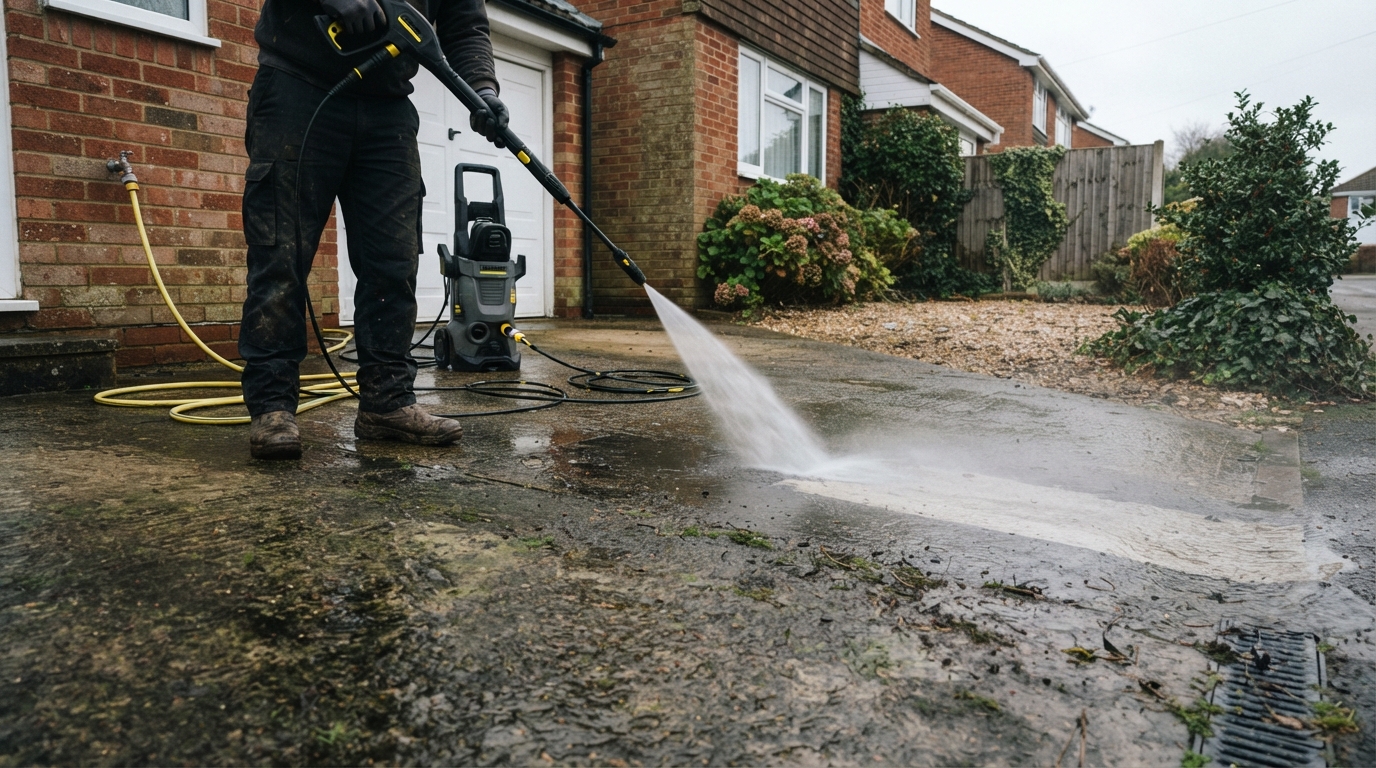
- Domestic Electric Pressure Washer (100–130 Bar): Great for washing down cars, garden furniture, and lightly soiled patios. However, the narrow high-pressure lance spray can leave distinct "zebra stripes" on wide driveway blocks.
- Hired Petrol Pressure Washer (200+ Bar): Powerful enough to shift heavy mud, but without proper operator technique or flat surface cleaner attachments, high pressure can dislodge paving blocks or damage mortar joints.
When DIY Cleaning Works Well
DIY driveway maintenance is entirely practical and cost-effective under the right circumstances:
- Sweeping away seasonal autumn leaves before they rot and stain paving blocks.
- Treating fresh motor oil spills immediately using absorbent cat litter and warm detergent water.
- Rinsing down smooth, non-porous surfaces like sealed resin-bound driveways or glazed porcelain tiles.
- Routine visual inspections to check for weed seedlings before they take firm root in joint sand.
When DIY Cleaning Can Cause Problems
While DIY cleaning sounds simple, inexperienced pressure washing frequently leads to unexpected problems on UK properties:
1. Removing Joint Sand Without Replacing It
Blasting block paving with a high-pressure nozzle washes away the jointing sand between blocks. If this sand is not replaced, the blocks lose their structural interlock, wobble under car tyres, and allow open gaps for weed seeds. Learn why re-sanding block paving is essential after cleaning.
2. Leaving "Zebra Stripes"
Holding a narrow jet lance too close to concrete or natural stone creates uneven, streaky lines where some parts are thoroughly washed while adjacent areas remain dirty.
3. Damaging Tarmac & Mortar Joints
Excessive water pressure on tarmac can dislodge stone chippings, breaking down the asphalt binder. On natural stone patios or driveways, high pressure can strip away weak mortar pointing.
Different Driveway Materials Require Different Methods
Not all driveways are built the same. Understanding how your specific surface reacts to water and pressure is vital before starting any cleaning project:
| Driveway Surface | DIY Suitability | Key Risks & Recommendations |
|---|---|---|
| Block Paving | Moderate (Requires Re-Sanding) | Pressure washing removes joint sand. Must be completely dry before brushing kiln-dried or polymeric sand into joints. See can pressure washing damage block paving. |
| Pattern Imprinted Concrete | Good for DIY | Non-porous sealed surface cleans easily. Avoid harsh metal brushes or extreme pressure that could chip acrylic sealers. |
| Resin-Bound Stone | Good for DIY | Use a wide fan nozzle or soft broom with light detergent. Avoid pointed turbo nozzles that could dislodge bound pebbles. |
| Tarmac / Asphalt | Low (High Risk) | High pressure strips bitumen binder and loosens stone aggregate. Chemical soft-washing is far safer. |
| Natural Indian Sandstone | Moderate | Porous stone vulnerable to black spot lichen. Standard pressure washing will not remove black spots without biocide treatment. |
Common Mistakes Homeowners Make
Avoid these frequent DIY pitfalls when cleaning your driveway:
- Using Excessive Pressure: Believing higher pressure equals better cleaning. Over-pressurising strips protective coatings and roughens tile surfaces, making them absorb dirt faster in future.
- Holding the Lance Too Close: Holding a nozzle 2 inches from paving gouges deep marks into concrete blocks or natural stone.
- Removing Jointing Sand Without Replacing It: Blasting away joint sand and leaving open gaps, leading to shifting paving blocks and immediate weed infestation.
- Using Unsuitable Household Chemicals: Applying undiluted household bleach or acid cleansers that discolour clay blocks, kill lawn borders, or corrode drain covers.
- Ignoring Drainage & Runoff: Washing heavy silt, sand, and moss directly into storm drains, causing blocked downpipes and street gutters.
DIY Cleaning vs Professional Driveway Cleaning
Here is a direct comparison between a typical DIY effort and a professional driveway restoration service:
| Feature / Step | DIY Cleaning | Professional Driveway Cleaning |
|---|---|---|
| Equipment Used | Domestic electric washer or high-pressure lance | Heavy-duty rotary flat surface cleaner & hot/cold pressure wash units |
| Surface Assessment | Trial and error | Expert inspection of block age, jointing, and tile porosity |
| Stain & Spot Removal | Basic detergent scrubbing | Specialist bio-enzymatic degreasers & sodium hypochlorite soft-washes |
| Weed & Moss Prevention | Physical removal only | Professional BAC50 biocide treatments killing micro-spores |
| Re-Sanding Finishing | Often skipped or done wet | Completely dried surface re-sanded with kiln-dried or polymeric sand |
| Risk of Surface Damage | Moderate to High | Minimal (Controlled pressure and wide rotary heads) |
Real-Life Example: DIY vs Professional Restoration
Consider two homeowners living in neighboring properties in Horsham:
- Homeowner A (Lightly Soiled Concrete Driveway): Used an electric pressure washer and garden hose over a weekend. Successfully removed light winter grime and dust from plain concrete slabs at minimal cost. A ideal outcome for DIY!
- Homeowner B (Heavily Mossy Block Paved Driveway): Attempted to clean a 15-year-old block paved driveway with a turbo lance. The jet blasted away jointing sand, scattered mud across house walls, and left prominent streaks. Without re-sanding, heavy weeds returned within 6 weeks. Homeowner B subsequently called Skyhawk Exterior Cleaning to perform a professional rotary clean, biocide wash, and complete kiln-dried re-sanding, restoring the driveway to like-new condition.
Key Takeaways
- ✔️ DIY is ideal for basic maintenance: Sweeping, hose rinses, and light detergent washes on flat concrete or resin work well.
- ✔️ Beware of high-pressure damage: Holding lances too close gouges stone and strips tarmac binder.
- ✔️ Always re-sand block paving: Pressure washing removes joint sand. Never leave block joints empty.
- ✔️ Black spots need chemical soft-washing: Water pressure alone cannot erase lichen spots without specialist biocides.
- ✔️ Professional cleaning lasts longer: Heavy-duty rotary heads, biocide spore killers, and professional joint re-sanding deliver results that endure for years. Check how long driveway cleaning lasts.
Frequently Asked Questions
Can I clean my driveway myself?
Yes, homeowners can clean light dirt and surface dust using a domestic electric pressure washer or stiff broom with detergent. However, heavy moss, black spot algae, or deep oil stains on block paving benefit greatly from professional rotary equipment, biocide treatments, and joint re-sanding.
Can I hire a commercial pressure washer for DIY cleaning?
Hiring a high-powered petrol pressure washer is possible, but without professional training or rotary surface cleaners, high pressure can strip tile glazes, blast away jointing sand, loosen blocks, or leave zebra stripes across the driveway.
Will DIY driveway cleaning remove lichen black spots?
Rarely. Black spot lichen roots into the porous upper layer of concrete and natural stone. Standard water pressure alone cannot dislodge black spots without applying specialist sodium hypochlorite or biocide soft-wash chemicals.
Can I damage block paving by pressure washing it myself?
Yes. Holding a turbo nozzle too close at an angle can wash away the underlying sub-base sand, destabilise paving blocks, or blast out joint sand without replacing it, leading to sunken blocks and rapid weed growth.
Should I re-sand block paving after cleaning it myself?
Essential. Pressure washing invariably removes jointing sand. Failing to brush kiln-dried sand back into dry block joints allows blocks to shift under car tyres and creates open gaps for airborne weed seeds.
Can I remove motor oil stains myself?
Fresh oil spills can be absorbed using cat litter or washing-up liquid scrubbed with hot water. Established oil stains soaked deep into porous concrete blocks require specialist enzymatic degreasers. Read our guide on how to remove oil stains from a driveway.
How often should I clean my driveway?
Most driveways benefit from a thorough professional clean and re-sand every 1 to 3 years, depending on shade, nearby tree cover, and surface type. Read how often you should have your driveway cleaned.
Which driveway surfaces are easiest to clean yourself?
Smooth, non-porous surfaces like glazed porcelain, sealed resin-bound stone, or flat concrete slabs are the easiest for DIY hose or light pressure washing. Block paving and natural sandstone are the hardest.
When should I call a professional driveway cleaner?
You should call a professional if you have heavily mossy block paving requiring re-sanding, stubborn black spot lichen, delicate natural stone, large oil spills, or when you want long-lasting biocide treatments.
Is professional driveway cleaning worth the money?
Yes. Professional driveway restoration includes heavy-duty flat surface cleaners, deep chemical soft-washing, weed-killing treatments, and proper re-sanding, delivering results that last years longer than basic hose spraying.
Arrange Your Free Driveway Cleaning Quote Today
Whether you need a quick professional assessment or a complete driveway overhaul with block paving re-sanding, Skyhawk Exterior Cleaning is here to help across 130+ locations in Sussex and Surrey.
Explore our driveway cleaning services, check out our pressure washing options, or learn about our patio restoration solutions.
To get an accurate, upfront price, book a free video call quote or call our expert team on 01293 922 243. You can also view our frequently asked questions for more information.
Skyhawk Exterior Cleaning Ltd
9 Hylands Close, Crawley, RH10 6RX
Phone: 01293 922 243
Website: skyhawkexteriorcleaning.co.uk
Serving 130+ locations across Surrey & Sussex
Skyhawk Exterior Cleaning – A Hawk Eye for Detail.