
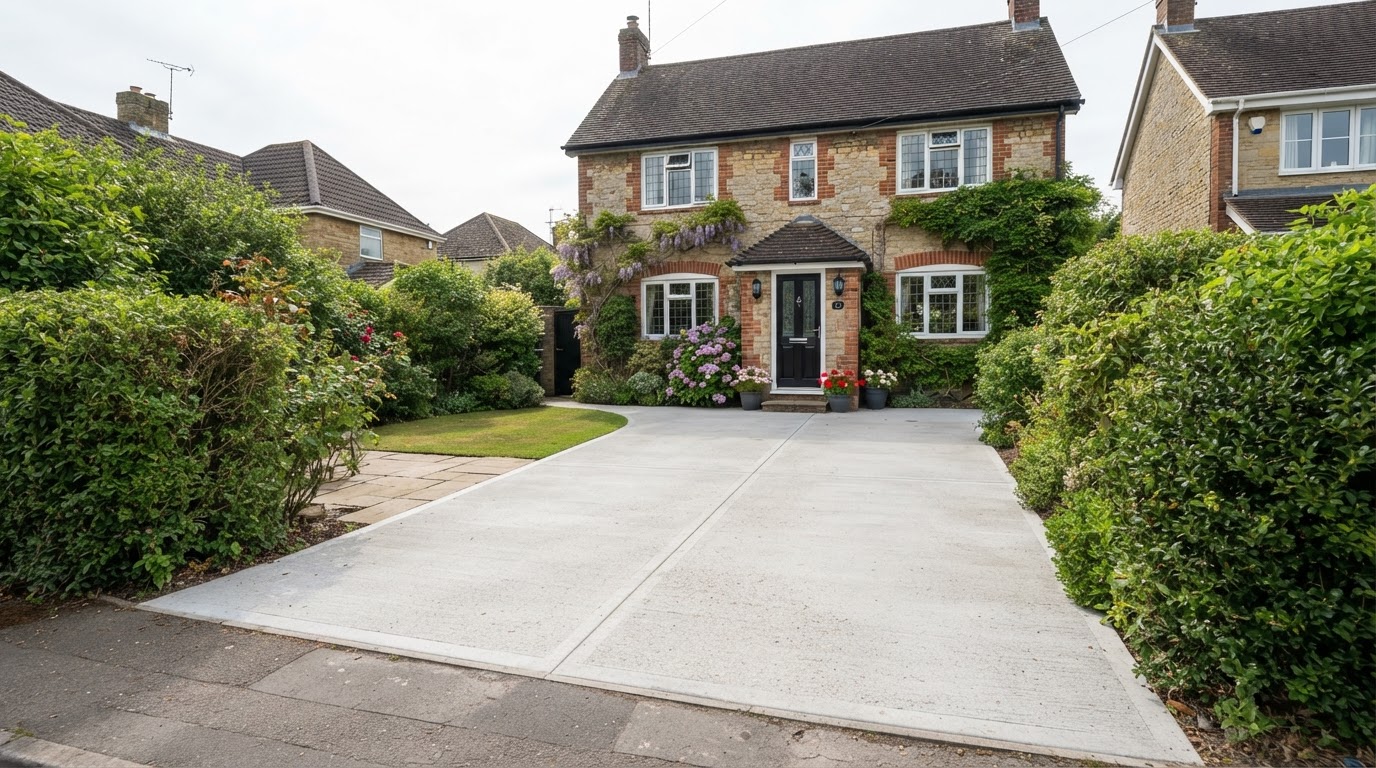
Professional driveway cleaning can keep a driveway looking significantly cleaner for years, but there isn't a single fixed answer for every property. How long the results last depends on the driveway material, surrounding environment, weather conditions, and whether the surface is properly restored and re-sanded afterwards.
A pristine driveway forms the cornerstone of any property's kerb appeal across Sussex and Surrey. Whether welcoming visitors to a period home in Horsham or returning to a modern detached property in Guildford, clean paving makes an immediate positive impression. However, after investing in professional driveway cleaning, homeowners naturally wonder: how long will the results last?
Because exterior paving is constantly exposed to changing British weather, windblown spores, falling autumn leaves, and vehicle tyre traffic, no cleaning process keeps paving permanently spotless. However, with professional equipment, proper surface soft-washing, and expert joint re-sanding, results routinely last between 1 and 3 years—and often longer under favourable conditions.
In this guide, we explore the primary factors that dictate driveway cleaning longevity, compare different paving materials, explain how joint restoration extends results, and share practical steps to keep your driveway looking fresh for as long as possible.
How Long Should Professional Driveway Cleaning Last?
While an uncleaned driveway gradually accumulates dirt, lichen, and weed growth over many seasons, a professionally cleaned and restored driveway resets the maintenance clock. On average, homeowners in Sussex and Surrey can expect the following realistic timelines:
- 12 to 18 Months: Highly shaded driveways under dense tree canopies, or driveways positioned beneath north-facing slopes with poor natural drainage.
- 2 to 3 Years: Standard block paved, concrete, or tarmac driveways in suburban locations with average sunlight exposure and moderate tree cover.
- 3 to 4 Years: Open, south-facing driveways treated with hard-setting polymeric jointing sand or commercial protective sealants.
It is important to understand that driveway deterioration after cleaning is a slow, gradual process rather than an overnight change. Green algae film appears first during damp winter months, followed by windblown weed seeds settling into joints a year or two later if joints are neglected.
What Affects How Long Driveway Cleaning Results Last?
No two properties in Sussex or Surrey experience identical environmental exposure. The actual longevity of your clean driveway depends on seven key variables:
- Tree Canopy & Organic Fall: Overhanging oak, pine, or beech trees constantly drop pollen, sap, leaves, and twigs that rot down into nutrient-rich silt inside paving joints.
- Sunlight vs. Shade: UV sunlight naturally dries paving surfaces and inhibits fungal growth. Shaded elevations stay damp for hours after rainfall, creating ideal germination conditions for moss and algae.
- Surface Porosity & Material: Highly porous materials (like older concrete blocks) absorb moisture and organic spores deeper into their matrix than dense, non-porous surfaces (like high-grade resin or glazed clay pavers).
- Quality of Joint Restoration: Leaving block paving joints empty or partially filled allows weeds to take root within weeks. Fully filling joints with dry kiln-dried sand or polymeric sand blocks seed penetration. Read our guide on why re-sanding block paving is essential after cleaning.
- Biocide Soft-Wash Treatments: Pressure washing alone removes visible surface dirt but leaves micro-spores alive. Applying a professional biocide wash kills deep-seated lichen roots, delaying regrowth by 12 to 18 months.
- Vehicle Traffic & Tyre Friction: Heavy daily vehicle use transfers road grime and rubber particles onto paving, while turning tyres can dislodge loose jointing sand if joints were not properly compacted.
- Surface Drainage & Slope: Driveways with adequate fall that drain water quickly into ACO channels remain cleaner much longer than flat driveways where rainwater pools in hollows.
Why Nearby Trees Make a Significant Difference
Trees are one of the most influential factors determining how quickly a driveway becomes dirty again. Properties bordering woodland areas—such as homes near Ashdown Forest in East Sussex or the Surrey Hills—face constant organic deposition.
During spring, trees shed sticky buds and pollen that cling to paving faces. In autumn, decaying leaves break down into fine black organic matter that washes straight into block joint lines. This organic silt acts as a fertile seedbed for moss and dandelions. If your driveway sits beneath mature trees, sweeping away leaf litter regularly in autumn is the single best action you can take to preserve your clean paving.
Why Shaded Driveways Become Dirty More Quickly
Moisture is the vital ingredient required for algae, liverwort, and moss to thrive. On a south-facing driveway in Crawley or Brighton, direct sunlight rapidly evaporates surface rainwater after a storm, starving spores of hydration.
Conversely, a north-facing driveway or a courtyard shaded by high boundary walls or garage extensions stays damp throughout winter. Microscopic green algae spores blown in the wind land on the damp stone and multiply, creating a slick green film within 12 to 18 months of cleaning. Applying a professional post-clean biocide treatment is particularly crucial for shaded driveways to suppress this regrowth.
Does the Driveway Material Matter?
Different paving materials age and respond to environmental exposure in distinct ways:
| Driveway Material | Typical Clean Longevity | Primary Maintenance Challenge |
|---|---|---|
| Block Paving (Kiln-Dried Sand) | 1 to 2 Years | Windblown weeds taking root in joint lines; moss growth in shade |
| Block Paving (Polymeric Sand) | 2 to 3+ Years | Surface traffic film; minor algae in heavy shade |
| Resin-Bound Gravel | 2 to 4 Years | Organic leaf staining and moss in porous gaps |
| Pattern Imprinted Concrete | 2 to 3 Years | Sealer wear in tyre tracks; surface dirt build-up |
| Tarmac / Asphalt | 1 to 2 Years | Moss embedding into aggregate surface texture |
| Natural Stone / Indian Sandstone | 2 to 3 Years | Black spot lichen infestation on porous stone faces |
Does Re-Sanding Help Block Paving Stay Looking Better?
Absolutely. Re-sanding is not just a cosmetic final touch—it is an essential structural and maintenance component. When high-pressure surface washers clear out weeds and old mud, they also flush out the top layer of jointing sand.
If block paving joints are left empty, windblown seeds drop straight down into the moist gap between the blocks, where they find ideal conditions to sprout. Brushing fresh silica kiln-dried sand tightly into every joint line seals the gap, preventing weed seeds from settling deep between blocks. Learn more about why this happens in our article why weeds grow between block paving.
Does Hard-Setting Sand Help Reduce Future Maintenance?
Yes. While standard kiln-dried sand is effective and economical, it remains a loose aggregate that can eventually wash out during heavy rain storms or garden hosing. Polymeric (hard-setting) sand contains specialized binding polymers that activate when misted with water.
Once cured, polymeric sand forms a firm, flexible joint seal that resists rain washout, deters burrowing ants, and creates a tough physical barrier against weed root penetration. Using polymeric sand can add an extra 12 to 18 months of weed-free appearance to your block paved driveway.
Can Regular Maintenance Extend Your Results?
Homeowners can significantly prolong the interval between professional driveway cleans by following a few simple routine habits:
- Regular Sweeping: Stiff-bristle sweeping every 2 to 3 weeks removes windblown soil, seeds, and leaf debris before they break down into joint silt.
- Prompt Leaf Removal in Autumn: Never leave wet autumn leaves sitting on paving for weeks. Decaying leaves leach dark tannins into stone and fertilize moss.
- Trim Overhanging Branches: Cutting back low overhanging tree branches increases sunlight exposure and improves airflow, allowing the driveway to dry faster after rain.
- Rinse Off Mud & Garden Soil: If soil from garden borders washes onto the driveway during heavy rain, hose it off promptly before it settles into block joints.
- Light Annual Biocide Spraying: Applying a gentle biocide wash once a year during dry spring weather keeps algae and lichen spores from establishing.
Real Homeowner Example: Comparing Two Sussex Driveways
To illustrate why driveway cleaning longevity varies so dramatically, consider two properties restored by Skyhawk Exterior Cleaning in Reigate and Chichester:
Property A (Reigate): A block paved driveway located in a wooded cul-de-sac beneath mature oak trees. The driveway is heavily shaded all day. After our team pressure washed, soft-washed, and re-sanded the surface with kiln-dried sand, it looked brand new. However, due to the heavy autumn leaf fall and constant shade, minor green algae film began reapplying along the shaded wall border after 14 months. An annual biocide touch-up kept it in top condition without needing a full re-clean.
Property B (Chichester): A south-facing 120m² resin-bound and block paved driveway situated in an open, tree-free suburban avenue. After thorough surface cleaning, soft-washing, and joint sealing with hard-setting polymeric sand, the driveway remained completely free of weeds, moss, and algae for over 3.5 years, requiring only occasional sweeping.
Both homeowners were delighted with their results because our team provided honest expectations upfront based on their property's specific surroundings.
Signs Your Driveway Is Ready for Another Professional Clean
You don't need to guess when it's time to arrange driveway maintenance. Watch for these clear indicators:
- Slippery Green Film: A thin layer of green algae forming across shaded sections, making paving treacherous when wet.
- Weed Sprouting Along Joints: Dandelions, moss cushions, or grass creeping up between block joints.
- Black Spot Lichen Outbreaks: Dark circular spots embedded into concrete or natural stone faces that cannot be removed with a garden hose.
- Traffic Film & Dull Appearance: Paving blocks losing their vibrant original red, buff, or charcoal color under a layer of ingrained dirt.
- Loss of Jointing Sand: Joint lines washing hollow after severe winter downpours. Read about the risks of improper pressure washing in our article can pressure washing damage block paving.
Key Takeaways
- Realistic Expectation: Professional driveway cleaning results typically last 1 to 3 years depending on environment and maintenance.
- Shade & Trees Matter Most: Overhanging trees and constant shade accelerate moss and algae regrowth significantly.
- Re-Sanding Is Vital: Filling block paving joints with kiln-dried or hard-setting sand prevents windblown seeds from taking root deep between blocks.
- Biocide Adds Longevity: Soft-wash biocide treatments kill invisible lichen spores, adding 12 to 18 months of clean appearance.
- Simple Routine Care Helps: Regular sweeping, prompt leaf clearing, and annual biocide touch-ups keep driveways looking fresh for years.
Frequently Asked Questions
How long does driveway cleaning last?
For most properties across Sussex and Surrey, professional driveway cleaning results last between 1 and 3 years. Open, sunny driveways with hard-setting sand can stay looking clean for up to 3 to 4 years, whereas heavily shaded driveways under mature trees may benefit from touch-ups every 12 to 18 months.
Will weeds come back after driveway cleaning?
Airborne seeds naturally drift onto driveways over time. However, deep-clearing joint silt, applying a biocide wash, and filling joints with clean kiln-dried or polymeric sand significantly reduces weed germination compared to untreated surfaces.
Does hard-setting sand make driveway cleaning results last longer?
Yes. Polymeric hard-setting sand cures into a durable, flexible barrier that resists rain washout and prevents windblown weed seeds from taking root deep within joint lines.
How often should a driveway be professionally cleaned?
Most homeowners arrange professional driveway maintenance every 1 to 3 years depending on surface type, tree canopy cover, shade, drainage, and personal aesthetic standards. Learn more in our article how often should you have your driveway professionally cleaned.
Can I make driveway cleaning results last longer?
Yes. Regularly sweeping away fallen leaves, rinsing off heavy mud or soil, keeping overhanging tree branches trimmed back, and treating joints with a light annual biocide spray extends the clean appearance.
Does tree cover make a difference to driveway longevity?
Substantially. Overhanging trees drop leaves, pollen, sap, and organic tannins, while blocking sunlight. Shaded driveways under dense tree canopies retain moisture much longer, encouraging moss and algae growth.
Does sealing help driveway cleaning last longer?
Sealing creates a protective barrier against oil penetration, lichen staining, and moisture absorption. While optional, sealing block paving or natural stone can add 1 to 2 extra years of protection before re-cleaning is needed.
Can rain make a driveway dirty again?
Rain itself does not soil a driveway, but heavy downpours can wash soil from elevated garden beds or blow organic debris across paving joints if drainage is poor.
When should I have my driveway cleaned again?
Consider re-cleaning when you notice green algae film appearing during damp autumn months, weeds re-establishing along joints, or grey traffic film dulling block colours.
Is professional driveway cleaning worth repeating?
Yes. Routine maintenance prevents heavy root systems from loosening blocks, preserves kerb appeal, maintains slip safety during wet winter weather, and avoids costly full driveway relaying.
Arrange Your Free Driveway Quote Today
Ready to restore your driveway's original beauty and extend its lifespan? Skyhawk Exterior Cleaning offers fully insured, professional driveway cleaning, soft-washing, patio restoration, and re-sanding services across 130+ locations in Sussex and Surrey.
Check out our pressure washing services or explore our patio restoration solutions.
To get a quick, accurate quote for your driveway, book a free video call quote or speak to our friendly team today on 01293 922 243. You can also review our frequently asked questions for more details.
Skyhawk Exterior Cleaning Ltd
9 Hylands Close, Crawley, RH10 6RX
Phone: 01293 922 243
Website: skyhawkexteriorcleaning.co.uk
Serving 130+ locations across Surrey & Sussex
Skyhawk Exterior Cleaning – A Hawk Eye for Detail.