
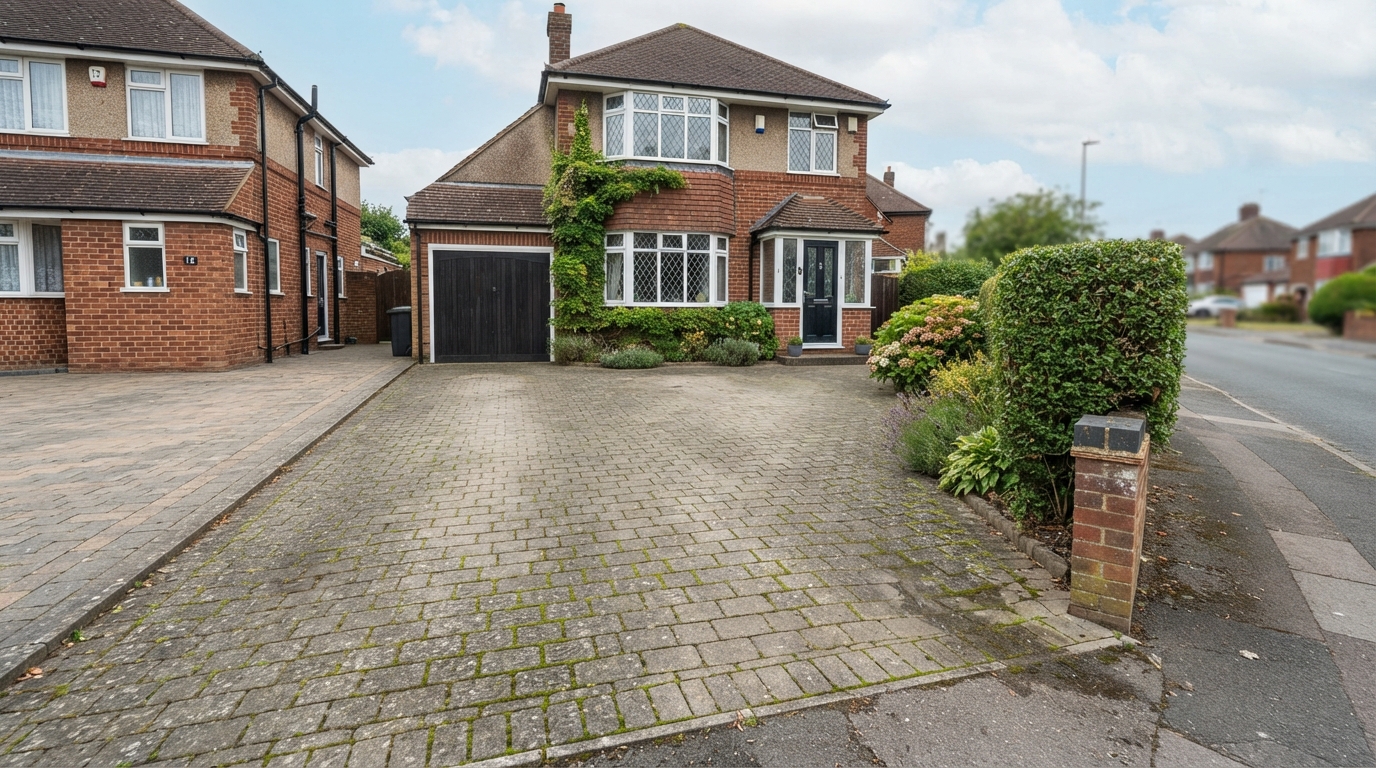
Your driveway is one of the very first things visitors, neighbours, and potential buyers see when approaching your home. As the primary entrance to your property, it endures constant wear and tear from heavy vehicles, foot traffic, oil drips, and the unpredictable British weather. Over time, moss, black lichen, green algae, and stubborn weeds take hold, dulling the original colour and making hard surfaces dangerously slippery underfoot.
If you're asking yourself: How often should you have your driveway professionally cleaned? the direct answer is straightforward: For most homes in Sussex and Surrey, a professional driveway clean every 1 to 3 years is ideal to keep the surface looking pristine and physically sound.
However, the exact maintenance interval depends heavily on your driveway surface material, surrounding tree cover, shade levels, drainage efficiency, and whether preventative biocide treatments or sealants have been applied.
Why Driveway Cleaning Is Preventative Maintenance, Not Just Cosmetic
It is easy to view driveway cleaning purely as an aesthetic improvement. While stripping away dark algae and grime instantly restores kerb appeal, professional care is fundamentally about preventative maintenance. Allowing organic growth to accumulate unrestricted leads to several practical issues:
- Slip Hazards: Black algae and jelly moss absorb rainwater and form an invisible, razor-slick biofilm on concrete, stone, and block paving during damp autumn and winter months.
- Structural Joint Degradation: Weed roots and moss pushed deep into sand joints exert outward pressure, breaking down jointing mortar and dislodging block paving interlocks.
- Surface Etching & Pitting: Organic acid secretions from lichen and moss slowly eat into lime-based paving stones and concrete surfaces, causing permanent pitting and surface flaking.
- Permanent Oil & Chemical Staining: Dirt and organic biofilms trap oil, brake dust, and rust marks, allowing them to soak deep into porous paving slabs.
By scheduling periodic professional driveway cleaning, you protect your hard landscaping investment, ensure safe footing for your family, and avoid premature replacement costs.
Recommended Cleaning Intervals by Driveway Surface Type
Different driveway materials possess unique physical properties, porosities, and jointing systems. Here is a breakdown of how frequently different driveway surfaces across Sussex and Surrey typically require professional cleaning:
| Driveway Material | Recommended Frequency | Primary Maintenance Vulnerability | Key Cleaning Requirement |
|---|---|---|---|
| Block Paving | Every 1 to 2 Years | Weeds, moss in sand joints, block shifting | Pressure wash, biocide & kiln-dried re-sanding |
| Pattern Imprinted Concrete | Every 2 to 3 Years | Loss of acrylic gloss shine, surface dirt build-up | Rotary washing & optional acrylic reseal |
| Resin-Bound Driveways | Every 2 to 3 Years | Algae in porous gaps, moss along borders | Low-pressure soft washing & biocide rinse |
| Natural Stone Slabs (Sandstone/Granite) | Every 1 to 2 Years | Black spot lichen, green algae staining | Soft washing chemical treatment & rotary wash |
| Tarmac / Asphalt | Every 2 to 3 Years | Moss growth in aggregate pores, discolouration | Gentle low-pressure cleaning & biocide spray |
1. Block Paving Driveways (Every 1 – 2 Years)
Block paving is immensely popular across residential properties in towns like Crawley, Horsham, and Reigate. However, because block paving consists of hundreds of individual bricks separated by sand-filled gaps, it requires more frequent attention than monolithic surfaces.
Windblown weed seeds, tree pollen, and organic dirt settle into the sand joints. When rainwater fills these gaps, seeds germinate rapidly. A professional clean every 12 to 24 months—including high-pressure rotary washing, biocide application, and precision re-sanding with dry silica kiln-dried sand—keeps the blocks locked tightly together and prevents weed jungles from forming.
2. Resin-Bound Driveways (Every 2 – 3 Years)
Resin-bound surfacing offers a smooth, permeable, modern finish. Because water drains naturally through the microscopic voids between aggregate stones, standing water is rare. However, environmental dust, fallen leaves, and shaded conditions can cause green algae to form within the porous matrix. Resin driveways typically require soft washing or low-pressure cleaning every 2 to 3 years to maintain their vibrant colour without dislodging the bonded stones.
3. Pattern Imprinted Concrete (Every 2 – 3 Years)
Imprinted concrete provides a continuous, durable surface with no open joints for weeds to grow through. Dirt accumulates on the textured surface layer, dulling the decorative pattern. A thorough rotary wash and biocide application every 2 to 3 years removes airborne traffic grime and restores the original colour profile.
4. Natural Stone & Indian Sandstone (Every 1 – 2 Years)
Natural stone driveways and entrance aprons look luxurious, but porous stones like Indian Sandstone absorb moisture easily. In damp Sussex environments, black lichen spores ("black spot") embed deeply into the stone matrix. Natural stone benefits from annual or biennial soft washing treatments that dissolve organic stains without damaging fragile stone edges.
Environmental Factors That Dictate Cleaning Frequency
Regardless of your driveway material, several local environmental conditions across Surrey and Sussex will accelerate dirt and organic accumulation:
- Tree Canopy & Overhanging Vegetation: Properties situated under mature oak, pine, or sycamore trees receive a constant rain of sap, leaves, pollen, and organic debris. Tree shade also restricts direct sunlight, preventing the driveway from drying out after rainfall.
- Sunlight Orientation & North-Facing Elevations: Driveways positioned on the north side of a house receive minimal direct sunlight. Persistent moisture creates an ideal breeding ground for algae, moss, and lichen, requiring more frequent maintenance.
- Vehicle Traffic & Parking Habits: High daily vehicle use introduces engine oil drips, diesel fumes, rubber tyre marks, and road salt in winter. Heavy vehicles also compact sand joints on block paving.
- Drainage & Slope: Driveways with poor natural drainage or low-lying dips collect standing puddles. Silt settles in these wet areas, providing nutrients for algae blooms.
Real-World Case Study: Block Paving Restoration in Reigate
The Situation: A homeowner in Reigate had a double block-paved driveway surrounded by mature hedging. Over 4 years without maintenance, moss had completely filled the joints, pushing blocks out of alignment and creating a slick green blanket during wet weather.
The Skyhawk Process: We used a professional flat-surface rotary cleaner to wash the block paving without blasting away underlying bedding sand. We then applied a high-strength BAC50 biocide to kill deep-rooted lichen spores, allowed the driveway to dry completely, and swept 6 bags of kiln-dried silica sand into the joints before applying an optional breathable sealant.
The Result: The driveway looked brand new, the interlock was completely restored, and the biocide treatment ensured zero weed regrowth for over 18 months.
Should Block Paving Always Be Re-Sanded After Cleaning?
Yes. Re-sanding is an essential part of professional block paving maintenance. Deep pressure washing naturally removes the top 15mm to 25mm of jointing sand along with embedded moss roots and dirt plugs.
If block paving is left un-sanded after washing, rainwater will pool between the exposed block edges. Vehicle weight will cause the un-supported blocks to shift, sink, and wobble. Once the surface has dried thoroughly after washing, fresh kiln-dried silica sand must be brushed into every joint to restore structural friction and stability.
Should You Seal Your Driveway After Cleaning?
Driveway sealing is an optional protective treatment that can extend the time between required cleans, but it should be evaluated on a case-by-case basis. Here is what driveway sealing provides:
- Stain Resistance: Sealer creates a protective barrier that prevents motor oil, petrol, and tree sap from soaking into porous concrete or stone.
- Sand Joint Lock: Polymeric or acrylic sealers set the jointing sand hard, making it far more difficult for windblown weed seeds to take root.
- Enhanced Colour: Sealing can restore rich, wet-look depth to faded block paving or pattern imprinted concrete.
However, sealing is not mandatory after every clean. A high-quality sealant typically lasts 3 to 5 years. At Skyhawk Exterior Cleaning, we give honest advice on whether sealing is genuinely beneficial for your specific driveway material or environment.
Signs Your Driveway Is Due for Professional Cleaning
Rather than waiting for a specific date, keep an eye out for these clear warning indicators:
- Slippery Biofilm: The surface feels dangerously slick underfoot when wet, even if no heavy moss is visible.
- Black Lichen Spots: Small, circular dark spots ("black spots") appearing on paving slabs that do not wash away with a garden hose.
- Weed Jungle in Joints: Dandelions, moss, or grass sprouting along the joint lines of block paving or slab edges.
- Dull, Darkened Surface: The original red, buff, or charcoal colour of your paving is hidden beneath a layer of grey traffic film.
- Mud & Silt Puddles: Rainwater leaves muddy tide marks after drying due to clogged surface pores.
Why Choose Skyhawk Exterior Cleaning Across Sussex & Surrey?
At Skyhawk Exterior Cleaning, we combine heavy-duty industrial rotary surface washers, variable-pressure equipment, specialized soft-washing chemical injectors, and professional biocide treatments to deliver flawless driveway restoration.
We don't simply blast surfaces with aggressive high pressure. We carefully adjust our approach based on your surface material, ensuring that delicate stone, resin, or tarmac is treated safely and effectively without damage. Combined with our pressure washing services, patio restoration, and gutter care, we provide complete exterior property care across 130+ locations in Surrey and Sussex.
Key Takeaways
- Ideal Frequency: Most driveways in Sussex and Surrey benefit from professional cleaning every 1 to 3 years.
- Block Paving Needs More Attention: Sand-filled joints trap organic silt and seeds, making 1 to 2 year maintenance and re-sanding ideal.
- Shade & Trees Accelerate Moss: North-facing driveways and properties under tree canopies require more frequent soft-wash biocide care.
- Re-sanding Is Mandatory for Block Paving: Washing without re-sanding destabilises block interlocks and leads to uneven paving.
- Safety & Longevity: Regular cleaning eliminates dangerous slip hazards and prevents root expansion from degrading hard surfaces.
Frequently Asked Questions
How often should a driveway be professionally cleaned?
For most UK homes, a professional driveway clean every 1 to 3 years is ideal. High-shade or block paved driveways near mature trees benefit from annual attention, while sealed or resin-bound surfaces can go 2 to 3 years.
Does block paving need cleaning more often than tarmac or concrete?
Yes. Block paving has numerous sand-filled joints that trap organic silt, windblown seeds, and moisture. This creates ideal growing conditions for weeds, moss, and algae, making regular maintenance and kiln-dried re-sanding essential.
Can pressure washing damage a driveway?
Aggressive, high-pressure jet washing applied incorrectly can erode sand joints, dislodge jointing mortar, or etch soft stone. Professionals use flat surface cleaners, rotary washers, and soft washing chemical treatments to clean safely without surface damage.
Should I re-sand block paving after cleaning?
Yes. Deep washing removes the top layer of jointing sand along with embedded moss and weeds. Re-sanding with dry kiln-dried silica sand stabilises the interlock between pavers and prevents structural shifting.
Does driveway cleaning stop weeds permanently?
No cleaning service can eliminate weeds forever, as seeds blow onto driveways on the wind. However, deep pressure washing combined with biocide treatment and fresh jointing sand starves weed roots and dramatically slows regrowth.
Can driveway cleaning improve kerb appeal and property value?
Absolutely. A clean, weed-free driveway creates an immediate positive first impression, making your home look well-maintained and welcoming for visitors, buyers, or estate agents. Read our guide on how exterior cleaning boosts property appeal.
How long do driveway cleaning results last?
Results typically last 12 to 36 months, depending on shade, rainfall, tree cover, and whether a preventative biocide or surface sealant was applied during the clean.
Can I clean my driveway myself with a domestic pressure washer?
While domestic washers can lift light dirt, they often leave zebra stripe lines, take hours to complete, and blast away jointing sand without applying professional biocides to kill deep-seated lichen spores.
When is the best time of year to clean a driveway?
Spring and autumn are popular times. Spring removes winter grime and prepares your driveway for summer use, while autumn clears fallen leaves before wet winter weather sets in.
Is driveway sealing necessary after every clean?
No. Sealing is beneficial for block paving, imprinted concrete, or natural stone to repel oil stains and lock in jointing sand, but it should be recommended on a case-by-case basis every 3 to 5 years rather than after every single clean.
Arrange Your Free Driveway Cleaning Quotation
Restore your driveway's original colour, eliminate dangerous slip hazards, and protect your paving investment with Skyhawk Exterior Cleaning. We offer free, no-obligation quotes and video surveys across Surrey and Sussex.
Arrange a free video call quote, speak directly with our expert team on 01293 922 243, or explore our driveway cleaning services today.
Arrange a free video call quote, speak directly with our expert team on 01293 922 243, or explore our driveway cleaning services today.