How to Remove Oil Stains from a Driveway: Methods, Realities & Prevention
Oil stains can often be significantly improved, but the success of removal depends on the type of driveway, how long the stain has been present, and how deeply the oil has penetrated the surface.
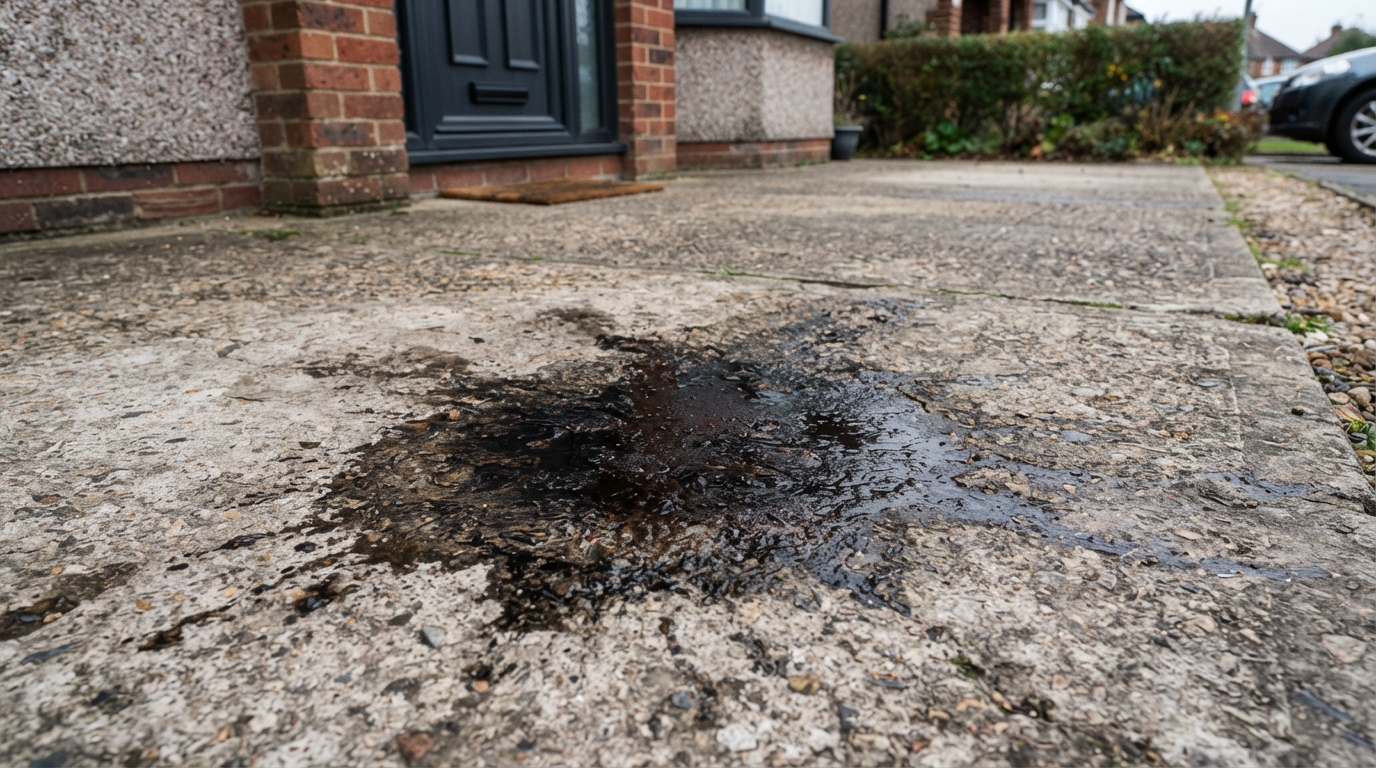
Few things ruin the visual appeal of a crisp, clean driveway faster than a dark puddle of engine oil or hydraulic fluid dripping from a car, van, or visitor's vehicle. Whether you live in a modern estate in Crawley or an established property in Horsham or Guildford, an unsightly oil mark draws the eye immediately.
However, treating an oil stain requires understanding basic chemistry. Hydrocarbons in vehicle lubricants do not mix with water, and porous driveway materials absorb oil like a sponge. In this comprehensive guide, we examine why oil stains occur, how different driveway surfaces respond, what household or DIY remedies actually achieve, and when professional driveway cleaning and restoration is required.
Short Answer: Can Oil Stains Be Completely Removed?
Yes, fresh oil spills can often be completely lifted if caught within hours. However, for established or deep-set oil stains on porous materials like concrete block paving or natural sandstone, realistic expectations are vital. Professional heavy-duty degreasers, emulsifiers, and bio-enzymatic treatments can lighten and dramatically reduce dark spots by 80% to 95%, but 100% invisible removal cannot always be guaranteed if oil has saturated deep into the substrate over several months.
Why Oil Stains Are So Difficult to Remove
Motor oil, power steering fluid, and brake oil are complex petroleum hydrocarbons designed to cling to metal under extreme heat and friction. When spilled onto an exterior surface, several physical processes make removal challenging:
- Capillary Action: Porous materials like concrete and clay contain millions of microscopic pores. Oil naturally wicks downward into these channels.
- Hydrophobic Nature: Water repels oil. Rinsing an oil stain with a garden hose simply causes water to bead and run over the top of the oil, leaving the stain intact.
- Viscosity & Oxidation: As light volatile compounds evaporate under sunlight, remaining heavy tars solidify inside the block's pores, darkening the stain.
Does the Driveway Material Matter?
The success of oil stain removal depends heavily on the driveway material. Different paving surfaces absorb and react to petroleum products in completely distinct ways:
| Driveway Surface | Ease of Oil Removal | Key Considerations & Characteristics |
|---|---|---|
| Block Paving (Concrete) | Moderate to Difficult | Highly porous concrete absorbs oil quickly. Deep cleaning requires degreasers followed by joint re-sanding block paving. |
| Standard Concrete / Slabs | Moderate | Porous finish. Degreasers and poultices work well, though dark rings can remain if untreated for months. |
| Resin-Bound Stone | Moderate to Easy | Permeable matrix allows oil to drain down if unsealed, but surface resin resists deep staining. Requires solvent-free bio-cleaners. |
| Tarmac / Asphalt | Complex / Delicate | Petroleum solvents dissolve tarmac's bitumen binder! Requires specialist tarmac-safe bio-enzymatic digesters only. |
| Natural Stone (Sandstone) | Difficult | Natural Indian sandstone is extremely absorbent. Deep oil spills saturate through the stone thickness. |
Fresh Oil Stains vs Old Oil Stains
Handling Fresh Oil Spills (Under 24 Hours)
If you spot a dripping car filter or fresh oil patch on your driveway today, speed is your greatest advantage:
- Absorb Liquid Immediately: Do NOT spray water on it. Cover the fresh liquid oil liberally with cat litter, baking soda, sawdust, or dry sand. Press it down with a boot and leave it for 30–60 minutes to draw up free liquid.
- Sweep Away & Dispose: Sweep up the soaked absorbent material into a bin bag.
- Emulsify with Detergent: Apply neat, concentrated dishwashing liquid or a specialist household degreaser directly onto the remaining mark. Scrub vigorously with a stiff nylon brush and warm water.
- Rinse Gently: Wash away with warm water toward a drain or collection area.
Handling Old, Dried Oil Stains (Weeks or Months Old)
When an oil spill has sat through weeks of Sussex rain and sun, the surface oil has dried, and remaining hydrocarbons sit deep within the concrete matrix. Household soap will only clean the surface dust, leaving the dark ring underneath. These require industrial-grade emulsifying chemicals or biological oil digesters to break down long-chain hydrocarbon molecules inside the block.
DIY Oil Stain Removal Methods: What Works and What Doesn't
1. Baking Soda & Dishwashing Liquid (For Minor Spills)
Verdict: Works well for fresh surface marks. Dishwashing soap contains surfactants designed to cut through grease on cooking pans. When combined with an abrasive like baking soda or washing soda, it helps lift fresh oil from the top 1mm of a concrete block.
2. Biological Washing Powder Poultice
Verdict: Effective on moderate stains with patience. Biological laundry detergent contains enzymes designed to break down organic fats and lipids. Creating a thick paste with warm water, applying it over the damp oil stain, covering with clingfilm, and leaving for 24 hours gives enzymes time to digest surface grease.
3. Solvent-Based Degreasers & Cat Litter Poultice
Verdict: Good for deeper concrete stains. Solvent cleaners dissolve dried oil tars. Mixing solvent degreaser with absorbent diatomaceous earth or fine cat litter creates a "poultice paste". As the solvent evaporates, it draws dissolved oil upward into the dry powder.
What to Avoid When Trying to Remove Oil Stains
- Avoid Pouring Petrol or Diesel on the Stain: A common old wives' tale suggests washing oil with petrol. Petrol is dangerous, highly flammable, pollutes local groundwater, damages tarmac, and leaves its own oily residue behind!
- Avoid Wire Brushes on Decorative Paving: Scrubbing block paving or natural sandstone with steel wire brushes scratches the surface aggregate, leaving permanent grey scuff marks.
- Avoid Harsh Acid Cleaners for Oil: Hydrochloric acid or brick acid cleans cement and rust, but does NOT dissolve oil. Acids on oil stains will etch concrete blocks without removing the oil ring.
- Avoid Using High Pressure Cold Water Without Chemicals: Blast-washing a fresh oil stain with a cold power washer forces liquid oil deeper into the concrete pores and splatters oil droplets across surrounding clean paving!
Can Pressure Washing Remove Oil Stains?
Homeowners often rent a pressure washer assuming 2000 PSI of water will wash oil away. However, cold pressure washing alone cannot dissolve oil molecules. Cold water under high pressure simply bounces off hydrophobic oil.
Professional exterior cleaners use a two-step approach: applying heavy-duty emulsifying degreasers or hot soft-wash chemical treatments to loosen the hydrocarbon bond, followed by controlled hot water rotary surface washing. Learn more in our article can pressure washing damage block paving.
Professional Oil Stain Removal Solutions
At Skyhawk Exterior Cleaning, we assess every driveway stain individually across Sussex and Surrey. Our professional approach includes:
- Specialist Emulsifiers: Industrial-grade degreasers break down heavy oil tars without damaging concrete or stone.
- Bio-Enzymatic Digesters: For tarmac or sensitive natural stone, we apply active bacterial cultures that feed on hydrocarbon chains, converting oil into harmless carbon dioxide and water over several days.
- Hot Water Soft-Washing: Heat lowers oil viscosity, allowing surfactant chemistry to flush out deeply embedded residue.
- Complete Driveway Restoration: Once oil is treated, we clean the full driveway surface and perform essential re-sanding block paving with kiln-dried or polymeric sand to ensure joints remain stable and weed-free.
When Complete Removal Isn't Always Possible
Honesty is central to our service. In some scenarios, oil stains cannot be 100% erased:
If motor oil has leaked onto unsealed, porous concrete block paving for 6 to 12 months, the oil penetrates 20mm+ into the block. While professional cleaning lifts surface grease and lightens dark spots by 80–90%, a faint shadow may remain under certain lighting conditions. In severe cases on block paving, individual deeply saturated blocks can easily be flipped over or replaced with spare blocks before re-sanding!
Real-World Example: Fresh Leak vs 6-Month Oil Stain in Horsham
A customer in Horsham noticed two oil marks on their block-paved driveway. The first mark was a 2-day-old power steering fluid drip, while the second was a 6-month-old dark motor oil stain from an old classic car.
We treated the 2-day-old drip with a bio-degreaser and hot wash—it lifted 100% invisibly within 20 minutes. The 6-month-old stain was treated with a deep poultice and bio-digester, lightening the dark shadow by approximately 85%. Because the blocks were standard concrete pavers, we replaced two severely saturated blocks from the customer's spare pile before re-sanding the driveway, leaving the paving looking brand new.
How to Prevent Future Oil Stains
- Apply a Quality Driveway Sealer: Sealing block paving or concrete after a deep clean creates an invisible oleophobic barrier. Oil drips bead up on the sealer surface rather than soaking into the concrete.
- Place Drip Trays Under Leaky Vehicles: If a classic car or commercial van leaks oil, place a thin metal or plastic drip tray on the driveway.
- Keep Absorbent Powder Hand: Keep a bag of cat litter or absorbent sand in the garage to treat accidental spills instantly.
Key Takeaways
- Act Fast: Fresh oil spills (under 24 hours) can often be removed 100% using absorbent powder and emulsifying detergents.
- Water Alone Doesn't Work: Cold pressure washing repels oil. Professional degreasers or enzymatic digesters are required to break oil bonds.
- Material Matters: Tarmac requires specialized bio-cleaners, as harsh solvents dissolve bitumen. Concrete blocks absorb oil deeply.
- Block Replacement Option: For severe, multi-month oil stains on block paving, saturated blocks can easily be turned over or swapped with spares during re-sanding.
- Sealing Protects: Applying an oleophobic sealer after driveway cleaning stops future oil drips from penetrating paving pores.
Frequently Asked Questions
Can old oil stains be removed from a driveway?
Old oil stains that have soaked deep into porous surfaces like concrete can be significantly faded and reduced using emulsifying degreasers and professional hot soft-wash chemical treatments, though 100% invisible removal cannot be guaranteed if oil sat for months.
Can pressure washing remove oil stains on its own?
Cold pressure washing alone rarely removes oil stains because oil and water do not mix. High-pressure cold water can actually force liquid oil deeper into porous concrete or dislodge jointing sand. Professional degreasers are required first.
Will washing-up liquid work on driveway oil spills?
Neat concentrated washing-up liquid can help emulsify small, fresh motor oil spills if applied immediately and scrubbed thoroughly with warm water. However, for established or deep-set stains, specialist bio-enzymatic degreasers are necessary.
Can oil permanently stain block paving?
Yes. If motor oil is left to soak into unsealed concrete block paving for weeks or months, it penetrates deep into the concrete block, leaving a dark shadow even after surface oil is removed.
Can professionals remove oil stains from tarmac?
Tarmac requires extra care because petroleum-based solvents and high pressure can dissolve the bitumen binder holding the asphalt together. Professionals use gentle, tarmac-safe bio-enzymatic digesters to lift oil safely.
Does the driveway material matter when removing oil?
Crucially. Non-porous surfaces like porcelain or sealed resin-bound stone are easiest to clean, while porous concrete blocks and sandstone absorb oil quickly, requiring deep enzymatic treatments.
Can engine oil damage a driveway structurally?
On tarmac, engine oil chemically breaks down the bitumen matrix, causing the aggregate to crumble into loose gravel. On block paving or concrete, oil creates an unsightly stain but does not ruin the structural integrity of the block.
How soon should an oil spill on a driveway be treated?
Immediately. The faster an absorbent material (cat litter, sawdust, or baking soda) is applied to soak up free liquid oil, the less oil penetrates beneath the driveway surface.
Can repeated cleaning improve old oil stains over time?
Yes. Applying a biological oil digester allows active microbes to continue breaking down hydrocarbons in the pores of the block over several weeks, gradually lightening dark spots.
When should I call a professional driveway cleaner for oil stains?
If a DIY scrub with household detergent leaves a prominent dark ring, or if you have a large spill across valuable block paving or natural stone, calling a professional ensures correct chemical treatment without damaging joint sand or paving surfaces.
Arrange Your Free Driveway & Stain Removal Quote Today
Tired of looking at stubborn oil stains, moss, or discoloured paving? Skyhawk Exterior Cleaning provides professional driveway cleaning, oil stain treatments, block paving restoration, and re-sanding across 130+ locations in Sussex and Surrey.
Explore our driveway cleaning services, check out our pressure washing solutions, or learn how long driveway cleaning lasts.
To get an accurate, upfront quote, book a free video call quote or speak directly to our friendly team today on 01293 922 243. You can also view our frequently asked questions for more details.
Skyhawk Exterior Cleaning Ltd
9 Hylands Close, Crawley, RH10 6RX
Phone: 01293 922 243
Website: skyhawkexteriorcleaning.co.uk
Serving 130+ locations across Surrey & Sussex
Skyhawk Exterior Cleaning – A Hawk Eye for Detail.