
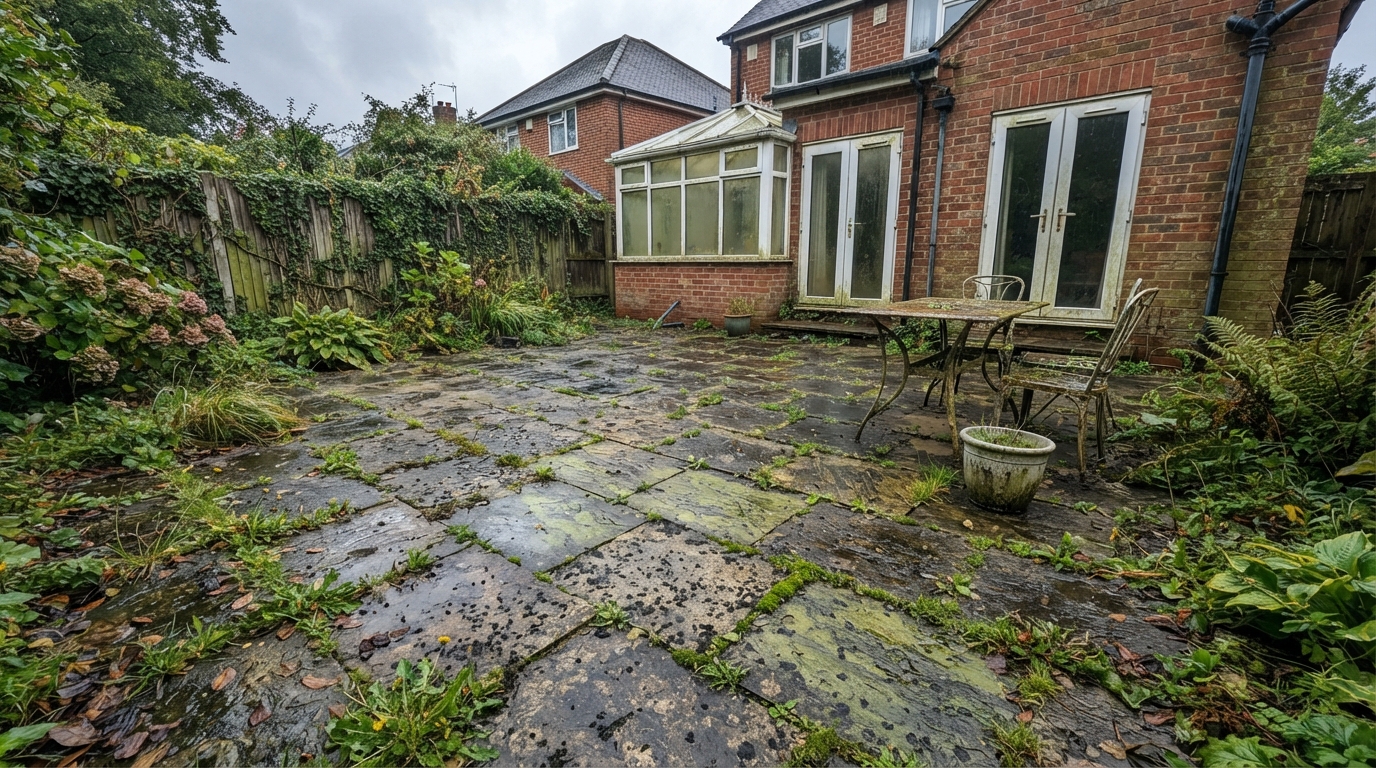
10 Signs Your Patio Needs Professional Cleaning
Patios gradually become dirty over time. Because the change happens slowly, many homeowners do not realise how much their outdoor space has deteriorated until they compare it with old photographs or a neighbouring property. Recognising the early signs that your patio needs professional cleaning helps you maintain the surface before staining and contamination become more established — and before the patio becomes slippery or unpleasant to use.
Across Sussex and Surrey, damp weather, shaded gardens and mature trees create the perfect conditions for algae, moss, lichen and black spot to develop. The good news is that most patios can be safely restored with the correct cleaning methods, without the expense and disruption of replacement.
Why Recognising the Signs Early Matters
Waiting until a patio is heavily contaminated often makes cleaning more difficult and more expensive. Algae, moss and lichen become more deeply established the longer they are left, and black spot in particular can embed itself into porous stone over several years. Early intervention keeps the surface looking its best, extends its usable life and reduces how quickly organic growth returns.
Professional patio cleaning is preventative maintenance. It restores appearance, improves safety and makes ongoing upkeep easier — but only if it is carried out at the right time and using the correct methods for the surface.
1. Your Patio Has Become Slippery
A slippery patio is usually the first sign that algae or organic growth has taken hold. Algae forms a thin, invisible film on the surface that becomes extremely slippery when damp — particularly after rain or early in the morning. This is one of the clearest signs that the patio needs attention, because it affects safety as well as appearance. You can read more about this in our guide to why patios become slippery.
2. Green Staining Is Spreading
Green staining is caused by algae thriving on the surface of the paving. Shaded areas are usually affected first, because they receive less sunlight and dry more slowly after rain. Over time, the green film spreads across the entire patio. Whilst it may look like simple dirt, green algae is living organic growth that will continue to spread if left untreated.
3. Black Spot Won't Wash Away
Black spot is caused by lichen that embeds itself into the surface of the stone. Unlike surface algae, black spot cannot be removed with ordinary pressure washing alone. It often requires specialist cleaning products and a professional approach. The longer black spot is left, the more deeply it becomes established and the more difficult it is to remove completely. Our guide on removing black spot from a patio explains this in more detail.
4. Moss Is Growing Between Paving Joints
Moss growing between paving joints is a sign that organic matter and moisture have built up in the gaps. Moss acts like a sponge, retaining water and creating the damp conditions that encourage further growth. As well as looking untidy, moss can lift paving edges and make the surface uneven over time.
5. The Original Colour Has Disappeared
Gradual weathering, dirt build-up and organic staining slowly dull the original colour of the paving. Many homeowners forget how bright and clean their patio once looked until they see a section that has been freshly cleaned. Restoring the original colour is one of the most dramatic results of professional patio cleaning.
6. Rust or BBQ Stains Are Becoming Noticeable
Rust stains from metal furniture, plant pots or fertilisers, along with oil and food stains from barbecues, can become more visible over time. These stains often require specialist cleaning products rather than pressure washing alone. Different stains respond to different treatments, which is why professional assessment is important.
7. Rainwater Leaves Dirty Streaks
If rainwater leaves dirty streaks across the patio, it is usually a sign that contamination has built up on the surface. As rain runs across the paving, it picks up algae, dirt and organic matter and redistributes it, creating visible streaks. This is a sign that the surface needs a thorough clean rather than simply waiting for rainfall to wash it.
8. You Avoid Using Your Patio
When a patio becomes slippery, green or stained, many homeowners simply stop using it. Furniture sits on a dirty surface, bare feet pick up grime and the garden feels neglected. If you find yourself avoiding your patio, it is a clear sign that professional cleaning would restore it to a usable, enjoyable space.
9. You Can't Remember the Last Professional Clean
If you cannot remember the last time your patio was professionally cleaned, it is probably overdue. Preventative maintenance keeps the surface looking its best and prevents contamination from becoming deeply established. Most patios benefit from cleaning every one to three years, but the best approach is to arrange cleaning when signs of growth begin to appear. Our guide on how often you should have your patio professionally cleaned explains this in more detail.
10. You're Preparing Your Home for Sale or Entertaining
If you are preparing to sell your home or planning to host guests, a clean patio creates a far better first impression. A green, stained or slippery patio suggests the property has not been well maintained, even if the rest of the home is immaculate. Professional cleaning restores the appearance of the paving and makes the whole garden feel more inviting. You can read more about this in our article on whether patio cleaning increases kerb appeal.
Warning Signs at a Glance
| Warning Sign | Why It Matters |
|---|---|
| Slippery algae | Creates a safety hazard, especially when damp. |
| Black spot | Deeply embedded lichen that is difficult to remove without specialist treatment. |
| Green staining | Indicates active algae growth that will continue to spread. |
| Moss | Retains moisture and can lift paving edges over time. |
| Rust stains | Require specialist cleaning products rather than pressure washing alone. |
| Faded appearance | Indicates gradual dirt build-up and organic staining that dulls the original colour. |
Which Patio Materials Do We Clean?
At Skyhawk Exterior Cleaning, we professionally clean a wide range of patio surfaces across Sussex and Surrey. Every material is assessed individually before we select the cleaning method, because different surfaces require different approaches.
- Porcelain — low porosity, often responds well to controlled cleaning with the correct products.
- Indian sandstone — porous natural stone that requires careful product selection to avoid damage.
- Limestone — a delicate natural stone that needs specialist treatment.
- York stone — a durable traditional stone that benefits from specialist cleaning.
- Slate — requires a gentle approach to protect the surface.
- Concrete paving — robust but still requiring the correct pressure and products.
- Block paving — cleaned carefully to avoid damaging the blocks or removing jointing sand unnecessarily.
Common Problems by Material
| Patio Material | Common Problems |
|---|---|
| Porcelain | Algae, rust stains from furniture, black spot in textured finishes. |
| Indian Sandstone | Algae, black spot, moss in joints, organic staining, rust. |
| Limestone | Algae, organic staining, etching from unsuitable chemicals. |
| Concrete | Algae, moss, oil stains, general dirt build-up. |
| Block Paving | Weeds, moss, algae, loss of jointing sand. |
Can Every Patio Be Professionally Cleaned?
Most patios can be professionally cleaned, but every surface should first be assessed individually. The correct cleaning method depends on the surface material, age, existing condition, type of staining, previous repairs and joint condition. Using the wrong method or pressure can cause damage, particularly to natural stone surfaces.
We assess each patio before selecting the cleaning products, water pressure and technique. Different paving materials require different approaches — what is safe for concrete may not be safe for limestone, and what works on porcelain may not be suitable for Indian sandstone. You can read more about this in our guides on cleaning porcelain patios safely and cleaning Indian sandstone without damaging it.
Questions We Get Asked on Site
Will my patio ever look like new again?
In most cases, professional cleaning makes a dramatic difference and restores the original appearance of the paving. We always set realistic expectations, because some deeply established staining or natural weathering may not be completely reversible.
Can black spot be removed?
Black spot can usually be significantly reduced with specialist cleaning products, but complete removal is not always possible on porous stones where the lichen has been established for many years. The key is to treat it before it becomes deeply embedded.
Is my patio dangerous when it's green?
A green patio is usually covered in algae, which becomes extremely slippery when damp. This is a safety concern, particularly for children and older family members. Professional cleaning removes the algae and restores a safer surface.
Will the stains return?
Organic growth will eventually return over time, particularly on shaded patios or those surrounded by trees. However, professional cleaning removes the existing contamination and specialist treatments can help slow regrowth. Regular maintenance keeps the surface looking its best for longer.
Should I wait until next spring?
There is no need to wait for a particular season. The best time to clean a patio is when it needs cleaning. Delaying allows algae, moss and black spot to become more established, which can make the eventual clean more difficult. You can read more about timing in our guide on how often you should have your patio professionally cleaned.
Common Mistakes Homeowners Make
- Waiting until the patio becomes unsafe. Algae and moss should be treated before the surface becomes slippery and hazardous.
- Using maximum pressure. Excessive pressure can damage natural stone, remove jointing sand and etch delicate surfaces.
- Cleaning natural stone like concrete. Different materials require different cleaning products and pressure levels.
- Ignoring black spot for years. The longer black spot is left, the more deeply it embeds into the stone and the harder it becomes to remove.
- Using unsuitable chemicals. Acid-based cleaners and household bleach can damage natural stone and discolour paving.
A Real Example from Sussex
A family in Horsham had a beautiful Indian sandstone patio that had gradually become covered in green algae and black spot over several years. The surface had become so slippery that the family stopped letting their children play outside on it, and they avoided using the patio altogether during the warmer months. After a professional clean using the correct products and controlled pressure for sandstone, the original colours of the stone were restored and the surface was safe to use again. The family were able to enjoy their garden throughout the summer for the first time in years.
Key Takeaways
- Patios become dirty gradually, so many homeowners do not notice the change until the surface is heavily contaminated.
- Slippery algae, green staining, black spot and moss are all signs that professional cleaning is needed.
- Different paving materials require different cleaning methods and products.
- Early intervention keeps the surface looking its best and prevents contamination from becoming deeply established.
- Professional patio cleaning is preventative maintenance that improves appearance, safety and enjoyment.
Frequently Asked Questions
How do I know if my patio needs cleaning?
If your patio is slippery, green, stained or has black spot that will not wash away, it is time for professional cleaning. If you cannot remember the last clean, it is probably overdue.
Can black spot be removed?
Black spot can usually be significantly reduced with specialist cleaning products, but complete removal is not always possible on porous stones where the lichen has been established for many years.
Can algae make patios slippery?
Yes. Algae forms a thin film on the surface that becomes extremely slippery when damp, making the patio a safety hazard.
How often should patios be cleaned?
Most patios benefit from cleaning every one to three years, but the best approach is to arrange cleaning when algae, moss or staining begins to appear rather than waiting for a fixed interval.
Can porcelain become slippery?
Yes. Although porcelain is less porous than natural stone, algae can still develop on the surface and make it slippery when damp.
Can sandstone lose its colour?
Sandstone does not lose its colour permanently, but algae, dirt and organic staining can dull the surface over time. Professional cleaning restores the original colour and texture.
Can I clean my patio myself?
Light cleaning is possible for some homeowners, but heavily stained patios, natural stone surfaces and established black spot usually require professional products, equipment and experience.
How long do patio cleaning results last?
Results vary depending on the material, shade and environment, but most patios stay looking noticeably cleaner for several years. Regular maintenance helps extend the results.
Can professional cleaning restore my patio?
In most cases, yes. Professional cleaning removes algae, moss, black spot and staining, restoring the original appearance of the paving without the need for replacement.
When should I arrange professional patio cleaning?
The best time to arrange cleaning is when you notice the early signs of algae, moss or staining. There is no need to wait for a particular season.
Conclusion
Recognising the signs that your patio needs professional cleaning helps you maintain the surface before contamination becomes deeply established. Whether your patio is slippery, green, stained or simply looking tired, professional cleaning restores the appearance, safety and usability of the surface using the correct methods for the material.
At Skyhawk Exterior Cleaning, we assess every patio individually and use the most appropriate cleaning methods for the surface. If your patio is showing any of these signs, arrange a free video quotation and we will provide honest advice about what can be achieved. You can also read more in our FAQs or learn about our patio restoration services.