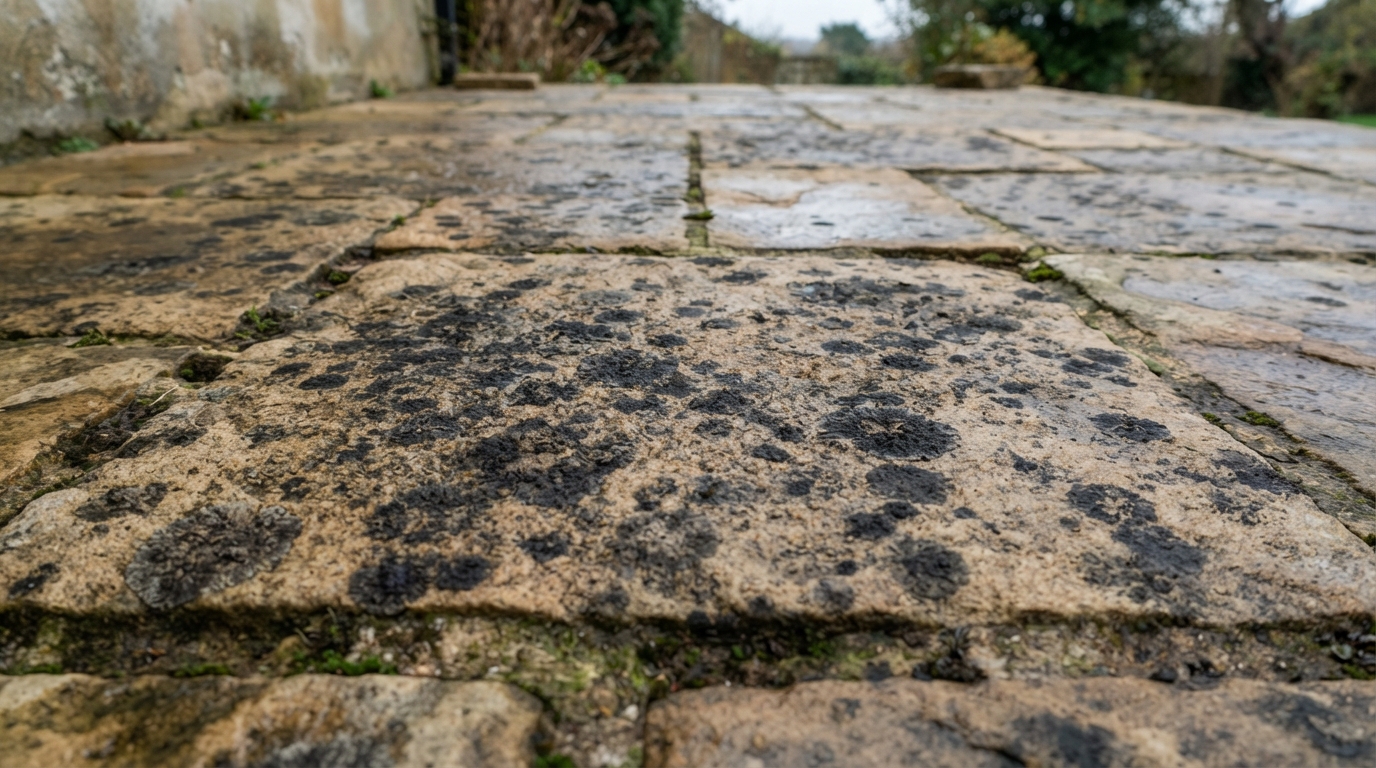
Black spot is one of the most frustrating forms of staining found on patios across Sussex and Surrey. Unlike surface dirt or green algae, which can often be rinsed away, black spot clings to the paving with a stubbornness that leaves many homeowners reaching for the strongest chemicals and the highest pressure washers they can find—often with disappointing results.
Black spot is one of the most stubborn forms of staining found on patios. It is commonly caused by deeply rooted lichen that becomes embedded into the surface over time. Whilst many patios can be dramatically improved, the results depend on the paving material and how established the black spot has become.
In this guide, we explain exactly what black spot is, why it is so difficult to remove, which patio materials are most affected, and why professional patio restoration often achieves far better results than repeated DIY attempts.
What Is Black Spot?
Black spot is not dirt. It is not mould. And it is not something that will simply wash away with a garden hose. Black spot is a form of lichen—a slow-growing organism that anchors itself firmly into the surface of the paving. Over time, it develops dark, pinhead-sized spots that spread across the stone, often appearing in clusters on the most shaded and damp areas of the patio.
Because lichen is a living organism, it feeds on the minerals within the stone and the organic matter that settles on the surface. This is why it tends to return even after the patio has been cleaned: unless the organism is treated at a biological level, the remaining spores will continue to develop.
Black spot is particularly common on natural stone patios, where the porous surface provides an ideal anchor point for the lichen to take hold. Once established, it can take years to become fully visible, which is why many homeowners only notice it when the patio has already been significantly affected.
Is Black Spot Algae, Moss or Lichen?
Black spot is often confused with algae and moss, but the three are quite different organisms that require different approaches.
Algae
Algae is a simple organism that forms a thin green film on the surface of the paving. It is the most common cause of slippery patios and is relatively easy to remove. Algae sits on the surface rather than rooting into it.
Moss
Moss is a small plant that forms cushion-like clumps, usually in the joints between slabs or in cracks. It retains water and can be removed with the right cleaning approach, though it tends to return if conditions remain damp.
Lichen (Black Spot)
Lichen is a more complex organism formed by a partnership between fungi and algae. Black spot lichen anchors itself firmly into the surface of the stone, making it far more difficult to remove than algae or moss. It appears as dark spots or patches and is the most stubborn form of organic staining found on patios.
Why Is Black Spot So Difficult to Remove?
The reason black spot is so difficult to remove is that it does not sit on the surface. The lichen roots itself into the microscopic pores of the paving, anchoring itself in a way that makes it resistant to ordinary cleaning methods.
Pressure washing alone often removes the visible top layer of the lichen, leaving the roots embedded in the stone. Within weeks, the black spots begin to reappear as the lichen continues to grow from beneath the surface. This is why many homeowners find that their patio looks cleaner immediately after pressure washing but develops the same black staining again within a few months.
Effective black spot removal requires a combination of the right cleaning method and specialist treatment that targets the lichen at a biological level. Simply blasting the surface with water—no matter how powerful—will not solve the underlying problem.
Which Patio Materials Are Affected Most?
Black spot can affect almost any patio material, but it is far more common on porous natural stone than on dense manufactured surfaces. The porosity of the paving determines how easily the lichen can anchor itself.
- Indian sandstone: One of the most commonly affected materials. Its porous surface and textured finish provide an ideal environment for lichen to take hold.
- Limestone: Also highly susceptible due to its porosity and softer composition.
- York stone: Older York stone patios often develop established black spot that has been present for many years.
- Concrete paving: Less susceptible than natural stone but can still develop black spot in shaded areas.
- Porcelain: Far more resistant to black spot due to its low porosity, but surface staining can still occur.
- Block paving: Less commonly affected by black spot, but the joints between blocks can harbour organic growth.
Understanding the patio material is essential because the cleaning method must be tailored to the surface. Using the wrong approach on natural stone can cause permanent damage, while using the wrong treatment on porcelain may simply be ineffective.
Does Pressure Washing Remove Black Spot?
Pressure washing can remove the visible top layer of black spot, but it rarely eliminates the lichen completely. Because the organism is rooted into the stone, the remaining spores continue to grow after the surface has been cleaned.
This is one of the most common frustrations homeowners experience. A patio looks clean immediately after pressure washing, but within a few months the black spots begin to reappear. Repeated pressure washing without specialist treatment often results in a cycle of cleaning and regrowth that never fully resolves the problem.
In some cases, excessive pressure can actually make the situation worse by etching the surface of the stone, creating more microscopic pores for lichen to colonise in the future. This is why professional assessment is so important before any cleaning is carried out.
Why Specialist Cleaning Products Are Often Required
Because black spot is a living organism, the most effective way to remove it is to treat it at a biological level. Specialist cleaning products are designed to target the lichen, breaking down the organism and helping to lift the staining from within the stone.
These products work differently from standard patio cleaners. Rather than simply blasting away surface dirt, they penetrate the pores of the paving and attack the lichen at its root. This process takes time—often requiring the product to dwell on the surface before being rinsed away—but it produces far longer-lasting results than pressure washing alone.
Skyhawk Exterior Cleaning selects the most appropriate cleaning products based on the patio material, the severity of the black spot and the condition of the surface. Not every product is suitable for every material, which is why professional assessment is essential.
Can Black Spot Be Prevented?
Black spot cannot be prevented entirely because it is caused by airborne spores that settle on the surface. However, there are practical steps that can significantly reduce how quickly it develops and how deeply it becomes established.
- Keep the patio clear of debris: Leaves and organic matter provide a food source for lichen. Sweeping regularly helps reduce the conditions it needs to thrive.
- Improve drainage: Addressing areas where water sits helps the surface dry more quickly, making it less hospitable to organic growth.
- Trim overhanging branches: Reducing shade allows more sunlight to reach the patio, which helps keep the surface dry.
- Arrange periodic professional cleaning: Regular maintenance prevents lichen from becoming deeply established. Learn more in our guide on how often patios should be cleaned.
For patios in heavily shaded or damp locations, more frequent treatment may be required. The best approach is to monitor the surface and arrange cleaning when black spot first begins to appear rather than waiting until it has become deeply rooted.
Black Spot Risk by Patio Material
| Patio Material | Black Spot Risk | Typical Cleaning Approach |
|---|---|---|
| Porcelain | Low | Low-pressure rinse with suitable products; black spot rarely establishes |
| Indian Sandstone | High | Specialist black spot treatment followed by controlled rinsing |
| Limestone | High | Gentle specialist treatment; avoid acidic products that damage the stone |
| Concrete | Moderate | Pressure washing with specialist treatment for established black spot |
| Block Paving | Low to Moderate | Pressure washing with re-sanding; treatment where black spot appears |
Questions We Get Asked on Site
Will black spot come back?
Black spot can return because it is caused by airborne spores. However, professional treatment that targets the lichen at a biological level significantly slows regrowth compared to pressure washing alone.
Can you remove every black mark?
Not always. The success of treatment depends on how deeply the lichen has rooted into the stone and how long it has been present. Older, established black spot may be dramatically improved but not completely eliminated.
Why didn't my pressure washer remove it?
Pressure washing removes the visible top layer of the lichen but not the roots embedded in the stone. Without specialist treatment, the black spot will continue to grow from beneath the surface.
Can black spot damage my patio?
Black spot itself does not usually cause structural damage, but the conditions that allow it to thrive—damp, shade and poor drainage—can contribute to other issues such as algae, moss and surface erosion over time.
How long will the results last?
Results vary depending on the patio material, shade and surrounding environment. Treated patios typically stay cleaner for significantly longer than those cleaned with pressure washing alone.
Common Mistakes Homeowners Make
- Using maximum pressure: Blasting the surface with excessive pressure can etch the stone and create more pores for lichen to colonise.
- Repeatedly pressure washing without specialist treatment: This removes the visible staining but does not address the root cause, leading to a cycle of cleaning and regrowth.
- Using unsuitable acids or bleach: Strong household chemicals can damage natural stone, discolour the surface and harm surrounding plants.
- Assuming all black marks are dirt: Because black spot is a living organism, it requires biological treatment rather than simple mechanical cleaning.
Key Takeaways
- Black spot is deeply rooted lichen, not surface dirt, and requires specialist treatment rather than pressure washing alone.
- Porcelain patios are highly resistant to black spot, while natural stone such as Indian sandstone and limestone are most commonly affected.
- The success of treatment depends on the patio material, how established the lichen is and how long it has been present.
- Professional assessment ensures the safest and most effective cleaning method is selected for the specific surface.
- Regular maintenance and keeping the patio clear of debris helps reduce how quickly black spot returns.
Frequently Asked Questions
What causes black spot on patios?
Black spot is caused by lichen—a living organism that anchors itself into the pores of the paving. It thrives in damp, shaded conditions and feeds on minerals within the stone.
Can black spot be removed?
Yes, in most cases black spot can be significantly improved. However, the success of treatment depends on the patio material and how deeply the lichen has become established.
Is black spot lichen?
Yes. Black spot is a form of lichen, which is a complex organism formed by a partnership between fungi and algae. It is not the same as green algae or moss.
Does pressure washing remove black spot?
Pressure washing removes the visible top layer but does not eliminate the lichen rooted in the stone. Specialist treatment is usually required for lasting results.
Will black spot come back?
Black spot can return because it is caused by airborne spores. Professional treatment significantly slows regrowth, but no cleaning service can prevent it entirely.
Can porcelain get black spot?
Porcelain is highly resistant to black spot due to its low porosity, but light surface staining can still occur. It is far less common than on natural stone.
Can sandstone be cleaned safely?
Yes, but the correct products and pressure must be used. Indian sandstone is porous and can be damaged by excessive pressure or unsuitable chemicals.
Should I use patio cleaner?
Standard patio cleaners may help with surface dirt but are often ineffective against established black spot. Specialist treatments that target lichen at a biological level are usually required.
Can I remove black spot myself?
Light surface staining may respond to DIY cleaning, but established black spot usually requires specialist products and professional assessment to avoid damaging the surface.
When should I call a professional?
If black spot has been present for more than a season, covers a significant area, or has not responded to pressure washing, professional assessment is recommended.
Conclusion
Black spot is one of the most challenging forms of patio staining, but it is not unbeatable. Understanding that it is a living organism—rather than surface dirt—is the key to selecting the right treatment. Pressure washing alone will not solve the problem because the lichen is rooted into the stone, but specialist cleaning products combined with the correct method can dramatically improve the appearance of affected patios.
Every patio is different, which is why Skyhawk Exterior Cleaning assesses each surface individually before recommending the safest and most effective approach. Whether you have an Indian sandstone patio with years of established black spot or a newer porcelain surface with light staining, the correct treatment depends on the material, the contamination and the condition of the paving.
If your patio has developed black spot and you would like honest, professional advice on the best way to restore it, we would be happy to help. Arrange a free video quotation and we will assess your patio and recommend the most appropriate treatment.