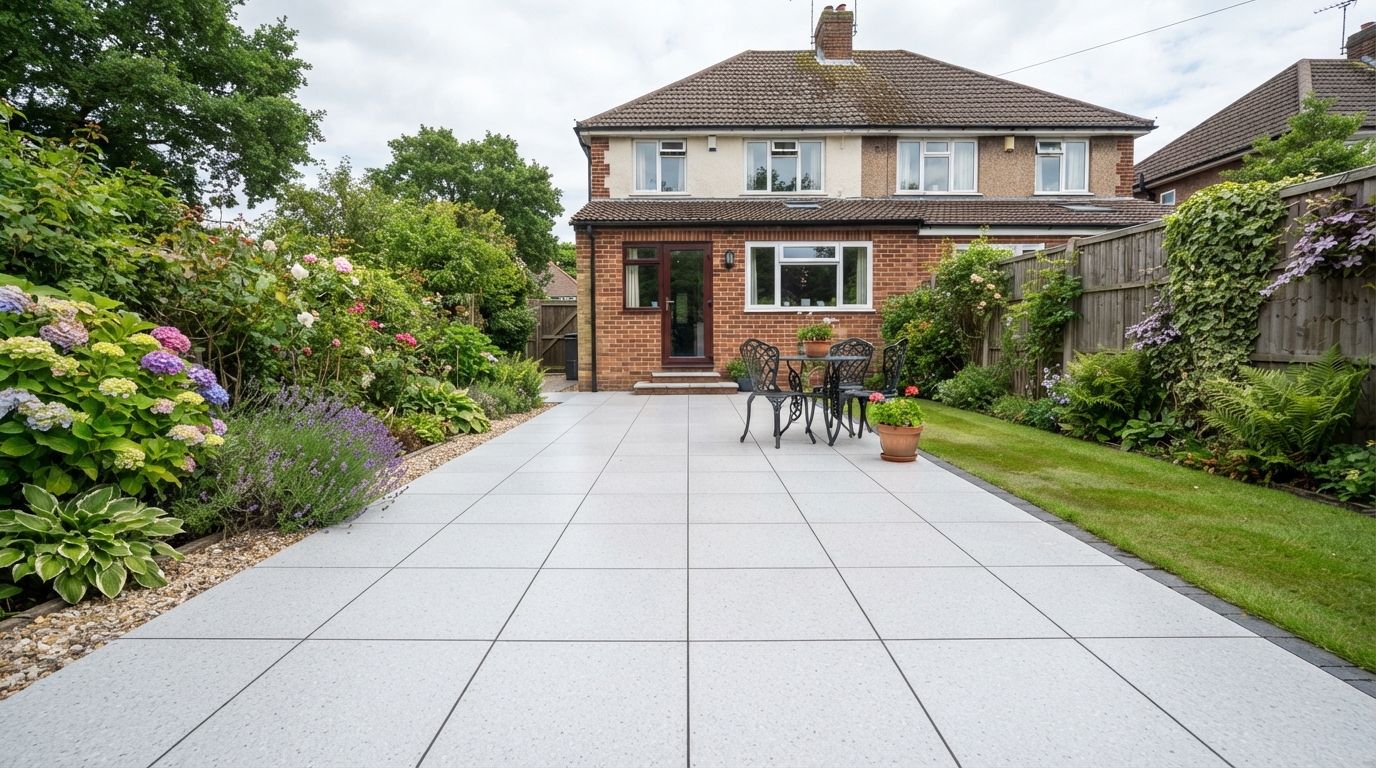
Porcelain has become one of the most popular paving choices for homeowners across Sussex and Surrey, and it is easy to see why. With its crisp, contemporary appearance, low porosity and excellent stain resistance, porcelain offers a smart, modern alternative to natural stone. But despite its reputation for being low maintenance, a porcelain patio is not immune to the effects of the British climate.
Porcelain patios are one of the easiest paving surfaces to maintain, but they still collect algae, dirt, black spot and atmospheric pollution over time. Cleaning them safely is about using the correct products, pressure and techniques rather than simply using maximum force.
In this guide, we explain how porcelain becomes dirty, the safest cleaning methods, common mistakes to avoid and when professional patio restoration is the better option for homeowners across Sussex and Surrey.
Why Porcelain Patios Become Dirty
One of the most common misconceptions about porcelain paving is that it is completely maintenance-free. Whilst it is true that porcelain is far less porous than natural stone, it is still an external surface exposed to everything the UK weather throws at it.
Over time, a combination of factors contributes to a porcelain patio losing its original appearance:
- Atmospheric pollution: Airborne dirt and pollution settle on the surface, creating a dull film.
- Organic growth: Algae and lichen can develop, particularly in shaded or damp areas.
- Rust stains: Metal furniture, fire pits and garden ornaments can leave rust marks on the surface.
- Leaf tannin: Fallen leaves left on the patio can leach tannins, leaving brown stains.
- General foot traffic: Mud, soil and everyday use gradually dull the surface.
The good news is that porcelain is far more resistant to staining than natural stone. The challenge is knowing which cleaning methods are safe and which products to avoid.
Is Porcelain Different from Natural Stone?
Yes, and the difference matters when it comes to cleaning. Natural stone such as Indian sandstone, limestone and York stone is porous, meaning it absorbs water, dirt and organic matter into its surface. This makes it more susceptible to deep staining and biological growth.
Porcelain, by contrast, is manufactured at extremely high temperatures, resulting in a dense, low-porosity surface. It does not absorb water in the same way, which means algae and lichen struggle to anchor themselves as effectively. However, organic growth and staining can still sit on the surface and should not be ignored.
Because porcelain behaves differently from natural stone, the cleaning approach must also be different. Products that are safe for sandstone may be unsuitable for porcelain, and vice versa. This is why identifying the surface material is the first step in any safe cleaning process.
Can Porcelain Be Pressure Washed?
Yes, porcelain can generally tolerate pressure washing better than many natural stone surfaces, but that does not mean maximum pressure is always the right approach. The key is using controlled pressure with the correct lance and nozzle rather than simply blasting the surface as hard as possible.
Excessive pressure can still cause problems, particularly around grout lines and jointing material. High-pressure water can erode the resin or cement jointing between porcelain slabs, leading to loose joints and an uneven surface over time.
Professional pressure washing is about selecting the correct pressure for the surface and the contamination. For porcelain, this usually means a moderate pressure that is strong enough to remove surface dirt and algae without damaging the joints or the surface finish.
What Cleaning Methods Work Best?
The most effective cleaning method for a porcelain patio depends on what is actually on the surface. Different types of contamination require different approaches.
- Surface dirt and algae: Controlled pressure washing with a suitable surface cleaner is often effective.
- Black spot and lichen: Specialist treatment may be required, particularly where lichen has begun to establish itself.
- Rust stains: Dedicated rust removers designed for porcelain can lift staining without damaging the surface.
- Leaf tannin and organic staining: Specialist cleaning products help break down organic matter before rinsing.
Because porcelain is non-porous, cleaning products tend to sit on the surface rather than being absorbed. This means the correct dwell time and rinsing process are important to achieve the best results without leaving residue behind.
What Causes Black Marks on Porcelain?
Black marks on porcelain are usually caused by one of three things: lichen (black spot), atmospheric pollution or rust. Identifying the cause is essential because each requires a different treatment.
Lichen is far less common on porcelain than on natural stone because the dense surface makes it difficult for the organism to anchor itself. However, in shaded, damp areas it can still develop, particularly on textured or riven porcelain surfaces.
Atmospheric pollution tends to settle as a dark film rather than the pinhead spots associated with lichen. Rust, on the other hand, usually appears as orange-brown marks beneath metal furniture or garden features.
Using the wrong treatment for the wrong stain is a common reason DIY cleaning produces disappointing results. A rust remover will not tackle lichen, and a biocide will not remove rust. This is why professional assessment helps ensure the correct product is selected for the specific contamination.
Can Porcelain Become Slippery?
Yes. Despite its modern, sleek appearance, porcelain can become slippery when algae develops on the surface. This is particularly common on patios that receive limited sunlight or are situated beneath mature trees.
Algae forms a thin, invisible film on the surface that becomes extremely slippery when wet. Many homeowners only realise how slippery their patio has become when the first heavy rain arrives or when someone slips on the damp surface.
Regular cleaning helps remove this algae film before it becomes hazardous. If you have noticed your patio becoming slippery, learn more in our guide on why patios become slippery.
How Professionals Clean Porcelain Patios
Skyhawk Exterior Cleaning assesses every porcelain patio before selecting the most appropriate cleaning process. The assessment considers:
- The type of contamination present
- The condition of the surface and jointing
- The level of shade and moisture
- Whether specialist stain removal is required
- Access to the patio and surrounding areas
Professional cleaning may involve a combination of controlled pressure washing, specialist cleaning products and targeted stain treatments. The aim is always to restore the appearance of the porcelain without causing damage to the surface or the jointing material.
How to Keep Porcelain Looking Its Best
Whilst professional cleaning restores the appearance of a porcelain patio, ongoing maintenance helps keep it looking its best for longer:
- Sweep regularly: Removing leaves and debris prevents tannin staining and reduces the food source for algae.
- Move furniture periodically: Preventing rust stains from metal legs sitting in damp conditions.
- Address stains early: Treating rust or organic staining promptly is far easier than removing established marks.
- Arrange periodic professional cleaning: Regular maintenance prevents algae and dirt from building up. Learn more in our guide on how often patios should be cleaned.
For patios in heavily shaded areas, more frequent cleaning may be beneficial. The best approach is to monitor the surface and arrange cleaning when the patio begins to look dull or slippery rather than waiting until it becomes heavily soiled.
Common Patio Problems and Treatments
| Problem | Typical Cause | Typical Treatment |
|---|---|---|
| Green algae | Damp, shaded conditions | Controlled pressure washing with suitable cleaning products |
| Black spot | Lichen establishing on the surface | Specialist biocidal treatment targeting lichen at a biological level |
| Rust stains | Metal furniture, fire pits or garden ornaments | Dedicated rust remover safe for use on porcelain surfaces |
| Dirt and pollution | Atmospheric build-up over time | Pressure washing with a suitable surface cleaner |
DIY Cleaning vs Professional Cleaning
| Factor | DIY Cleaning | Professional Cleaning |
|---|---|---|
| Equipment | Domestic pressure washer or hose | Commercial surface cleaners and specialist products |
| Risk of damage | Higher if incorrect pressure or products used | Lower due to controlled pressure and correct methods |
| Cleaning products | General household or patio cleaners | Specialist products selected for the specific staining |
| Typical results | Surface dirt removed; deeper staining often remains | Comprehensive clean including targeted stain removal |
Questions We Get Asked on Site
Can porcelain scratch?
Porcelain is highly resistant to scratching, but it is not indestructible. Dragging heavy furniture or using abrasive tools can mark the surface. Professional cleaning uses methods designed to clean without scratching.
Can you remove rust stains?
Yes, in most cases rust stains can be significantly improved using dedicated rust removers that are safe for porcelain. The success depends on how long the rust has been present and how deeply it has bonded with the surface.
Why is my porcelain patio slippery?
A slippery porcelain patio is usually caused by a thin film of algae developing on the surface, particularly in shaded or damp areas. Professional cleaning removes this film and restores slip resistance.
Does porcelain need sealing?
Most porcelain paving does not require sealing because of its low porosity. However, some textured or riven finishes may benefit from a suitable sealer. Each patio should be assessed individually.
Can pressure washing damage grout?
Excessive pressure or holding the lance too close to the joints can erode grout or resin jointing. Professional cleaning uses controlled pressure to clean the surface without damaging the joints.
Common Mistakes Homeowners Make
- Using patio acid cleaners: Acidic products designed for natural stone can etch or dull the surface of porcelain.
- Using excessive pressure: Blasting the surface on maximum pressure can damage jointing and does not necessarily produce better results.
- Using wire brushes: Abrasive brushes can scratch the surface and leave metal particles that cause rust stains.
- Leaving rust stains untreated: The longer rust sits on porcelain, the more difficult it becomes to remove.
- Assuming porcelain is maintenance-free: Whilst it is low maintenance, it still requires periodic cleaning to prevent algae and staining.
A Real Example from Sussex
A homeowner in Reigate contacted us after noticing their porcelain patio had developed two separate issues. The first was a green algae film across the shaded area beneath a large oak tree, which had made the surface slippery during wet weather. The second was a series of rust stains beneath their cast-iron garden furniture.
Because the two problems required different treatments, a single approach would not have been effective. We treated the algae with a controlled pressure wash using a suitable surface cleaner, then applied a dedicated rust remover to the affected areas beneath the furniture. The result was a clean, uniform patio with no damage to the porcelain surface or the jointing material.
This example illustrates why identifying the type of contamination is so important. Had the homeowner simply pressure washed the entire patio without treating the rust, the rust stains would have remained and potentially spread.
Key Takeaways
- ✓ Porcelain is low maintenance, not maintenance-free: Algae, rust and atmospheric dirt still build up over time.
- ✓ Identify the stain before cleaning: Different contamination requires different products and methods.
- ✓ Avoid acid cleaners and wire brushes: These can damage the porcelain surface and jointing material.
- ✓ Professional assessment ensures the safest method: Every patio is different and should be assessed before cleaning.
Frequently Asked Questions
How do you clean a porcelain patio?
Porcelain patios are best cleaned using controlled pressure washing with suitable cleaning products. The exact method depends on the type of contamination and the condition of the surface.
Can porcelain be pressure washed?
Yes, porcelain can tolerate pressure washing better than many natural stone surfaces, but the pressure should be controlled to avoid damaging the jointing material.
Can porcelain scratch?
Porcelain is highly scratch-resistant, but dragging heavy furniture or using abrasive tools can mark the surface. Professional cleaning uses methods designed to avoid scratching.
Does porcelain need sealing?
Most porcelain paving does not require sealing due to its low porosity. Some textured finishes may benefit from a sealer, but each patio should be assessed individually.
Can black spot be removed from porcelain?
Black spot is far less common on porcelain than on natural stone, but where it does appear, specialist treatment can help. Learn more in our guide on removing black spot from patios.
Can rust stains be removed?
Yes, dedicated rust removers that are safe for porcelain can significantly improve rust staining. The success depends on how long the rust has been present.
Can algae make porcelain slippery?
Yes. Algae forms a thin film on the surface that becomes extremely slippery when wet. Regular cleaning helps prevent this from developing.
How often should porcelain be cleaned?
Most porcelain patios benefit from professional cleaning every one to three years, depending on shade, tree cover and how quickly algae develops.
Can I clean porcelain myself?
Light cleaning is achievable for many homeowners, but established staining, rust and slippery algae often require specialist products and professional equipment.
When should I arrange professional cleaning?
If your patio has become slippery, discoloured or stained, or if DIY cleaning has not produced the desired results, professional assessment is recommended.
Conclusion
Porcelain is one of the most durable and attractive paving materials available, but it is not immune to the effects of the British climate. Algae, rust, atmospheric pollution and organic staining can all develop over time, and the safest way to restore the surface is to identify the contamination and select the correct cleaning method.
Every porcelain patio is different, which is why Skyhawk Exterior Cleaning assesses each surface individually before recommending the most appropriate cleaning process. Whether your patio has developed a slippery algae film, rust stains from garden furniture or general dirt build-up, the correct treatment depends on the specific contamination and the condition of the surface.
If your porcelain patio has lost its original appearance and you would like honest, professional advice on the best way to restore it, we would be happy to help. Arrange a free video quotation and we will assess your patio and recommend the most suitable approach.