
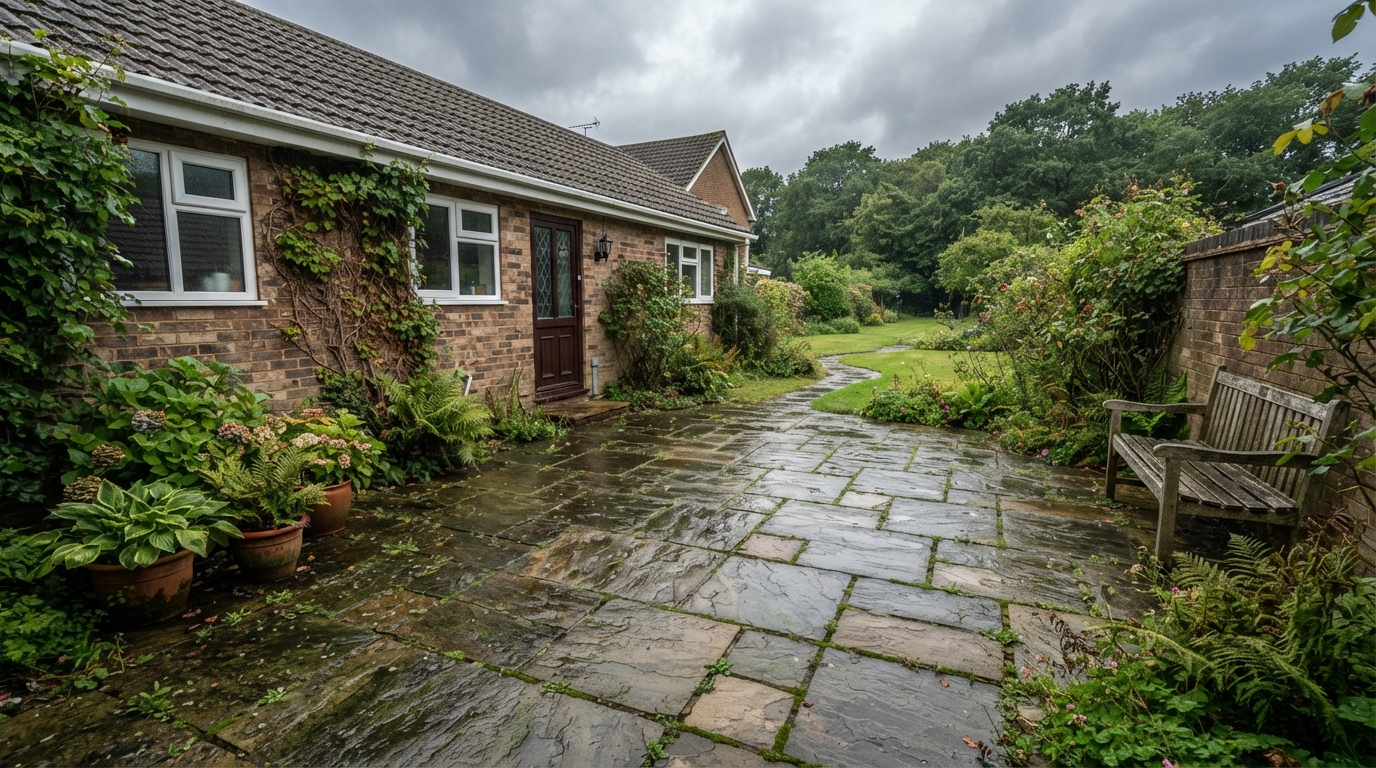
A slippery patio is more than just a nuisance. It is one of the most common concerns homeowners raise when the weather turns damp, and it is usually the moment people realise their patio has changed without them noticing.
A slippery patio is usually caused by algae, moss, lichen or other organic growth that develops on the surface over time. Shaded areas, damp conditions and poor drainage create the ideal environment for these organisms, making patios both unattractive and potentially hazardous. The good news is that the surface itself is rarely the problem. In almost every case, the slipperiness is caused by something growing on top of the paving that can be safely removed.
In this guide, we explain exactly why patios become slippery, which organisms are responsible, whether it is dangerous, and how professional patio cleaning can restore both the appearance and the safety of your outdoor space.
Why Patios Become Slippery
Patios do not become slippery on their own. The slipperiness is almost always caused by a thin, often invisible layer of biological growth that clings to the surface of the paving. This growth thrives in the damp, shaded conditions found in many gardens across Sussex and Surrey.
When moisture sits on a patio for long periods, it creates the perfect environment for algae, moss and lichen to colonise the surface. These organisms retain water, which makes the paving slick underfoot—particularly after rain or in the early morning when dew is present.
The slipperiness usually develops gradually. A patio that was perfectly safe when first laid can become hazardous over several seasons as organic growth establishes itself. Because the change happens slowly, many homeowners do not realise how slippery the surface has become until someone nearly slips.
Is a Slippery Patio Dangerous?
Yes, a slippery patio can be genuinely dangerous. While it is easy to dismiss a slick surface as a minor inconvenience, the reality is that slips and falls on outdoor paving are a common cause of injury, particularly for older adults, young children and anyone with mobility concerns.
The risk increases significantly in autumn and winter when surfaces stay damp for longer and temperatures drop. A wet, algae-covered patio can be as slippery as ice, and the danger is often not visible until it is too late.
Removing the organic growth that causes slipperiness is the most effective way to make the patio safe again. Professional cleaning restores the grip of the surface and reduces the risk of slips without the need to replace the paving.
Why Algae Is the Biggest Culprit
Algae is the most common cause of slippery patios. It is a simple organism that thrives in damp, shaded conditions and spreads quickly across surfaces that retain moisture. Algae often appears as a green, slimy film across the paving, particularly in areas that receive little direct sunlight.
What makes algae particularly slippery is its ability to retain water. Even when the rest of the patio appears dry, algae-covered patches can remain slick for hours after rainfall. This is why many people notice their patio is slippery in specific spots rather than across the whole surface.
Algae spreads via airborne spores, which means it can colonise any patio regardless of how well it is maintained. However, surfaces that stay damp for longer—such as shaded sandstone or porous concrete—tend to develop algae more rapidly than dense, sun-baked porcelain.
Moss vs Algae vs Lichen
While algae is the most common cause of slipperiness, moss and lichen also contribute to unsafe and unsightly patios. Understanding the difference helps explain why different cleaning methods are required.
Moss
Moss is a small, rootless plant that forms dense, cushion-like clumps on paving. It thrives in damp, shaded areas and often grows in the joints between slabs or in cracks where debris has accumulated. Moss retains a significant amount of water, which makes it both slippery and damaging over time.
Algae
Algae is a simpler organism than moss. It typically forms a thin green film across the surface rather than clumps. Algae spreads quickly in wet conditions and is the primary cause of the slick, slippery feel that develops on patios in autumn and winter.
Lichen (Black Spot)
Lichen is a more complex organism that often appears as dark spots or patches on the paving. Black spot, a common form of lichen, is particularly prevalent on Indian sandstone and other natural stone surfaces. Lichen is not as slippery as algae or moss, but it is far more difficult to remove and often requires specialist treatment.
Why Some Patios Become Slippery Faster Than Others
Not all patios become slippery at the same rate. The speed at which organic growth develops depends on a combination of environmental factors and the patio material itself.
- Shade: Patios that receive little direct sunlight stay damp for longer, which accelerates algae and moss growth.
- Nearby trees: Overhanging branches drop organic debris onto the paving, providing a food source for algae and moss.
- Poor drainage: Areas where water sits after rainfall create the ideal conditions for organic growth.
- Roof runoff: Water spilling from gutters or downpipes onto the patio keeps the surface damp. Having your gutters cleaned can help reduce this.
- Surface porosity: Porous materials such as sandstone and concrete retain moisture longer than dense materials like porcelain.
These factors explain why one side of a patio may become slippery while another remains clean. The surface material matters, but the environment matters just as much.
Does the Patio Material Matter?
Yes, the patio material has a significant influence on how quickly the surface becomes slippery. Porous materials absorb moisture and provide a better surface for algae to grip, while dense materials are more resistant.
However, no patio material is completely immune. Even porcelain, which is highly resistant to water absorption, can develop algae on its surface in shaded or damp conditions. The difference is usually how quickly the growth develops and how easy it is to remove.
This is why Skyhawk Exterior Cleaning assesses every patio individually before recommending a cleaning method. The correct approach depends on the material, the type of contamination and the condition of the surface.
Can Pressure Washing Solve the Problem?
Pressure washing can remove algae and moss from many patio surfaces, but it is not the right solution for every patio. The effectiveness and safety of pressure washing depends on the material, the pressure used and the operator's experience.
Excessive pressure can damage natural stone, remove jointing sand and etch delicate surfaces. On some materials, pressure washing alone may not remove black spot lichen, which requires specialist chemical treatment.
Professional cleaning is about selecting the correct method for the surface rather than simply using the highest pressure available. For some patios, a lower-pressure approach combined with specialist cleaning products produces a better, safer result.
How Professionals Safely Clean Slippery Patios
Skyhawk Exterior Cleaning professionally cleans a wide range of patio surfaces, including:
- Porcelain patios
- Indian sandstone
- Limestone
- York stone
- Concrete paving
- Block paved patios
Every patio is assessed individually before deciding:
- The most appropriate cleaning method
- The correct water pressure for the material
- Suitable cleaning products for the type of contamination
- Whether specialist treatments such as black spot removal are required
The correct cleaning method depends on the patio material, the type of contamination, the existing condition and previous maintenance. By assessing each surface individually, we ensure the patio is cleaned safely and effectively without unnecessary risk of damage.
How to Reduce Algae Returning
Professional cleaning removes the algae, moss and lichen that cause slipperiness, but no cleaning service can prevent organic growth from returning entirely. The environment around the patio will continue to influence how quickly regrowth occurs.
However, there are practical steps homeowners can take to help keep the patio cleaner for longer:
- Trim overhanging branches: Reducing shade and leaf drop helps the surface dry more quickly.
- Improve drainage: Addressing areas where water sits helps reduce the damp conditions algae needs.
- Sweep regularly: Removing leaves and debris prevents organic matter from breaking down into the surface.
- Arrange periodic cleaning: Regular maintenance prevents growth from becoming established. Learn more in our guide on how often patios should be cleaned.
For patios in heavily shaded or damp locations, more frequent cleaning may be required. The best approach is to monitor the surface and arrange cleaning when algae begins to appear rather than waiting until it becomes hazardous.
What Causes a Slippery Patio?
| Cause | Typical Appearance | Effect |
|---|---|---|
| Algae | Thin green film, often in patches | Primary cause of slipperiness, especially when damp |
| Moss | Dense green clumps in joints and cracks | Retains water, lifts paving and creates slippery patches |
| Lichen (black spot) | Dark spots or patches on the surface | Less slippery but difficult to remove without specialist treatment |
| Dirt & organic matter | Dull, grimy film across the surface | Provides a food source for algae and moss |
Questions We Get Asked on Site
Why is only half my patio slippery?
This is very common. The slippery side is usually the shaded side. If one part of your patio receives sunlight for most of the day, it will dry quickly and resist algae. The shaded side stays damp for longer, which allows algae to thrive. A north-facing patio in a garden with mature trees will almost always become slippery before a south-facing one.
Will the algae come back?
Algae will eventually return because it spreads via airborne spores. However, professional cleaning removes the existing growth and the organic matter it feeds on, which significantly slows regrowth. Regular maintenance keeps it under control before it becomes hazardous.
Is it safe for children and pets after cleaning?
Yes. We use cleaning products appropriate for the surface and the type of contamination. Once the patio has been rinsed and has dried, it is safe for the whole family to use.
Will pressure washing damage my patio?
Not when carried out by a professional who selects the correct pressure for the material. Damage usually occurs when excessive pressure is used on delicate surfaces. We assess every patio individually to ensure the safest cleaning method.
Can you remove black spot as well?
Yes. Black spot lichen requires specialist treatment rather than pressure washing alone. We can assess the extent of the contamination and recommend the most appropriate treatment for your patio.
Common Mistakes Homeowners Make
- Ignoring algae until the patio becomes hazardous. Algae develops gradually, so it is easy to overlook until someone nearly slips.
- Using excessive pressure. Hiring a pressure washer and using the highest setting can damage natural stone and remove jointing sand.
- Using bleach without understanding the patio material. Bleach and strong household chemicals can discolour or damage certain surfaces, particularly limestone and Indian sandstone.
- Cleaning one area but not treating the whole patio. Spot-cleaning leaves spores behind, which quickly spread back across the surface.
Key Takeaways
- A slippery patio is almost always caused by algae, moss or lichen growing on the surface.
- Shade, damp conditions and nearby trees accelerate organic growth.
- The patio material influences how quickly growth develops, but no surface is immune.
- Professional cleaning restores safety by removing the organisms that cause slipperiness.
- Different materials require different cleaning methods, which is why individual assessment is important.
- Regular maintenance helps keep the patio safe and reduces the rate of regrowth.
Frequently Asked Questions
Why is my patio slippery?
A slippery patio is usually caused by algae, moss or lichen growing on the surface. These organisms retain moisture and create a slick film, particularly in shaded or damp areas.
Can algae make patios dangerous?
Yes. Algae becomes very slippery when damp and is a common cause of slips and falls, particularly in autumn and winter.
Does pressure washing remove algae?
Pressure washing can remove algae, but the correct pressure must be used for the material. Excessive pressure can damage natural stone and remove jointing sand.
Will patio cleaning stop slips?
Professional cleaning removes the organisms that cause slipperiness, making the patio significantly safer. Regular maintenance helps prevent regrowth.
Can porcelain become slippery?
Yes. While porcelain is more resistant to algae than natural stone, it can still develop a slippery film in shaded or damp conditions.
Why is my patio green?
A green patio is usually caused by algae growing on the surface. It is most common in shaded areas that stay damp for long periods.
How often should patios be cleaned?
Most patios benefit from cleaning every one to three years, depending on the material, shade and tree cover. Shaded patios may need cleaning more frequently.
Can I clean a slippery patio myself?
Light cleaning is possible, but heavily contaminated patios and delicate natural stone often require professional equipment and the correct products to avoid damage.
Can professional cleaning remove black spot?
Yes. Black spot lichen requires specialist treatment rather than pressure washing alone. We can assess the contamination and recommend the appropriate treatment.
When should I arrange professional patio cleaning?
The best time is when you first notice the surface becoming slippery or green. Arranging cleaning early prevents the growth from becoming established. You can book a free video call with our team.
Conclusion
A slippery patio is not something you have to live with. In almost every case, the slipperiness is caused by algae, moss or lichen that can be safely removed with the right cleaning method. The key is identifying the cause and selecting an approach that suits the material rather than using the same technique for every surface.
If your patio has become slippery, green or hazardous, the simplest next step is to arrange a free video quotation. We will assess the surface individually, identify the material and recommend the safest and most effective cleaning method. Book your free video call today.