
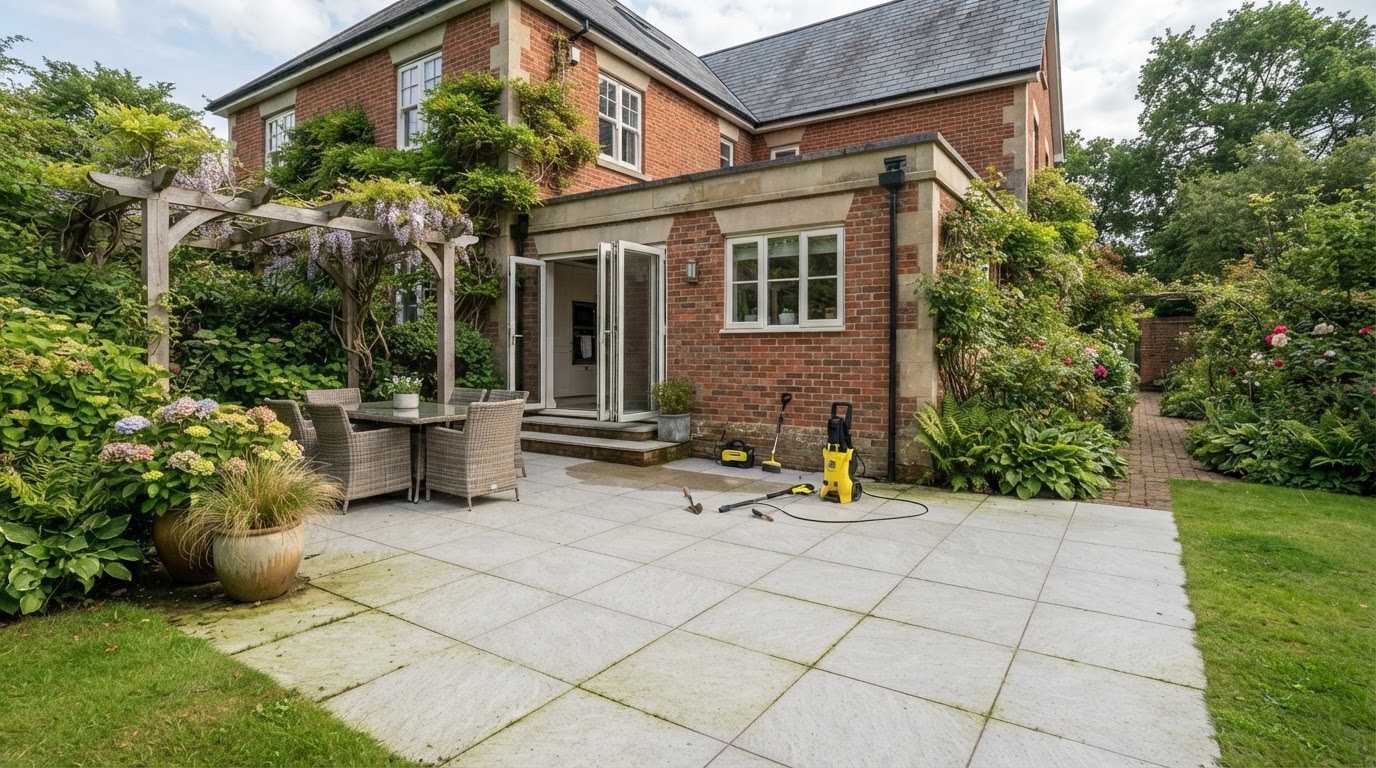
A clean patio transforms the way a garden looks and feels. Whether it is a space for summer barbecues, a quiet morning coffee spot or simply a practical area beside the back door, a well-maintained patio makes outdoor living far more enjoyable.
But patios do not stay clean on their own. Across Sussex and Surrey, the damp climate, mature trees and shaded gardens create ideal conditions for algae, moss and organic staining to develop on outdoor surfaces. Over time, what was once a bright, inviting patio can become green, slippery and tired-looking.
For most patios, professional cleaning every one to three years helps keep the surface looking its best. However, the ideal frequency depends on the patio material, surrounding environment, shade, tree cover and how quickly algae, moss and dirt build up. There is no single answer that suits every property, because every patio ages differently.
In this guide, we explain what influences how often a patio should be professionally cleaned, how different materials respond to the elements, and how to recognise the signs that your patio is ready for attention.
Why Patio Cleaning Is Preventative Maintenance
Patio cleaning is often treated as a cosmetic job, something homeowners arrange when the surface starts to look unsightly. In reality, professional patio cleaning is preventative maintenance that protects the surface and keeps it safer to use.
Algae and moss retain moisture against the paving. In winter, that moisture can freeze and expand, which places stress on the surface of natural stone and concrete. Over several seasons, this cycle of wetting, freezing and drying can contribute to surface degradation, particularly on older or more porous materials.
Regular cleaning also removes the organic matter that creates slippery conditions. A green, algae-covered patio is not just unsightly; it is a genuine slip hazard, particularly for young children, older family members and anyone with limited mobility. Keeping the surface clean helps keep it safe.
Preventative cleaning is typically quicker, gentler and more cost-effective than waiting until the patio is heavily stained. Removing contamination early usually means a less intensive cleaning process is required, which helps preserve the surface for longer.
How Often Should Different Patio Materials Be Cleaned?
There is no fixed rule for how often a patio should be cleaned, because the answer depends on the material, the environment and how the space is used. However, understanding how different surfaces respond to the elements helps explain why some patios need cleaning more frequently than others.
Porcelain Patios
Porcelain paving has become increasingly popular across Sussex and Surrey thanks to its sleek, contemporary appearance and low water absorption. Because porcelain absorbs very little moisture, it is generally more resistant to algae and moss than natural stone.
However, algae can still develop on the surface, particularly in shaded areas or where water sits after rainfall. Porcelain patios usually benefit from professional cleaning every two to three years, though shaded installations may need attention sooner.
Indian Sandstone
Indian sandstone is one of the most popular patio materials in the UK. Its natural riven surface and varied colouring make it attractive, but its slightly porous nature means it absorbs moisture and organic staining more readily than porcelain.
Indian sandstone patios often benefit from professional cleaning every one to two years, particularly those in shaded gardens or beneath trees. Black spot—a common form of lichen—is particularly prevalent on sandstone and usually requires specialist treatment rather than ordinary pressure washing alone.
Limestone
Limestone offers a smoother, more contemporary finish than sandstone, but it is also porous and sensitive to acidic cleaning products. Because it absorbs moisture readily, limestone can develop algae and green staining in damp conditions.
Most limestone patios benefit from cleaning every one to two years, using methods and products suited to the material. Using the wrong chemicals or excessive pressure can etch or damage the surface, which is why professional assessment is important.
York Stone
York stone is a premium, durable natural stone that develops a characteristic weathered appearance over time. It is less prone to rapid algae growth than sandstone but still benefits from periodic cleaning to remove organic build-up and atmospheric staining.
York stone patios typically need professional cleaning every two to three years, depending on location and shade.
Concrete Slabs
Concrete paving is practical and widely used. Its relatively porous surface can attract algae and moss, particularly in shaded areas. Concrete slabs usually benefit from cleaning every one to two years to keep them looking fresh and prevent organic growth from becoming established.
Block Paved Patios
Block paving is popular for both driveways and patios. The jointing sand between the blocks can trap seeds and organic matter, creating ideal conditions for weeds, moss and algae to develop. Block paved patios often need cleaning every one to two years, followed by re-sanding to keep the surface stable and tidy.
Does the Material Affect Cleaning Frequency?
Yes, the patio material is one of the most significant factors influencing how often cleaning is required. Porous materials such as Indian sandstone, limestone and concrete absorb moisture and organic staining more readily than dense materials like porcelain, which means they tend to discolour sooner.
However, material is only part of the equation. A porcelain patio in a heavily shaded garden beneath mature trees may need cleaning more frequently than an Indian sandstone patio in a sunny, open position. The environment matters just as much as the surface.
That is why Skyhawk Exterior Cleaning assesses every patio individually before recommending a cleaning schedule. The correct frequency depends on the combination of material, location and condition rather than a one-size-fits-all rule.
Why Shaded Patios Become Slippery Sooner
Shade is one of the biggest factors behind rapid algae growth on patios. Areas of the garden that receive little direct sunlight stay damper for longer, which creates the ideal environment for algae and moss to thrive.
This is particularly common in gardens across Sussex and Surrey where mature trees, tall hedges and neighbouring buildings cast shadows over paving for much of the day. A patio that is clean and safe in spring can become noticeably slippery by autumn if it sits in a shaded position.
If your patio is shaded, it will usually need cleaning more frequently than a patio in full sun. The surface itself is not the problem; the environment simply encourages faster organic growth.
How Nearby Trees Affect Patios
Mature trees are a wonderful feature of many gardens, but they have a significant impact on how quickly patios become dirty. Overhanging branches drop leaves, seeds, sap and organic debris onto the paving throughout the year. This material breaks down into the surface and provides a food source for algae and moss.
Properties surrounded by trees often need more frequent patio cleaning. Even after a thorough clean, debris will continue to fall, and some regrowth is inevitable. Regular cleaning helps keep the build-up under control before it becomes established.
If your patio sits beneath trees, you may also benefit from having your gutters cleaned at the same time, as leaves frequently block guttering on nearby roofs.
Can Regular Cleaning Extend the Life of a Patio?
Professional patio cleaning is not just about appearance. By removing algae, moss and organic matter, cleaning helps reduce the conditions that contribute to surface wear over time.
Moss and algae retain moisture against the paving. In winter, that moisture can freeze and thaw repeatedly, placing stress on the surface. Over several years, this cycle can contribute to pitting, flaking and general degradation, particularly on more porous materials.
Regular cleaning helps keep the surface dry and free of organic growth, which supports the long-term condition of the patio. It is a simple but effective way to protect your investment and keep the space looking its best for longer.
Signs Your Patio Is Ready for Cleaning
Instead of waiting for a fixed interval, it is usually better to watch for the signs that your patio is ready for attention. Common indicators include:
- Green discolouration: Algae is spreading across the surface, particularly in shaded areas.
- Slippery surface: The patio feels slick underfoot, especially when damp.
- Black spots: Small dark marks are appearing on the paving, which often indicate lichen.
- Faded colour: The original colour of the stone or porcelain is obscured by dirt and organic staining.
- Weeds in joints: Weeds or moss are growing between the paving slabs or blocks.
- Visible staining: Food, drink or leaf stains have become established.
- It has been years since the last clean: If you cannot remember when the patio was last professionally cleaned, it is probably overdue.
If you notice any of these signs, arranging a professional assessment is the simplest way to determine the most appropriate cleaning method and timescale.
Patio Surface Comparison
| Patio Surface | Typical Cleaning Considerations |
|---|---|
| Porcelain | Low water absorption; resistant to algae but can still develop surface staining in shade. Clean every 2–3 years. |
| Indian Sandstone | Slightly porous; prone to algae and black spot. Clean every 1–2 years, particularly in shaded gardens. |
| Limestone | Porous and sensitive to acidic products. Clean every 1–2 years using specialist methods. |
| Concrete Slabs | Practical and porous; attracts algae in damp conditions. Clean every 1–2 years. |
| Block Paving | Joints trap seeds and organic matter; prone to weeds and moss. Clean every 1–2 years and re-sand afterwards. |
Common Mistakes Homeowners Make
When it comes to patio maintenance, a few common mistakes can lead to unnecessary damage or disappointing results:
- Waiting until the patio becomes slippery. By the time a surface feels slick underfoot, algae is already well established. Cleaning earlier is safer and usually more effective.
- Using excessive pressure. High-pressure washing can damage the surface of natural stone, remove jointing sand and etch delicate materials. The correct pressure depends on the surface.
- Using the wrong cleaning products. Acidic cleaners can etch limestone and sandstone, while harsh chemicals can discolour porcelain. Specialist products are selected based on the material.
- Ignoring algae because it develops gradually. Because discolouration happens slowly, many homeowners do not realise how much the surface has changed until they compare it with a freshly cleaned area.
Professional patio cleaning avoids these pitfalls by assessing the surface first and selecting the safest, most effective method for the material.
How Skyhawk Cleans Patios Across Sussex and Surrey
Skyhawk Exterior Cleaning provides professional patio cleaning and restoration across Sussex and Surrey. We clean a wide range of surfaces, including:
- Porcelain patios
- Indian sandstone
- Limestone
- York stone
- Concrete slabs
- Block paved patios
Every patio is assessed individually before we decide on:
- Cleaning method
- Water pressure
- Cleaning products
- Whether specialist stain removal is required
- Whether re-sanding or sealing is appropriate
We do not use the same approach for every patio. A porcelain patio in a sunny position requires a very different process to a shaded Indian sandstone patio with established black spot. Professional assessment ensures the safest and most effective result.
A Tale of Two Patios
To illustrate why cleaning frequency varies so much, consider two common scenarios we see across Sussex and Surrey.
The first is a north-facing Indian sandstone patio in a mature garden near Dorking. Overhanging trees provide shade for most of the day, and leaves fall onto the paving each autumn. Within twelve months of its last clean, the surface has developed a visible green tinge and early black spot is appearing in the joints. This patio benefits from professional cleaning every year to keep the organic growth under control.
The second is a south-facing porcelain patio on a modern development near Horsham. The open position means the surface receives plenty of sunlight and dries quickly after rain. Two years after installation, the patio still looks bright and clean, with only minor surface dust to remove. This patio may not need professional cleaning for another year or two.
Both patios are in good condition, but their environments dictate very different cleaning schedules. This is exactly why we assess every patio individually rather than recommending the same interval for every property.
Key Takeaways
- Most patios benefit from professional cleaning every one to three years, but the ideal frequency depends on the material, environment and condition.
- Shaded patios and those beneath trees usually need cleaning more frequently because algae and moss thrive in damp conditions.
- Porous materials such as Indian sandstone and limestone discolour more quickly than dense materials like porcelain.
- Regular cleaning is preventative maintenance that helps keep the surface safe, clean and in good condition.
- The best time to clean a patio is when it needs cleaning, not after waiting for a fixed number of years.
- Professional assessment ensures the correct method and products are used for the specific surface.
Frequently Asked Questions
How often should patios be professionally cleaned?
Most patios benefit from cleaning every one to three years, depending on the material, shade, tree cover and how quickly organic growth develops. Shaded patios usually need cleaning more frequently.
Does porcelain need cleaning?
Yes. Porcelain is low-maintenance and resistant to algae, but it can still develop surface staining and organic growth, particularly in shaded areas. Periodic cleaning keeps it looking its best.
Can pressure washing damage patios?
Excessive pressure can damage natural stone, remove jointing sand and etch delicate surfaces. The correct pressure depends on the material, which is why professional assessment is important. See our guidance on pressure washing and paving.
How long do patio cleaning results last?
Results vary depending on the material, environment and weather exposure. A patio in full sun may stay cleaner for longer than one in shade beneath trees. Regular maintenance helps extend the results.
Can patio cleaning remove black spot?
Black spot is a form of lichen that can be difficult to remove with pressure washing alone. Specialist treatments are usually required to tackle black spot effectively, particularly on sandstone and limestone.
Should patios be sealed?
Sealing is appropriate for some surfaces and situations but not every patio requires it. We assess each patio individually and advise whether sealing would be beneficial based on the material and condition.
Can I clean my patio myself?
Light cleaning is possible for many homeowners, but heavily stained patios, delicate natural stone and specialist stain removal often require professional equipment and the correct products to avoid damage.
Does tree cover make a difference?
Yes. Overhanging trees drop leaves, seeds and organic debris onto the patio, which breaks down and encourages algae and moss. Patios beneath trees usually need cleaning more frequently.
Can algae make patios slippery?
Yes. Algae retains moisture on the surface and becomes particularly slippery when damp. Removing algae helps keep the patio safe to walk on, especially in winter.
When should I arrange professional patio cleaning?
The best time to clean a patio is when it needs cleaning. If you notice green discolouration, slippery patches or a faded appearance, it is time to arrange a professional assessment. You can book a free video call with our team.
Conclusion
There is no single answer to how often a patio should be professionally cleaned, because every surface and every garden is different. The most effective approach is to watch for the signs of algae, moss and staining, and arrange cleaning when the surface needs it rather than waiting for a fixed interval.
For most homes across Sussex and Surrey, professional cleaning every one to three years keeps patios looking their best and helps protect the surface from unnecessary wear. Shaded patios and those beneath trees may need attention sooner, while sunny porcelain installations may go longer between cleans.
If your patio is starting to look green, slippery or tired, the simplest next step is to arrange a free video quotation. We will assess the surface individually, identify the material and recommend the safest and most effective cleaning method. Book your free video call today.