
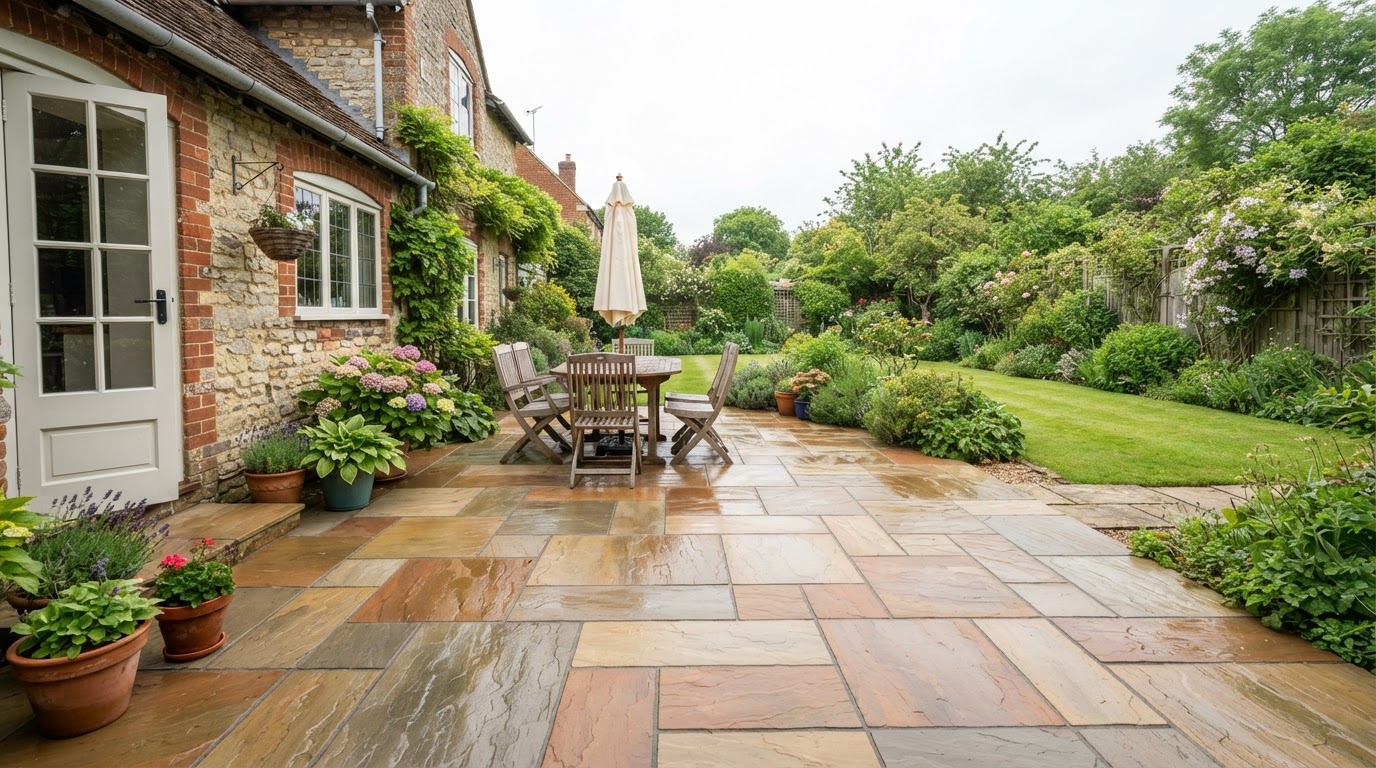
Indian sandstone has become one of the most popular paving choices for homeowners across Sussex and Surrey, and it is easy to see why. With its natural colour variation, riven texture and timeless appearance, it adds warmth and character to any garden or patio. But like all natural stone exposed to the British climate, it gradually collects algae, lichen, black spot and dirt.
Indian sandstone is a beautiful natural paving material that can last for many years, but like all outdoor surfaces it gradually collects algae, lichen, black spot and dirt. Cleaning it safely is about selecting the right products and techniques rather than simply using the highest pressure possible.
In this guide, we explain how Indian sandstone becomes stained, the safest cleaning methods, common mistakes to avoid and when professional patio restoration is the better option for homeowners across Sussex and Surrey.
What Makes Indian Sandstone Different?
Indian sandstone is a natural sedimentary rock, which means it is formed over millions of years from compressed sediment. Unlike manufactured surfaces such as porcelain or concrete, natural sandstone is porous. It absorbs water, dirt and organic matter into its surface, making it more susceptible to staining and biological growth than denser materials.
This porosity is both a strength and a weakness. It gives sandstone its characteristic natural appearance and allows it to weather beautifully, but it also means algae, lichen and black spot can anchor themselves deep within the surface over time. Once established, these contaminants are far more difficult to remove than surface dirt alone.
Indian sandstone also varies significantly in density and finish. Some slabs are relatively dense and smooth, whilst others are softer and more riven. This variation means that the cleaning approach must be tailored to the individual patio rather than applying the same method to every surface.
Why Indian Sandstone Becomes Green or Black
The damp, shaded conditions common across Sussex and Surrey create the perfect environment for organic growth. Over time, several factors contribute to sandstone losing its original appearance:
- Algae: Thrives in damp, shaded areas and forms a green film on the surface.
- Moss: Establishes itself in the joints and surface texture, retaining moisture.
- Lichen (black spot): Deeply rooted organisms that embed themselves into the porous surface.
- Atmospheric pollution: Airborne dirt settles on the surface, creating a dull, dark film.
- Rust stains: Metal furniture, fire pits or garden ornaments leave orange-brown marks.
- Organic staining: Fallen leaves, berries and plant matter leach tannins into the stone.
Because sandstone is porous, these contaminants can penetrate below the surface. This is why cleaning methods that work well on non-porous materials like porcelain may not be effective on sandstone, and why some cleaning products can actually make the problem worse.
Can Indian Sandstone Be Pressure Washed?
Yes, Indian sandstone can generally be pressure washed, but the pressure and technique must be carefully controlled. The key is using an appropriate pressure that is strong enough to remove surface contamination without damaging the stone face or eroding the pointing between the slabs.
Excessive pressure can cause several problems:
- Surface damage: The top layer of the stone can be eroded, particularly on softer or more riven slabs.
- Pointing damage: High-pressure water can wash out the jointing material between the slabs.
- Uneven appearance: Inconsistent pressure can leave streaks and patches across the patio.
- Deeper staining exposure: Removing the surface layer can sometimes reveal deeper staining that was previously hidden.
Professional pressure washing is about selecting the correct pressure, lance and nozzle for the specific stone. For Indian sandstone, this usually means a controlled pressure that removes contamination without compromising the integrity of the surface.
What Cleaning Methods Are Commonly Used?
The most effective cleaning method depends on what is actually on the surface. Different types of contamination require different approaches:
- Surface dirt and algae: Controlled pressure washing with a suitable surface cleaner is often effective.
- Black spot and lichen: Specialist biocidal treatment is usually required to target the organism at a biological level.
- Rust stains: Dedicated rust removers designed for natural stone can lift staining without etching the surface.
- Moss: Manual removal followed by treatment helps prevent rapid regrowth.
- Organic staining: Specialist cleaning products break down tannins and organic matter before rinsing.
Because sandstone is porous, cleaning products can be absorbed into the surface. This means the correct dwell time and rinsing process are essential to achieve the best results without leaving residue or causing discolouration.
Why Black Spot Can Be Difficult to Remove
Black spot is one of the most challenging forms of staining found on Indian sandstone. It is caused by lichen, a symbiotic organism that embeds itself into the porous surface of the stone. Over time, the lichen extends root-like structures into the stone itself, making it far more difficult to remove than surface dirt or algae.
This is why pressure washing alone often fails to remove established black spot. The visible part of the lichen may be blasted away, but the roots remain embedded in the stone, allowing the black spot to return relatively quickly.
Specialist biocidal treatments are designed to target lichen at a biological level, killing the organism and causing it to break down over time. This approach is gentler on the stone and often produces longer-lasting results than aggressive pressure washing alone. Learn more in our guide on how to remove black spot from a patio.
Can Indian Sandstone Become Slippery?
Yes. Despite its natural riven texture, which provides better grip than many smoother surfaces, Indian sandstone can still become slippery when algae develops on the surface. This is particularly common on patios that receive limited sunlight or are situated beneath mature trees.
Algae forms a thin, invisible film on the surface that becomes extremely slippery when wet. Many homeowners only realise how slippery their patio has become when the first heavy rain arrives or when someone slips on the damp surface.
Regular cleaning helps remove this algae film before it becomes hazardous. If you have noticed your patio becoming slippery, learn more in our guide on why patios become slippery.
How Professionals Clean Sandstone Safely
Skyhawk Exterior Cleaning assesses every Indian sandstone patio individually before selecting the most appropriate cleaning process. The assessment considers:
- The density and finish of the stone
- The type of contamination present
- The condition of the pointing and jointing
- The level of shade and moisture
- Whether specialist stain removal is required
- Access to the patio and surrounding areas
Professional cleaning may involve a combination of controlled pressure washing, specialist biocidal treatments and targeted stain removal. The aim is always to restore the natural appearance of the sandstone without causing damage to the surface or the pointing material.
How to Keep Sandstone Cleaner for Longer
Whilst professional cleaning restores the appearance of an Indian sandstone patio, ongoing maintenance helps keep it looking its best for longer:
- Sweep regularly: Removing leaves and debris prevents tannin staining and reduces the food source for algae.
- Move furniture periodically: Preventing rust stains from metal legs sitting in damp conditions.
- Address stains early: Treating rust or organic staining promptly is far easier than removing established marks.
- Arrange periodic professional cleaning: Regular maintenance prevents algae and black spot from becoming established. Learn more in our guide on how often patios should be cleaned.
For patios in heavily shaded areas, more frequent cleaning may be beneficial. The best approach is to monitor the surface and arrange cleaning when the patio begins to look dull or slippery rather than waiting until it becomes heavily soiled.
Common Sandstone Problems and Treatments
| Problem | Typical Cause | Typical Treatment |
|---|---|---|
| Green algae | Damp, shaded conditions | Controlled pressure washing with suitable cleaning products |
| Black spot | Lichen embedding into the porous surface | Specialist biocidal treatment targeting lichen at a biological level |
| Moss | Moisture and organic debris in joints | Manual removal followed by treatment and rinsing |
| Rust stains | Metal furniture, fire pits or garden ornaments | Dedicated rust remover safe for natural stone surfaces |
| Organic staining | Fallen leaves, berries and plant matter | Specialist cleaning products to break down tannins before rinsing |
DIY Cleaning vs Professional Cleaning
| Factor | DIY Cleaning | Professional Cleaning |
|---|---|---|
| Equipment | Domestic pressure washer with limited pressure control | Professional equipment with adjustable pressure and surface cleaners |
| Risk of damage | Higher risk of etching the stone or damaging pointing | Lower risk due to controlled pressure and correct technique |
| Cleaning products | Limited access to specialist stone-safe products | Access to professional-grade biocides and stain removers |
| Stain removal | Surface-level cleaning only | Targeted treatment for black spot, rust and organic staining |
| Typical results | Improved appearance but often temporary | Longer-lasting results with reduced regrowth |
Questions We Get Asked on Site
Can sandstone lose its colour?
Indian sandstone does not lose its colour in the sense that the pigment fades, but a build-up of algae, dirt and atmospheric pollution can dull the surface and mask the natural colour. Professional cleaning often reveals the original tones that have been hidden beneath layers of contamination.
Can you remove black spot completely?
Complete removal depends on how deeply the lichen has embedded into the stone. Specialist biocidal treatments can significantly reduce black spot, but very established growth may require repeated treatments over time. We always provide honest expectations before starting any work.
Why is my sandstone turning green?
Green discolouration is almost always algae. It thrives in damp, shaded conditions and is particularly common on north-facing patios or areas beneath trees. Regular cleaning helps keep it under control.
Can you remove rust stains?
Yes, dedicated rust removers that are safe for natural stone can significantly improve rust staining. The success depends on how long the rust has been present and how deeply it has penetrated the porous surface.
Will pressure washing damage the pointing?
Excessive pressure can damage pointing, which is why professional cleaning uses controlled pressure and the correct technique. The aim is to remove contamination without compromising the jointing material between the slabs.
Common Mistakes Homeowners Make
- Using excessive pressure: Blasting the surface with maximum pressure can etch the stone and damage the pointing.
- Using acid-based cleaners without checking suitability: Acid can etch and discolour natural stone, particularly sandstone and limestone.
- Using wire brushes: Abrasive brushes can scratch the surface and leave metal deposits that cause rust staining.
- Ignoring algae until the patio becomes slippery: Algae develops gradually, but once it forms a film the surface becomes hazardous when wet.
- Treating all natural stone the same: Indian sandstone, limestone and York stone all have different properties and require different cleaning approaches.
Key Takeaways
- Indian sandstone is porous, meaning algae, lichen and black spot can embed themselves into the surface over time.
- Pressure washing can be safe when carried out with controlled pressure and the correct technique.
- Black spot requires specialist biocidal treatment rather than pressure washing alone.
- Different types of staining require different cleaning products and methods.
- Every sandstone patio should be assessed individually before choosing the safest cleaning approach.
- Regular maintenance helps prevent contamination from becoming established and keeps the patio looking its best.
Frequently Asked Questions
How do you clean Indian sandstone?
Indian sandstone is best cleaned using a combination of controlled pressure washing and specialist cleaning products tailored to the type of contamination. The exact method depends on the condition of the stone and the level of staining.
Can Indian sandstone be pressure washed?
Yes, but the pressure must be carefully controlled to avoid damaging the stone surface or the pointing. Professional equipment allows for adjustable pressure and the correct technique for natural stone.
Can sandstone lose its colour?
Sandstone does not fade, but algae, dirt and pollution can mask the natural colour. Professional cleaning often restores the original appearance by removing the build-up of contamination.
Can black spot be removed from sandstone?
Black spot can be significantly reduced using specialist biocidal treatments. The success depends on how deeply the lichen has embedded into the porous surface, and some very established growth may require repeated treatment.
Can sandstone become slippery?
Yes. Algae forms a thin film on the surface that becomes extremely slippery when wet. Regular cleaning helps prevent this from developing.
Does sandstone need sealing?
Sealing can help protect sandstone by reducing porosity and slowing the rate at which contamination penetrates the surface. However, sealing should be considered on a case-by-case basis and is not always necessary for every patio.
Can rust stains be removed from sandstone?
Yes, dedicated rust removers that are safe for natural stone can significantly improve rust staining. The success depends on how long the rust has been present and how deeply it has penetrated.
How often should sandstone be cleaned?
Most Indian sandstone patios benefit from professional cleaning every one to three years, depending on shade, tree cover and how quickly algae and black spot develop.
Can I clean sandstone myself?
Light cleaning is achievable for many homeowners, but established black spot, rust stains and slippery algae often require specialist products and professional equipment to achieve safe, lasting results.
When should I arrange professional patio cleaning?
If your patio has become slippery, discoloured or stained, or if DIY cleaning has not produced the desired results, professional assessment is recommended. You can arrange a free video quotation at a time that suits you.
Conclusion
Indian sandstone is a stunning natural material that can enhance any garden, but its porosity means it requires careful, knowledgeable cleaning to keep it looking its best. The safest approach is always to assess the stone individually and select the most appropriate cleaning method for the specific contamination.
Whether your patio has developed green algae, stubborn black spot or rust stains, professional cleaning can restore its appearance without the risk of damage that comes with excessive pressure or unsuitable chemicals. If you would like honest advice about your sandstone patio, we are happy to help.
To arrange a free video quotation or learn more about our services across Sussex and Surrey, please get in touch. You can also visit our FAQs page for answers to other common questions.