
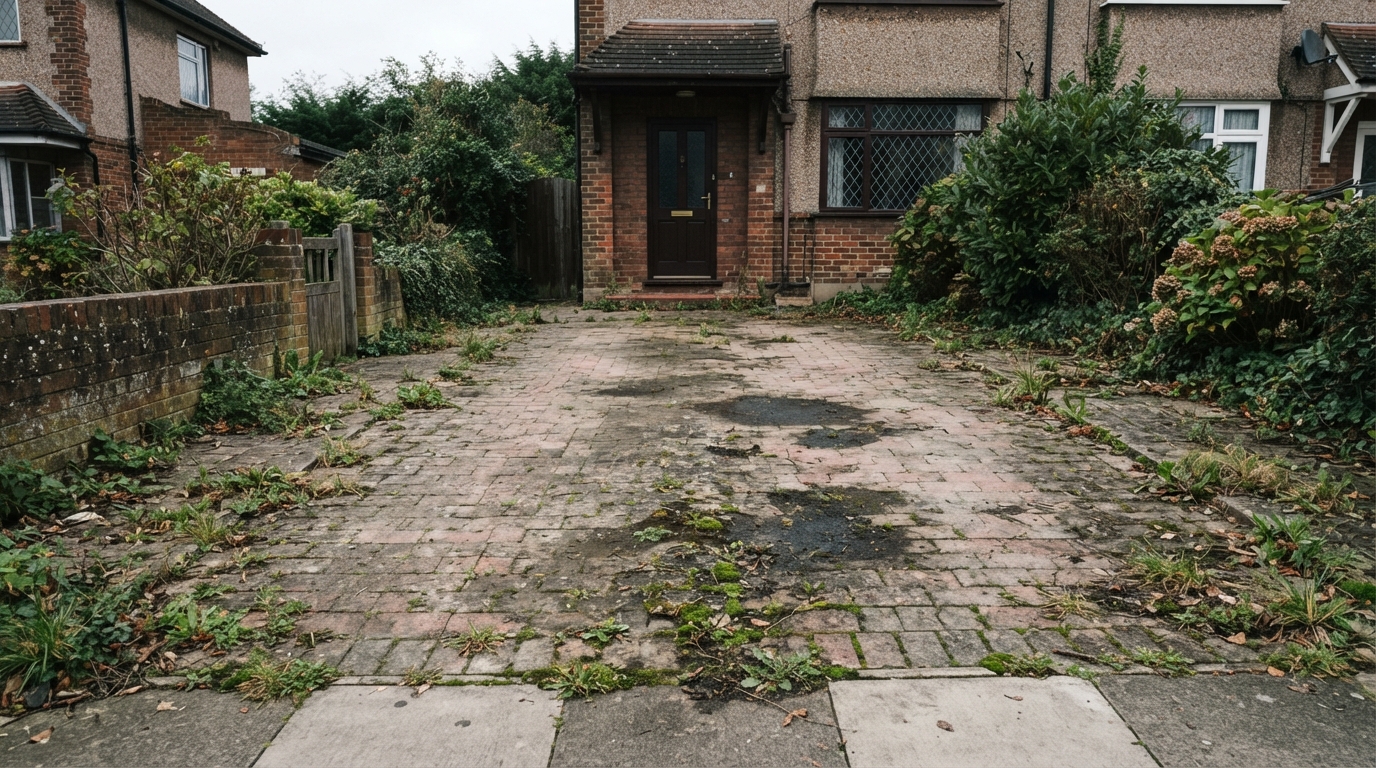
If you own a home in Sussex or Surrey, your driveway is one of the largest and most visible exterior surfaces on your property. It is also one of the most exposed. Day after day, it sits beneath the sky, absorbing rain, gathering leaves, and slowly collecting moss, algae, dirt and organic debris.
The challenge is that driveways deteriorate gradually. Because the change happens so slowly, many homeowners do not notice how tired their driveway has become until the surface is heavily stained or until they see it alongside a freshly cleaned one. Recognising the early warning signs can help you stay ahead of the curve, keeping maintenance simpler and more cost-effective.
Here are ten clear signs your driveway needs professional cleaning, along with practical advice on what to look for and why acting early matters.
Why Recognising the Signs Early Matters
Driveway cleaning is preventative maintenance. When moss, algae, weeds and stains are dealt with early, the surface is easier to restore and the results last longer. Left untreated, organic growth becomes more deeply established, oil stains penetrate further into the surface, and block paving joints lose their stability.
By the time a driveway looks genuinely neglected, restoration often requires more time, more specialist treatment and more effort. Spotting the signs early keeps the process straightforward and protects the long-term condition of the surface.
1. Moss Is Spreading Across the Surface
Moss is one of the most common issues affecting driveways across Sussex and Surrey. It thrives in damp, shaded conditions and spreads quickly across surfaces that retain moisture.
On a driveway, moss is more than a cosmetic problem. It acts like a sponge, holding water against the surface. This can make paving slippery underfoot, particularly during wet weather, and it creates the kind of damp environment that encourages further organic growth.
If you notice patches of green moss spreading across your block paving, concrete or natural stone, it is a clear sign the driveway would benefit from professional cleaning before the growth becomes more deeply established.
2. Green Algae Is Appearing
Algae often appears as a thin green film across driveways, particularly in shaded areas or on surfaces that stay damp for long periods. It is especially common on north-facing driveways or those surrounded by mature trees.
Whilst algae may seem harmless, it can make surfaces surprisingly slippery. It also discolours the driveway, dulling the original colour of the material and giving the whole area a tired, unkempt appearance.
Professional cleaning removes algae from the surface, and a suitable treatment can help slow its return in shaded areas.
3. Black Spots Won't Wash Away
Black spot is a particularly stubborn form of lichen that embeds itself into porous surfaces such as block paving, concrete and natural stone. It appears as small dark dots scattered across the driveway and is notoriously difficult to remove with ordinary pressure washing alone.
Many homeowners try to wash black spot away with a domestic pressure washer, only to find that it barely shifts. This is because black spot roots itself into the pores of the material. Specialist cleaning treatments are often required to break it down effectively.
If black spot is spreading across your driveway, it is a strong sign that professional cleaning would deliver far better results than DIY methods.
4. Weeds Are Growing Between Block Paving
Weeds between block paving are a common frustration. They do not usually grow up through the sub-base. In most cases, airborne seeds settle into the joints where dirt and organic matter have accumulated, creating the perfect environment for new growth.
Once weeds take hold, they widen the joints, dislodge jointing sand and make the surface look untidy. Simply pulling them out does not address the underlying cause, because the organic matter remains in the joints, ready for the next batch of seeds.
Professional cleaning removes the debris that weeds thrive in, and re-sanding the joints afterwards helps stabilise the paving and makes future maintenance easier.
5. Oil Stains Are Becoming More Noticeable
Oil stains are a common sight on driveways, particularly where vehicles are parked regularly. Fresh stains are much easier to treat because the oil has not yet penetrated deeply into the surface. Older stains, however, can soak into porous materials and become far more difficult to remove.
If you have noticed oil stains becoming more visible on your driveway, it is worth having them assessed sooner rather than later. Professional cleaning can often significantly improve the appearance of oil stains, although results depend on the age of the stain and the type of surface.
For more detailed guidance, see our article on how to remove oil stains from a driveway.
6. The Original Colour of the Driveway Has Disappeared
One of the most surprising things about driveway cleaning is how much the original colour changes over time. Moss, algae, dirt and pollution gradually build up, dulling the surface until the driveway looks a completely different shade to when it was first laid.
Many homeowners forget what their driveway originally looked like. It is only after professional cleaning that the transformation becomes clear. Block paving that appeared dark grey or green can emerge looking bright, clean and almost new.
If your driveway looks dull, flat or uniformly dirty, professional cleaning will likely restore a dramatic difference in colour and appearance.
7. Sand Is Missing Between the Blocks
Block paving relies on kiln-dried sand in the joints to keep the blocks stable. Over time, rain, traffic and cleaning can wash this sand away. When the joints are empty, blocks become loose, weeds establish themselves more easily, and the driveway loses its structural integrity.
If you can see gaps between your blocks or the joints look visibly empty, it is a sign the driveway needs cleaning followed by re-sanding. Replacing the jointing sand is an essential finishing step that helps keep the surface stable and looking its best.
8. Water Doesn't Drain Away Properly
If rainwater sits on the surface of your driveway rather than draining away, it may indicate a build-up of debris, moss or organic matter affecting the drainage. This is particularly common on block paving where the joints have become clogged, or on surfaces where moss has created a barrier across the top.
Poor drainage not only looks unsightly, it can also contribute to further moss and algae growth, because the surface stays wet for longer. Professional cleaning helps restore proper drainage by clearing the channels and joints that allow water to flow.
9. Visitors Comment That the Driveway Looks Tired
Sometimes it takes an outside perspective to notice how a driveway has changed. If visitors, neighbours or family members have commented that your driveway looks tired or worn, it is often a sign that the deterioration has become noticeable.
Kerb appeal matters, whether you are planning to sell your home or simply take pride in its appearance. A clean driveway is one of the most effective ways to improve the front of your property. For more on this, see our article on whether driveway cleaning increases property value.
10. You Can't Remember the Last Time It Was Professionally Cleaned
Preventative maintenance is always more effective than reactive cleaning. If you cannot remember the last time your driveway was professionally cleaned, it is probably overdue.
Regular cleaning helps prevent moss, algae and weeds from becoming deeply established, keeps the surface looking its best, and makes each subsequent clean simpler and more cost-effective. For guidance on frequency, see our article on how often you should have your driveway professionally cleaned.
Can Every Driveway Be Professionally Cleaned?
Most driveways can be professionally cleaned, but the correct method depends on the surface. Every driveway should first be assessed based on:
- Surface material
- Age
- Condition
- Existing stains
- Previous repairs
Skyhawk Exterior Cleaning professionally cleans a wide range of driveway surfaces, including:
- Block paving
- Concrete
- Resin-bound surfaces
- Natural stone
- Pattern imprinted concrete
- Tarmac, using suitable cleaning methods
The correct cleaning process depends on the surface rather than using maximum pressure on every driveway. Professional assessment ensures the safest and most effective approach for your specific material. For more on this, see our article on whether pressure washing can damage block paving.
Warning Signs and Why They Matter
| Warning Sign | Why It Matters |
|---|---|
| Moss | Retains moisture, makes surfaces slippery and encourages further growth |
| Black Spot | Embeds into porous surfaces and requires specialist treatment |
| Weeds | Grow in accumulated debris, widen joints and dislodge sand |
| Oil Stains | Penetrate deeper over time, making older stains harder to remove |
| Missing Sand | Reduces block stability and allows weeds to establish |
| Poor Drainage | Indicates clogged joints or surface build-up, leading to more growth |
| Faded Appearance | Suggests a build-up of dirt and organic matter dulling the surface |
Common Mistakes Homeowners Make
When it comes to driveway maintenance, a few common mistakes can make the situation worse rather than better:
- Waiting until the driveway looks extremely dirty. The longer organic growth is left, the harder it becomes to remove.
- Hiring equipment without understanding the correct pressure. Using excessive pressure can damage some surfaces. See our guide on cleaning a driveway yourself.
- Cleaning block paving without replacing jointing sand. Re-sanding is essential to keep blocks stable after cleaning.
- Ignoring early moss and algae growth. Small patches spread quickly, particularly in shaded areas.
A Real Example From Sussex
We recently worked with a homeowner in Horsham whose block paved driveway had gradually deteriorated over several years. The change was so slow that they had not realised how much moss and black spot had spread. By the time they contacted us, the original colour of the paving was barely visible, weeds had established themselves in most of the joints, and the sand had washed away entirely.
After a professional clean, re-sanding with kiln-dried sand and a suitable treatment, the transformation was striking. The blocks looked almost new, the surface drained properly again, and the joints were stable. The homeowner remarked that they had forgotten the driveway had ever looked that clean. It was a clear reminder that gradual deterioration is easy to miss until the results are compared side by side.
Key Takeaways
- Driveways deteriorate gradually, so the signs are easy to miss until the surface is heavily soiled.
- Moss, algae, black spot, weeds and oil stains are all indicators that professional cleaning would help.
- Missing jointing sand and poor drainage are structural signs that the surface needs attention.
- Different driveway materials require different cleaning methods, so professional assessment matters.
- Acting early keeps maintenance simpler, more effective and more cost-efficient.
- Re-sanding block paving after cleaning is essential to restore stability.
Frequently Asked Questions
How do I know if my driveway needs cleaning?
If you can see moss, algae, weeds, black spot, oil stains or a general dulling of the surface colour, your driveway would benefit from professional cleaning. If you cannot remember the last time it was cleaned, it is probably overdue.
Can black spot be removed?
Yes, black spot can be removed, but it often requires specialist treatment rather than ordinary pressure washing. Because it embeds into porous surfaces, professional cleaning products and methods are usually needed for effective results.
Can driveway cleaning remove moss?
Yes. Professional cleaning physically removes moss from the surface, and a suitable treatment helps tackle remaining spores and slow regrowth, particularly in shaded areas.
How often should a driveway be professionally cleaned?
For most homes, a professional clean every one to three years is sufficient, depending on the surface, surrounding trees and how quickly moss and algae return.
Can weeds damage block paving?
Weeds do not usually damage the blocks themselves, but they widen the joints, dislodge jointing sand and create the conditions for further growth. Removing them and re-sanding the joints helps keep the paving stable.
Should block paving be re-sanded?
Yes. Re-sanding is an essential step after cleaning block paving. It replaces the jointing sand removed during cleaning and helps keep the blocks stable and properly aligned.
Can pressure washing damage driveways?
Pressure washing can damage some surfaces if the wrong pressure or technique is used. Professional cleaning is about selecting the correct method for the individual surface rather than simply using maximum pressure.
Can oil stains be removed?
Oil stains can often be significantly improved, particularly if treated early. Older stains that have penetrated deeply may be more difficult to remove completely, so it is best to address them sooner rather than later.
Is driveway cleaning worth it?
Yes. Professional cleaning improves appearance, removes slippery organic growth, helps maintain the surface and makes ongoing maintenance simpler. It is one of the most effective ways to improve the front of your property.
When should I book professional driveway cleaning?
The best time to book is when you first notice the warning signs. Acting early prevents organic growth from becoming deeply established and keeps the restoration process straightforward.
Final Conclusion
Your driveway is one of the most visible parts of your home, and it works hard every day. Recognising the early signs that it needs professional cleaning helps you stay ahead of moss, algae, weeds and stains before they become more difficult to manage.
Whether your driveway is block paving, concrete, resin-bound, natural stone or tarmac, professional cleaning tailored to the surface can dramatically improve its appearance, safety and long-term condition. If you have noticed any of the signs above, it is probably time to have your driveway assessed.
Explore our driveway cleaning services, learn about our pressure washing options, or find out more about our patio restoration solutions.
To get an accurate, upfront price, book a free video call quote or call our expert team on 01293 922 243. You can also view our frequently asked questions for more information.
Skyhawk Exterior Cleaning Ltd
9 Hylands Close, Crawley, RH10 6RX
Phone: 01293 922 243
Website: skyhawkexteriorcleaning.co.uk
Serving 130+ locations across Surrey & Sussex
Skyhawk Exterior Cleaning – A Hawk Eye for Detail.