Can You Pressure Wash Solar Panels?
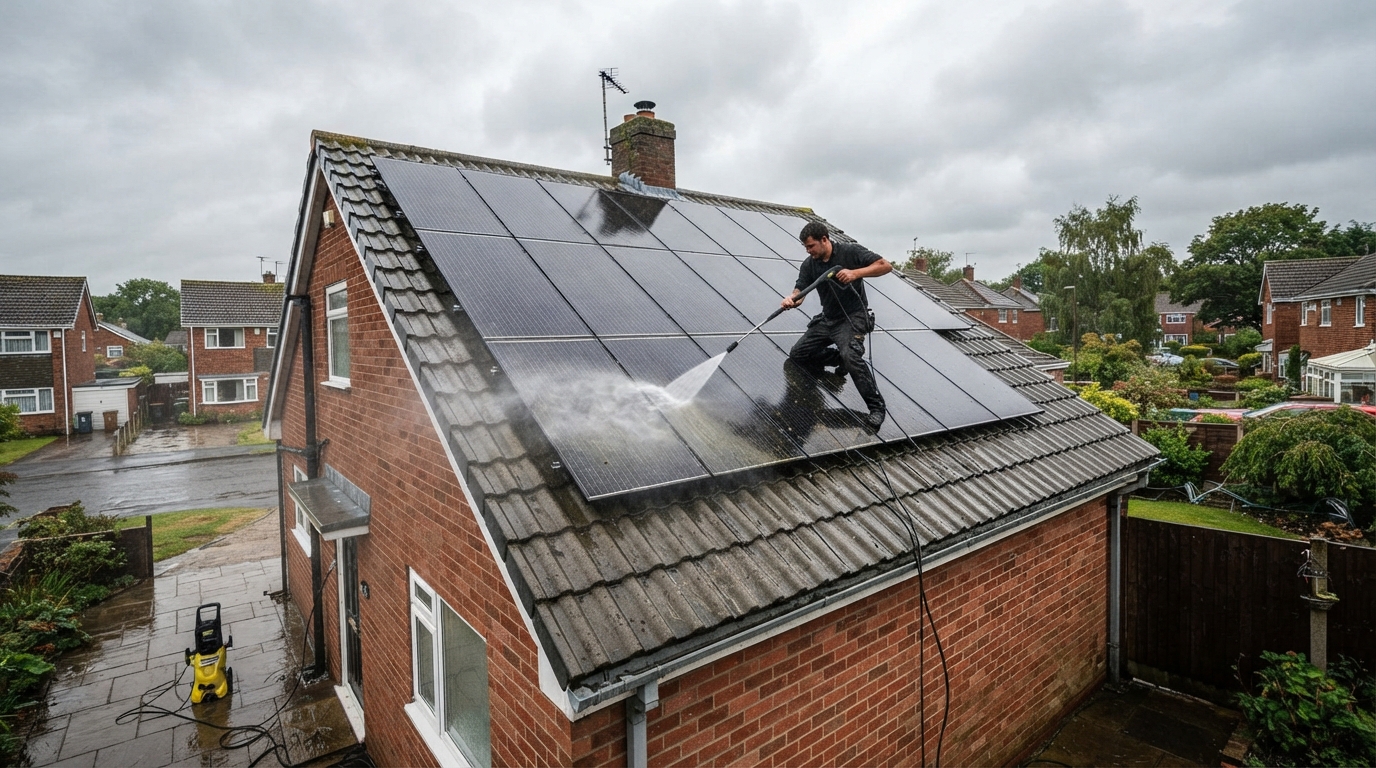
Pressure washing is generally not the preferred method for cleaning solar panels. Most professional cleaning is carried out using purified water, soft brushes where appropriate and techniques designed to protect both the panels and their surrounding components. The most suitable cleaning method depends on the panel manufacturer, the type of contamination and the installation rather than simply using the highest pressure available.
Across Sussex and Surrey, more homes than ever have roof-mounted solar arrays, and it is natural to assume that a pressure washer — the tool most homeowners associate with exterior cleaning — would be the quickest way to get them clean. However, solar panels are precision-engineered electrical components, not simply another outdoor surface. This guide explains why pressure washing is rarely the recommended approach, what methods professionals use instead, and why cleaning the panels is only one part of looking after the whole roof.
Why Homeowners Ask About Pressure Washing
Pressure washers are widely available, powerful and effective on many exterior surfaces. It is easy to see why homeowners ask whether they can simply blast the dirt off their solar panels. After all, pressure washing is the standard method for cleaning driveways, patios and block paving.
The difference is that solar panels are not solid paving slabs. They are tempered glass modules mounted on aluminium frames, sealed to protect sensitive electrical cells beneath. The seals, fixings and junction boxes that keep the panels weatherproof are far more vulnerable to high-pressure water than the glass itself. Understanding this distinction is the first step in choosing a cleaning method that protects the panels rather than risking them.
How Solar Panels Are Designed
Solar panels are engineered to withstand years of British weather — rain, wind, frost and UV exposure. The tempered glass surface is tough, but the panel is not designed to have high-pressure water forced at it from close range. Beneath the glass sits a network of photovoltaic cells, electrical connections and a backing sheet, all sealed around the edges to prevent water ingress.
Most manufacturers provide cleaning recommendations, and these should always be considered before any cleaning is attempted. In many cases, manufacturer warranties specify that abrasive cleaning, high-pressure washing or the use of certain chemicals can void the warranty. This is an important consideration for any homeowner thinking about pressure washing their panels.
Why Cleaning Methods Matter
The goal of solar panel cleaning is to remove contamination that blocks sunlight from reaching the photovoltaic cells, without damaging the panels, their seals or the surrounding roof. The cleaning method matters because:
- High pressure can force water behind seals — potentially causing internal corrosion or electrical faults.
- Abrasive cleaning can scratch the glass — creating micro-scratches that reduce light transmission.
- Harsh chemicals can degrade coatings — many panels have anti-reflective coatings that are sensitive to detergents.
- Thermal shock can crack the glass — cold water applied to hot panels on a sunny day can cause sudden contraction.
For these reasons, professional solar panel cleaning typically uses low-impact methods that prioritise the long-term integrity of the panels over speed.
What Can Make Solar Panels Dirty?
Solar panels are exposed to the same environment as the rest of your roof, so they collect a similar range of contamination. Common causes of soiling include:
- Bird droppings — thick, opaque and rarely shifted by rainfall alone.
- Dust — particularly during dry spells and in rural or agricultural areas.
- Pollen — which can form a visible yellow-green film across the array.
- Tree sap — from overhanging branches, which bonds stubbornly to the glass.
- Moss fragments — shed from the surrounding roof tiles onto the panels.
- Leaves — which settle on the panel surface and trap moisture beneath them.
- Airborne pollution — atmospheric soot and grime that builds up gradually over time.
Each of these contaminants requires a slightly different approach. Light dust may rinse off easily with purified water, whereas bird droppings and tree sap often need specialist cleaning products and a soft brush to remove safely without pressure.
How Professionals Typically Clean Solar Panels
Professional solar panel cleaning is usually carried out using methods designed to lift contamination gently without risking the panels or the roof. The most common approach involves:
- Purified water systems — deionised water that cleans without leaving streaks or mineral deposits.
- Reach-and-wash poles — extending poles that allow safe cleaning from ground level or a secure platform.
- Soft, non-abrasive brushes — designed to lift contamination without scratching the glass.
- Specialist cleaning products — where contamination is bonded and will not shift with water alone.
- Professional inspection — assessing the panels, roof and gutters at the same time.
The combination of purified water and soft brushes is widely used because it effectively removes contamination while protecting the seals, coatings and electrical components. Pressure washing, by contrast, introduces risks that are simply not necessary when gentler methods achieve the same result.
Comparison of Cleaning Methods
The table below summarises the most common cleaning methods and their typical considerations.
| Cleaning Method | Typical Use | Considerations |
|---|---|---|
| Purified water | Standard professional method for most roof-mounted arrays. | Leaves no residue; safe for seals and coatings; requires specialist equipment. |
| Soft brush where appropriate | Removing bonded contamination such as bird droppings. | Must be non-abrasive; used with purified water to avoid scratching. |
| Pressure washing | Generally not recommended for solar panels. | Risk of water ingress behind seals; can void warranties; may damage coatings. |
| Professional inspection | Carried out alongside cleaning. | Identifies bird activity, roof moss, blocked gutters and panel issues. |
Can Pressure Washing Affect Seals, Fixings or Surrounding Components?
The main concern with pressure washing solar panels is not the glass itself — tempered glass is tough — but the seals, fixings and surrounding components that keep the system weatherproof. High-pressure water can be forced behind the edge seals, into junction boxes or beneath the panel frame, where it can cause corrosion, electrical faults or premature failure of the module.
In addition to the panels themselves, pressure washing can affect the surrounding roof. On a pitched roof, high-pressure water can dislodge tiles, force water beneath the underlayment and damage the pointing on ridge lines. It can also blast moss and debris from the roof straight into the gutters, creating blockages that then need to be cleared separately.
This is why professional cleaning companies use low-impact methods that protect the entire roof system, not just the glass surface of the panels.
Why Bird Proofing and Roof Maintenance Should Be Considered at the Same Time
Solar panels do not exist in isolation. If birds are nesting beneath your panels, cleaning the glass is only a short-term fix — the birds will continue to foul the panels and drop nesting material into the gutters. In these situations, solar panel bird proofing is usually recommended alongside cleaning.
Similarly, if the surrounding roof has moss growth, the moss will continue to shed spores onto the panels. Roof cleaning helps keep the whole system cleaner for longer. And if the gutters are blocked, overflowing rainwater will run across the roof and panels, leaving streaks and deposits that undo the cleaning. Gutter cleaning should be carried out at the same time.
The table below summarises common roof issues and why they matter for solar panels.
| Roof Issue | Why It Matters |
|---|---|
| Bird droppings | Opaque contamination that blocks sunlight and bonds to the glass. |
| Moss | Sheds spores and fragments onto the panels, re-soiling them after cleaning. |
| Blocked gutters | Overflowing water runs across the roof and panels, leaving streaks and deposits. |
| Tree debris | Leaves and sap settle on the panel surface and trap moisture beneath them. |
| Pigeon nesting | The single biggest cause of heavy panel soiling; also blocks gutters with debris. |
Looking After the Whole Roof
Solar panels are only one part of the roof. The condition of the surrounding roof directly affects how quickly the panels become dirty again, which is why treating the roof as one complete system often produces better long-term results than treating each element in isolation.
Regular maintenance may also include:
- Roof cleaning — removing moss and algae that would otherwise spread onto the panels.
- Gutter cleaning — ensuring rainwater drains freely away from the array.
- Bird proofing — preventing pigeons from re-establishing nests beneath the panels.
- Roof inspections — identifying damaged tiles or contamination early.
- Solar panel cleaning — removing bonded contamination from the glass.
By combining these services into one coordinated visit, Skyhawk Exterior Cleaning helps homeowners maintain the entire roof system rather than solving one problem only to leave another unresolved.
Questions We Get Asked On Site
Can a pressure washer damage solar panels?
Yes. The high pressure can force water behind seals, damage the frame and potentially void the manufacturer's warranty. The glass is tough, but the seals and electrical components beneath it are not. This is why professionals use purified water and soft brushes instead.
Does rain clean solar panels?
Rain rinses away loose dust but does not remove bird droppings, tree sap or bonded pollution. In a climate like Sussex and Surrey, where rainfall is frequent but often light, rain alone is rarely enough to keep panels performing at their best.
Why do professionals use purified water?
Purified water is deionised, meaning it contains no minerals that would leave streaks or deposits on the glass. It lifts contamination without the need for chemicals and dries clear, making it the safest and most effective cleaning medium for solar panels.
Can pigeon droppings be pressure washed off?
Whilst pressure washing might appear to remove droppings quickly, it risks forcing water behind the panel seals. Professionals use purified water with a soft brush to lift droppings gently, or specialist cleaning products where the contamination is particularly bonded.
Should I clean my gutters at the same time?
Yes. Blocked gutters cause water to overflow across the roof and panels, leaving streaks and deposits that undo the cleaning. Combining gutter cleaning with solar panel cleaning helps keep the whole system cleaner for longer.
Common Mistakes Homeowners Make
- Using excessive pressure — forcing water behind seals and risking electrical damage.
- Cleaning with unsuitable detergents — household chemicals can degrade the anti-reflective coating and leave residue.
- Ignoring bird nesting beneath the panels — cleaning the glass without solving the cause of the soiling.
- Cleaning the panels but leaving blocked gutters — overflowing water re-soils the panels almost immediately.
- Assuming all cleaning methods are suitable for every installation — different panels, roofs and levels of contamination require different approaches.
Key Takeaways
- Pressure washing is generally not the preferred method for cleaning solar panels.
- Purified water and soft brushes are the standard professional approach.
- High pressure can damage seals, fixings and surrounding roof components.
- Manufacturer cleaning recommendations should always be considered.
- Bird proofing, roof cleaning and gutter cleaning should be considered alongside panel cleaning.
- Treating the roof as one complete system produces better long-term results.
A Real Example From Sussex
A homeowner in Horsham contacted us after noticing their solar panels were heavily soiled and their electricity generation had dropped noticeably over the summer. On inspection, we found a significant pigeon population nesting beneath the array, with droppings covering much of the glass, nesting material in the gutters and moss beginning to spread across the surrounding roof tiles.
Using purified water and soft brushes, we cleaned the panels gently without pressure, removing the bonded droppings and restoring the glass to full clarity. At the same time, we cleared the gutters of feathers and nesting debris, cleaned the surrounding roof to remove moss, and installed bird proofing mesh around the perimeter of the array to prevent the pigeons from returning.
By addressing the panels, the gutters, the roof and the bird nesting in one coordinated visit, the homeowner was left with a clean, protected roof system rather than a short-term fix that would need repeating within months.
Frequently Asked Questions
Can you pressure wash solar panels?
Pressure washing is generally not recommended. Most professionals use purified water and soft brushes, which remove contamination effectively without the risks associated with high pressure.
What is the safest way to clean solar panels?
The safest method is purified water applied with a soft, non-abrasive brush from a secure platform or reach-and-wash pole. This protects the seals, coatings and electrical components.
Can pressure washing damage solar panels?
Yes. High pressure can force water behind seals, damage fixings and potentially void the manufacturer's warranty. The glass is tough, but the components beneath it are not.
Do professionals use pressure washers?
Reputable professional solar panel cleaners typically do not use pressure washers on the panels themselves. They use purified water systems and specialist low-impact methods instead.
Does rain clean solar panels?
Rain rinses away loose dust but does not remove bird droppings, tree sap or bonded pollution. Periodic professional cleaning is still recommended.
Why is purified water used?
Purified water is deionised, so it contains no minerals that would leave streaks or deposits. It cleans effectively without chemicals and dries clear.
Can bird droppings damage solar panels?
Bird droppings are opaque and block sunlight from reaching the cells. Over time, they can bake onto the glass and become difficult to remove without specialist cleaning products.
Should I clean my roof and gutters at the same time?
Yes. Moss on the roof sheds spores onto the panels, and blocked gutters cause overflowing water that re-soils the glass. Combining these services keeps the whole system cleaner for longer.
Can I clean solar panels myself?
Some homeowners can clean safely accessible panels themselves, but roof-mounted systems often benefit from professional cleaning due to safe access, specialist equipment and the opportunity to inspect the wider roof.
When should I arrange professional cleaning?
If your panels are roof-mounted, heavily soiled, or you suspect bird nesting, professional cleaning is usually the safest and most effective option.
Final Conclusion
Whilst pressure washing is effective for many exterior surfaces, it is generally not the preferred method for cleaning solar panels. The risks to seals, fixings and surrounding roof components are simply not necessary when purified water and soft brushes achieve the same result safely.
If you are considering having your solar panels cleaned, the best first step is a professional assessment. Book a free video call with Skyhawk Exterior Cleaning and we will advise on the most suitable approach for your property — whether that is cleaning, bird proofing, roof maintenance or a combination of all three.
For more information, you may also find these related articles helpful:
- Does Solar Panel Cleaning Improve Performance?
- How Often Should Solar Panels Be Cleaned?
- Why Do Birds Nest Under Solar Panels?
- Is Solar Panel Bird Proofing Worth It?
- Can You Clean Solar Panels Yourself?
- Is Roof Moss Damaging Your Roof?
- How Often Should Gutters Be Cleaned?
You can also read our frequently asked questions or learn more about our solar panel cleaning and bird proofing service.