Can You Clean Solar Panels Yourself?
Yes, some homeowners choose to clean their own solar panels, particularly where they can be accessed safely. However, roof access, the risk of falls, the correct equipment and using suitable cleaning methods all need careful consideration. In many situations, professional cleaning provides a safer and more practical solution.
Across Sussex and Surrey, more homes than ever have roof-mounted solar panels installed. Whilst the panels themselves are designed to be durable, they still collect contamination over time — and the question of whether to clean them yourself or call in a professional is one we are asked regularly. This guide explains what DIY solar panel cleaning can realistically achieve, the risks involved, and when professional cleaning is the better option.
Can Homeowners Clean Their Own Solar Panels?
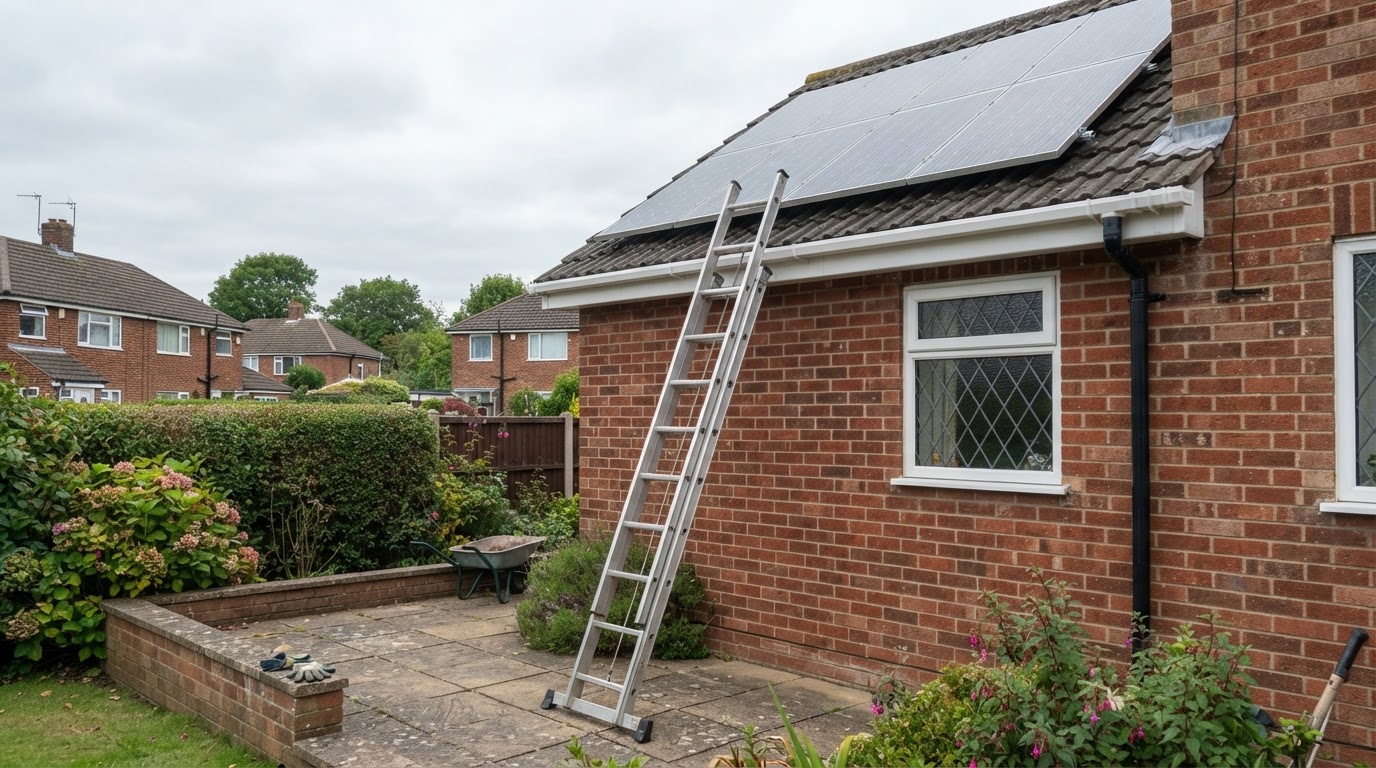
In principle, yes. There is no law preventing a homeowner from cleaning their own solar panels, and for low-level or easily accessible ground-mounted systems, a careful DIY approach can be perfectly reasonable. However, the vast majority of domestic solar arrays in the UK are roof-mounted, which introduces a significant safety consideration that cannot be overlooked.
The panels are only one part of the equation. To clean them properly you need safe access to the roof, suitable equipment, the correct cleaning method and an understanding of what is actually causing the contamination. For many homeowners, the combination of height, awkward access and the risk of damaging the panels or the roof makes professional cleaning the more sensible choice.
Why Roof Safety Comes First
Before considering any DIY cleaning, roof safety must be the first priority. Working at height is one of the most common causes of serious domestic injury in the UK, and solar panels are almost always installed on pitched roofs at significant height.
General health and safety principles around working at height are clear: if you cannot reach the panels safely from a secure platform or stable ladder with appropriate fall protection, the job should be left to a professional who has the correct access equipment, training and insurance. A clean solar panel is never worth a fall.
Professional exterior cleaning companies use purpose-built access equipment — including reach-and-wash poles, harness systems and, where necessary, elevated platforms — to clean panels safely without needing to stand on the roof or the panels themselves.
What Can Make Solar Panels Dirty?
Solar panels are exposed to the same environment as the rest of your roof, so they collect a similar range of contamination. Common causes of soiling include:
- Bird droppings — thick, opaque and rarely shifted by rainfall alone.
- Dust — particularly during dry spells and in rural or agricultural areas.
- Pollen — which can form a visible yellow-green film across the array.
- Tree sap — from overhanging branches, which bonds stubbornly to the glass.
- Leaves — which settle on the panel surface and trap moisture beneath them.
- Moss fragments — shed from the surrounding roof tiles onto the panels.
- Air pollution — atmospheric soot and grime that builds up gradually over time.
Each of these contaminants requires a slightly different approach. Light dust may rinse off easily, whereas bird droppings and tree sap often need specialist cleaning products and purified water to remove safely.
Does Rain Clean Solar Panels?
This is one of the most common questions we hear on site. The honest answer is: only partially. Rainfall will rinse away loose dust and some pollen, but it has very little effect on bonded contamination such as dried bird droppings, tree sap or the fine film of atmospheric pollution that builds up over months and years.
Think of it like a car windscreen — rain will wet the glass, but it will not remove the dried splatters and grime that accumulate. Solar panels behave in a similar way. In a climate like Sussex and Surrey, where rainfall is frequent but often light, rain alone is rarely enough to keep panels performing at their best.
What Equipment Is Commonly Used?
The equipment needed depends on the level of contamination and the height of the panels. For low-level or ground-mounted systems, a soft brush and a hose may be sufficient. For roof-mounted arrays, the equipment requirements become considerably more demanding.
Professional solar panel cleaning typically uses:
- Purified water systems — deionised water that cleans without leaving streaks or mineral deposits.
- Reach-and-wash poles — extending poles that allow safe cleaning from ground level or a secure platform.
- Soft, non-abrasive brushes — designed to lift contamination without scratching the glass.
- Specialist cleaning products — where contamination is bonded and will not shift with water alone.
Using a standard pressure washer is generally not recommended. The high pressure can force water behind panel seals, damage the frame and, in some cases, void the manufacturer's warranty. The glass is tough, but the seals and electrical components beneath it are not.
Why Household Cleaning Products Can Cause Problems
Many homeowners reach for washing-up liquid or glass cleaner when attempting a DIY panel clean. Whilst these products may seem harmless, they can cause several issues:
- Streaking and residue — household detergents leave a film that attracts further dirt.
- Damage to anti-reflective coatings — many modern panels have a thin coating to improve light absorption, which can be degraded by harsh chemicals.
- Environmental runoff — strong chemicals run off the roof and into the gutters and surrounding garden.
- Warranty concerns — manufacturers often specify that only certain cleaning methods should be used.
Purified water is the safest and most widely recommended cleaning medium because it lifts contamination without the need for chemicals. Where products are required, specialist solar panel cleaning solutions are formulated to be safe for the glass, the seals and the surrounding roof.
When Professional Cleaning Is Recommended
Professional cleaning is usually the better option in the following situations:
- The panels are roof-mounted and require working at height.
- Bird droppings, sap or pollution are bonded to the glass.
- You have noticed birds nesting beneath the panels.
- The gutters are blocked or overflowing.
- The surrounding roof has moss or algae growth.
- You want the panels inspected alongside the clean.
A professional clean also provides an opportunity to assess the wider roof system — checking for damaged tiles, blocked gutters, bird activity and moss growth that could affect the panels in the future.
Why Bird Proofing Should Also Be Considered
If pigeons or other birds are nesting beneath your solar panels, cleaning the glass alone is only a short-term fix. The birds will continue to foul the panels, drop nesting material into the gutters and encourage moss growth on the surrounding roof. In these situations, solar panel bird proofing is usually recommended alongside cleaning.
Bird proofing seals the gap beneath the panels with a discreet mesh, preventing birds from returning and re-establishing nests. It is most effective when installed after the panels have been cleaned and any existing nests have been responsibly removed in accordance with UK wildlife legislation.
Looking After the Whole Roof System
Solar panels do not exist in isolation. They are part of a wider roof system, and the condition of the surrounding roof directly affects how quickly the panels become dirty again. While cleaning the panels is important, homeowners should also consider:
- Roof moss — moss on surrounding tiles sheds spores onto the panel surface. Roof cleaning helps keep the whole system cleaner for longer.
- Blocked gutters — overflowing gutters cause water to run across the roof and panels, leaving streaks and deposits. Gutter cleaning should be carried out at the same time.
- Bird nesting — nesting beneath panels is the single biggest cause of heavy panel soiling.
- Roof inspections — identifying damaged tiles or contamination early prevents bigger problems.
- Water drainage — ensuring rainwater drains freely away from the array.
All of these factors affect the long-term condition of both the roof and the solar panels. This is why Skyhawk Exterior Cleaning assesses every property individually before carrying out solar panel cleaning, bird proofing, roof cleaning or gutter cleaning — and often recommends combining them into one coordinated visit.
DIY vs Professional Solar Panel Cleaning
The table below summarises the key differences between cleaning the panels yourself and using a professional service.
| DIY Cleaning | Professional Cleaning |
|---|---|
| Roof access — homeowner must provide their own safe access. | Roof access — specialist equipment and trained operatives. |
| Equipment — hose, brush, household products. | Equipment — purified water systems, reach-and-wash poles, specialist products. |
| Safety — significant risk when working at height. | Safety — fully insured, risk-assessed and compliant with working-at-height principles. |
| Cleaning products — risk of streaking and coating damage. | Cleaning products — specialist, panel-safe solutions. |
| Inspection of roof — rarely possible during a DIY clean. | Inspection of roof — full assessment of tiles, gutters, moss and bird activity. |
| Bird proofing advice — not usually considered. | Bird proofing advice — recommended where nesting is identified. |
Common Cleaning Methods Compared
Different cleaning methods suit different situations. The table below outlines the most common approaches.
| Cleaning Method | Typical Considerations |
|---|---|
| Rainwater only | Removes loose dust but not bonded contamination. Insufficient for bird droppings, sap or pollution. |
| Soft brush and hose | Suitable for low-level or ground-mounted panels. Risk of streaking if tap water is used. |
| Purified water system | The professional standard. Cleans without streaks or residue and is safe for panel coatings. |
| Professional cleaning | Combines purified water, safe access, specialist products and a full roof inspection. |
Questions We Get Asked On Site
- Will rain clean my panels? Rain rinses loose dust but will not remove bird droppings, sap or bonded pollution.
- Can I use washing-up liquid? It is not recommended. Household detergents leave residue and can damage anti-reflective coatings.
- Can I stand on the panels? No. Standing on solar panels risks cracking the glass and damaging the cells beneath. Professionals use poles or access equipment to avoid direct weight on the array.
- Do I need bird proofing? If pigeons are nesting beneath the panels, bird proofing is usually the most effective long-term solution.
- Should I clean the gutters at the same time? Yes. Blocked gutters contribute to panel soiling and should be cleared during the same visit where possible.
Common Mistakes Homeowners Make
- Walking on solar panels. The glass is not designed to take body weight and cracking is a real risk.
- Using abrasive pads or harsh chemicals. These can scratch the glass or degrade the anti-reflective coating.
- Ignoring roof safety. Working at height without proper access equipment is dangerous.
- Cleaning the panels but leaving birds nesting underneath. The birds will recontaminate the surface within weeks.
- Forgetting about blocked gutters. Overflowing gutters cause streaking and accelerate re-soiling.
Key Takeaways
- Some homeowners can clean accessible panels safely, but roof-mounted systems often benefit from professional cleaning.
- Roof safety is the most important consideration — never take risks working at height.
- Purified water systems are the professional standard and avoid streaking and coating damage.
- Household chemicals and pressure washers can damage panels and may affect warranties.
- Bird proofing, gutter cleaning and roof cleaning should be considered alongside panel cleaning.
- A professional clean includes an inspection of the wider roof system.
A Real Homeowner Example
A homeowner near Horsham contacted us intending to clean their own solar panels, which had become noticeably dull over the winter. When we discussed the job, it became clear that pigeons had been roosting beneath the array. Rather than attempting a DIY clean, the homeowner booked a combined service visit. On inspection, we found heavy bird droppings across the panels, nesting material in the gutters and early moss growth on the surrounding tiles. We cleaned the panels using purified water, cleared the gutters, removed the nesting material responsibly and installed bird proofing mesh around the array. The result was a cleaner, safer and more protected roof system — something a DIY hose-down could never have achieved.
Frequently Asked Questions
Can I clean solar panels myself?
Yes, if the panels are safely accessible. For roof-mounted systems, professional cleaning is usually safer and more effective due to the access equipment and specialist methods required.
Can I use a pressure washer?
Pressure washers are generally not recommended. The high pressure can force water behind panel seals and damage the electrical components. Purified water with a soft brush is the preferred professional method.
Can I stand on solar panels?
No. Solar panels are not designed to support body weight. Standing on them risks cracking the glass and damaging the cells. Professionals use extending poles or access platforms instead.
Does rain clean solar panels?
Rain rinses away loose dust but does not remove bird droppings, tree sap or bonded pollution. Periodic professional cleaning is still recommended.
Can bird droppings affect performance?
Yes. Bird droppings are opaque and block sunlight from reaching the cells beneath the glass. Even small amounts of fouling can affect the panel's ability to generate electricity.
Should I use detergent?
Household detergents are not recommended. They can leave a residue, cause streaking and potentially damage the anti-reflective coating. Purified water is the safest cleaning medium.
When should I call a professional?
If your panels are roof-mounted, heavily soiled, or you suspect bird nesting, professional cleaning is usually the safest and most effective option.
Should I have the roof inspected too?
Yes. A professional clean provides an ideal opportunity to inspect the roof, gutters and surrounding tiles for moss, damage and bird activity.
Can I install bird proofing myself?
DIY bird proofing kits are available, but they frequently leave gaps that pigeons exploit. Professional installation ensures the mesh is fitted securely and in accordance with UK wildlife legislation.
Is professional solar panel cleaning worth it?
For most roof-mounted systems, yes. Professional cleaning provides safe access, specialist equipment, a thorough result and an inspection of the wider roof system that DIY cleaning cannot match.
Final Conclusion
Some homeowners can clean their own solar panels safely, particularly where the array is low-level or easily accessible. However, for the majority of roof-mounted systems across Sussex and Surrey, professional cleaning is the safer and more effective option. It provides the correct equipment, the right cleaning methods and the opportunity to inspect the wider roof, gutters and bird activity at the same time.
If you are considering cleaning your solar panels, the best first step is a professional assessment. Book a free video call with Skyhawk Exterior Cleaning and we will advise on the most suitable approach for your property — whether that is cleaning, bird proofing, roof maintenance or a combination of all three.
For more information, you may also find these related articles helpful:
- Does Solar Panel Cleaning Improve Performance?
- How Often Should Solar Panels Be Cleaned?
- Why Do Birds Nest Under Solar Panels?
- Is Solar Panel Bird Proofing Worth It?
- Is Roof Moss Damaging Your Roof?
- How Often Should Gutters Be Cleaned?
You can also read our frequently asked questions or learn more about our solar panel cleaning and bird proofing service.