Does Solar Panel Cleaning Improve Performance?
Yes — solar panel cleaning can help maintain the performance of your panels by removing dirt, pollen, bird droppings and organic debris that reduce the amount of sunlight reaching the photovoltaic cells. Whilst panels are designed to be self-cleaning to a degree, many properties across Sussex and Surrey experience environmental conditions that allow contamination to build up faster than rainfall can wash it away. However, it is important to understand that cleaning alone does not guarantee a specific percentage improvement in output — results depend on how soiled the panels were, the type of contamination and the property's surroundings.
How Solar Panels Generate Electricity
Solar photovoltaic (PV) panels generate electricity by converting sunlight into direct current (DC) power. The surface of each panel is made up of photovoltaic cells, usually encased in a protective glass layer. When sunlight hits these cells, it excites electrons within the silicon, creating an electrical current that an inverter then converts into usable alternating current (AC) for your home.
Because the process relies entirely on sunlight reaching the surface of the cells, anything that sits on top of the glass — whether that is dust, pollen, bird mess or moss spores — acts as a barrier. The cleaner the surface, the more effectively the panels can capture available daylight. This is why regular maintenance, including cleaning, forms part of recognised UK property upkeep best practice for solar installations.
What Builds Up on Solar Panels?
Solar panels are exposed to the elements every day of the year, and over time a range of contaminants can settle on the surface. Common types of build-up include:
- Atmospheric dust and dirt — carried on the wind, particularly during dry spells.
- Pollen — especially during spring and early summer when nearby trees and hedgerows release large quantities.
- Bird droppings — one of the most common and stubborn forms of contamination, often resistant to rainfall alone.
- Sap and organic residue — from overhanging trees and shrubs.
- Moss and lichen spores — which can begin to colonise the edges of panels, particularly on shaded roofs.
- Traffic pollution — more common on homes near busy roads in towns such as Crawley, Redhill and Guildford.
Whilst a good downpour will remove some light dust, it rarely shifts bird droppings or established organic staining. This is why many homeowners find that their panels look progressively duller over time — and why professional cleaning is often recommended as part of a wider roof maintenance routine.
Does Bird Mess Reduce Performance?
Bird droppings are one of the most significant causes of localised soiling on solar panels. Unlike a thin film of dust, droppings are thick, opaque and often adhere firmly to the glass. A single dropping can create a "hard shadow" over a small section of a panel, and because panels are typically wired in strings, one heavily shaded cell can affect the output of the entire string.
Properties with pigeons nesting under solar panels are particularly affected. Pigeons roosting beneath the array will frequently foul the surface above, sometimes within days of a clean. In these situations, cleaning the panels alone is rarely a lasting solution because the birds simply return and recontaminate the surface. This is why bird proofing is often recommended alongside cleaning — it addresses the root cause rather than just the symptom.
Can Moss From the Roof Affect Solar Panels?
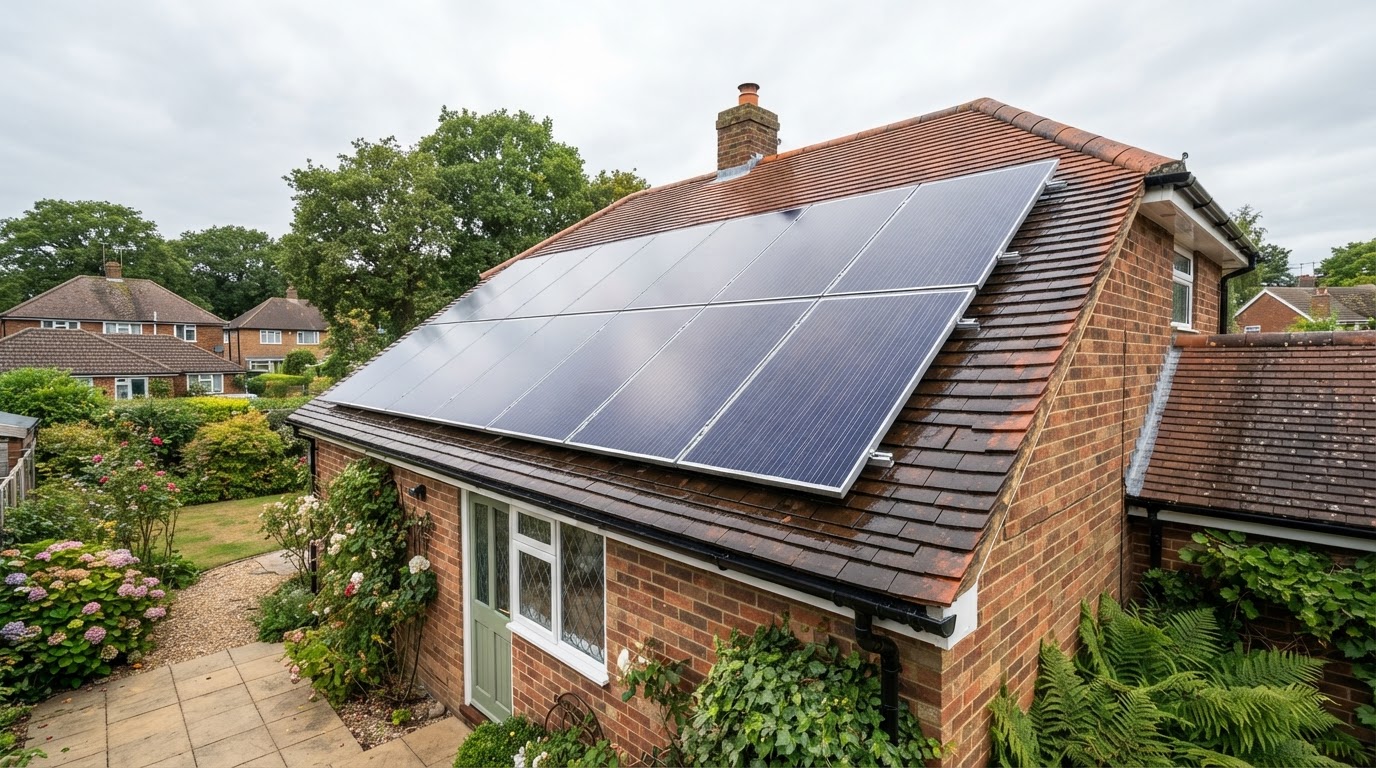
Yes. Moss, lichen and algae growing on the surrounding roof tiles can spread towards the edges of solar panels, particularly where leaves and organic debris collect in the gaps. Over time, moss can lift the edges of panels, trap moisture and create conditions that encourage further organic growth.
This is one of the reasons why roof cleaning and solar panel cleaning are often best carried out together. Removing moss from the roof reduces the source of spores that would otherwise continue to settle on the panels. It also helps maintain the condition of the tiles beneath and around the array — areas that are easily overlooked once panels are installed.
Why Gutters Matter Too
Solar panels do not exist in isolation. They sit on top of a roof drainage system that relies on clear gutters and downpipes to carry rainwater away safely. When birds nest under panels, they often drag nesting material, twigs and debris into the gutters, leading to blockages.
Blocked gutters can cause water to overflow down the roof and around the panel edges, potentially contributing to staining and organic growth. This is why gutter cleaning is frequently recommended as part of a complete solar panel maintenance plan. Addressing the gutters, the roof and the panels together helps keep the entire system functioning as it should.
Why Bird Proofing Often Makes Sense Alongside Cleaning
If birds are nesting under your solar panels, cleaning the surface will only provide a temporary improvement. The birds will continue to roost beneath the array, and the droppings will return — often within weeks. Bird proofing involves installing a specialist mesh around the perimeter of the panels to prevent birds from accessing the gap beneath.
When carried out correctly, bird proofing:
- Prevents pigeons from nesting under the panels.
- Stops droppings from accumulating on the panel surface.
- Reduces nesting debris entering gutters and roof valleys.
- Helps protect the roof felt and tiles beneath the array.
- Complements roof and gutter maintenance by removing the source of ongoing contamination.
For this reason, solar panel cleaning and bird proofing are often most effective when carried out together, particularly on properties in leafy areas of Sussex and Surrey where pigeon activity is common.
Birds Nesting Beneath Solar Panels: The Wider Maintenance Issue
When pigeons or other birds establish a nest beneath a solar array, they create a chain of maintenance issues that extend well beyond the panels themselves. Typical problems include:
- Bird droppings across panels — reducing light transmission and creating stubborn staining.
- Moss and nesting material on the roof — twigs, feathers and organic matter collect around the array and encourage moss growth.
- Blocked gutters — nesting debris is frequently washed or dragged into gutters, causing overflows.
- Organic debris around valleys — roof valleys and channels become clogged, affecting drainage.
- Increased roof maintenance requirements — the longer the nest remains, the more widespread the contamination becomes.
This is why we treat solar panel cleaning as part of a wider roof care system rather than an isolated task. Cleaning the panels without addressing the nest, the roof or the gutters often means the same problems return within a short period.
Can Homeowners Clean Solar Panels Themselves?
Some homeowners do attempt to clean their own solar panels, usually with a hose from ground level or a long-reach brush. Light rinsing can remove loose dust, but it rarely tackles bird droppings, pollen films or organic staining effectively. More importantly, there are practical and safety considerations:
- Accessing panels usually means working at height, which carries significant risk without the correct training and equipment.
- Using abrasive brushes or unsuitable chemicals can scratch or damage the protective glass coating.
- Cold water on hot panels can cause thermal shock, potentially cracking the glass.
- Hard water can leave mineral deposits and streaks that are difficult to remove.
- Bird proofing requires specialist mesh and fitting techniques — it is not a practical DIY task.
For these reasons, professional cleaning is generally the safer and more effective option, particularly where bird activity or roof moss is involved.
How Professionals Clean Solar Panels Safely
Professional solar panel cleaning uses specialist equipment and techniques designed to remove contamination without damaging the panels. At Skyhawk Exterior Cleaning, every property is assessed individually before we begin. The process typically involves:
- Visual inspection — to assess the level of soiling, bird activity and the condition of the surrounding roof.
- Safe access — using appropriate access equipment to reach the panels without risk.
- Specialist cleaning — using suitable water-fed methods and non-abrasive techniques to remove dirt, pollen and droppings.
- Bird proofing where required — installing mesh to prevent birds returning beneath the array.
- Roof and gutter checks — identifying whether moss, debris or blockages require additional attention.
Because every property is different, we do not apply the same approach to every job. A clean, modern array with light dust requires a very different process to a heavily fouled system above a moss-covered roof with active pigeon nesting.
Complementary Services That Maintain the Whole Roof
Skyhawk Exterior Cleaning provides a range of services that work together to maintain the entire roof system:
- Solar panel cleaning — removing contamination from the panel surface.
- Solar panel bird proofing — preventing birds from nesting beneath the array.
- Roof cleaning — removing moss, lichen and algae from the surrounding tiles.
- Gutter cleaning — clearing blockages caused by nesting debris and organic matter.
Positioned together, these services help maintain the appearance, safety and function of the whole roof rather than treating the panels in isolation. For homeowners across Sussex and Surrey, this joined-up approach often produces longer-lasting results than cleaning the panels alone.
A Realistic Homeowner Example
Consider a detached property in Horsham with a south-facing solar array. The homeowners noticed their generation had gradually declined and, on inspection, found pigeons nesting beneath the panels. The situation had developed over several months:
- The panel surfaces were heavily fouled with droppings that rain had not shifted.
- Moss had begun collecting around the edges of the array where nesting material had trapped moisture.
- The gutters were partially blocked with twigs, feathers and organic debris washed down from the nest.
- The roof tiles surrounding the array had become stained with algae encouraged by the damp conditions.
In this scenario, cleaning the panels alone would have provided only a short-term improvement. Instead, the panels were professionally cleaned, bird proofing mesh was installed around the perimeter, the gutters were cleared and the surrounding roof was treated to remove moss and algae. The result was a cleaner, safer and better-functioning roof system — and panels that remained cleaner for longer because the source of contamination had been addressed.
Comparison: Clean vs Soiled Solar Panels
| Factor | Clean Panels | Soiled Panels |
|---|---|---|
| Light transmission | Maximised | Reduced by surface contamination |
| Bird droppings | Removed | Creating localised shading |
| Surrounding roof | Moss and debris removed | Moss spreading towards panels |
| Gutters | Clear and flowing | Blocked with nesting debris |
| Bird activity | Prevented by proofing | Ongoing fouling and nesting |
| Long-term maintenance | Managed holistically | Problems recurring |
Comparison: Cleaning Alone vs Cleaning With Bird Proofing
| Factor | Cleaning Only | Cleaning + Bird Proofing |
|---|---|---|
| Immediate result | Panels cleaned | Panels cleaned |
| Bird return | Likely | Prevented |
| Droppings recurrence | Within weeks | Minimised |
| Gutter blockages | May recur | Reduced |
| Roof moss | May spread | Addressed alongside |
| Long-term value | Short-term | Longer-lasting |
Questions We Get Asked on Site
Will cleaning restore my panels to brand new?
Cleaning removes contamination and restores the surface, but it does not reverse any degradation of the photovoltaic cells themselves. The goal is to maintain the panels in the best possible condition.
How do I know if birds are nesting under my panels?
Common signs include droppings on the panels or ground below, nesting material in gutters, noise from beneath the array and visible birds landing on the roof. A professional inspection can confirm activity.
Can I just wait for rain to clean them?
Rain will remove some light dust, but it is rarely effective on bird droppings, pollen films or organic staining. If panels look dull or visibly marked, rain alone is usually insufficient.
Does bird proofing damage the panels?
When installed correctly by a professional, bird proofing mesh does not damage the panels or the roof. It is fitted around the perimeter to seal the gap without interfering with the array.
Should I have my roof cleaned at the same time?
If moss or algae is present on the surrounding tiles, cleaning the roof at the same time helps prevent spores from spreading back onto the panels. It is often more efficient to address both together.
Common Mistakes Homeowners Make
- Assuming panels are self-cleaning. Rain alone is rarely enough where bird activity or pollen is involved.
- Cleaning panels without addressing the nest beneath. The birds return and the problem repeats.
- Ignoring the gutters and roof around the array. Blocked gutters and moss growth contribute to ongoing contamination.
- Using abrasive brushes or harsh chemicals. These can scratch or damage the protective glass surface.
- Waiting until generation has noticeably dropped. Regular maintenance prevents contamination from becoming established.
Key Takeaways
- Solar panel cleaning helps maintain performance by removing dirt, pollen and bird droppings that reduce sunlight reaching the cells.
- Bird droppings are one of the most common and stubborn contaminants — and often indicate nesting beneath the panels.
- Bird proofing is frequently recommended alongside cleaning to prevent problems returning.
- Moss on the surrounding roof and blocked gutters contribute to ongoing panel contamination.
- Cleaning, bird proofing, roof cleaning and gutter cleaning work best as complementary services.
- Professional cleaning uses safe, non-abrasive methods and avoids the risks associated with DIY access.
- Every property is different — the correct approach depends on the level of soiling, bird activity and the condition of the roof.
Frequently Asked Questions
Does solar panel cleaning improve performance?
Yes. Cleaning removes dirt, pollen and bird droppings that reduce the amount of sunlight reaching the photovoltaic cells. However, the extent of any improvement depends on how soiled the panels were and the type of contamination present.
Can I clean my solar panels myself?
Light rinsing can remove loose dust, but effective cleaning usually requires safe access and specialist equipment. Working at height and using unsuitable brushes or chemicals carries risk to both you and the panels.
Does bird proofing stop droppings on panels?
Bird proofing prevents birds from nesting beneath the panels, which is the most common cause of repeated fouling. Once proofed, droppings are significantly reduced.
Can moss from the roof affect my panels?
Yes. Moss and lichen on surrounding tiles can spread towards the panel edges and trap moisture. Cleaning the roof alongside the panels helps prevent this.
How often should solar panels be cleaned?
There is no fixed interval. Panels should be cleaned when contamination is visible or when bird activity is present. Properties beneath trees or with active pigeon nesting may need more frequent attention.
Will rain clean my solar panels?
Rain removes some light dust but is rarely effective on bird droppings, pollen films or organic staining. If panels look visibly marked, professional cleaning is usually required.
Does bird proofing damage the panels?
No. When installed professionally, bird proofing mesh seals the gap beneath the panels without damaging the array or the roof.
Should gutters be cleaned with solar panels?
Yes. Birds nesting under panels often drop debris into gutters, causing blockages. Cleaning gutters as part of the same visit helps maintain the whole roof drainage system.
Can solar panel cleaning scratch the glass?
Professional cleaning uses non-abrasive methods designed for solar glass. DIY cleaning with abrasive brushes or harsh chemicals can cause damage.
When should I call a professional?
If your panels are visibly soiled, if birds are nesting beneath the array, or if you notice droppings and debris around the roof and gutters, it is worth arranging a professional assessment. You can book a free video call to discuss your property.
Conclusion
Solar panel cleaning can help maintain performance by removing the dirt, pollen and bird droppings that reduce sunlight reaching the cells. However, cleaning is rarely the whole answer — particularly where birds are nesting beneath the array. In those situations, bird proofing, roof cleaning and gutter clearing all play a part in keeping the entire roof system functioning correctly.
At Skyhawk Exterior Cleaning, we assess every property individually and recommend the most appropriate combination of services based on what we find. Whether you need the panels cleaned, the birds proofed out, the roof treated or the gutters cleared, we provide honest advice and a joined-up approach. If you would like to discuss your solar panels, we offer a free video quotation — simply book a video call at a time that suits you. You can also read more in our FAQs or explore our related articles on roof moss, how long roof cleaning lasts and gutter cleaning frequency.