Is Solar Panel Bird Proofing Worth It?
For many homeowners, yes. If birds are regularly nesting beneath your solar panels, professional bird proofing can help prevent ongoing nesting, reduce maintenance and protect the wider roof system. Whether it is worthwhile depends on your individual property and the level of bird activity.
Across Sussex and Surrey, more homes than ever are installing roof-mounted solar panels — and pigeons in particular have learned that the sheltered gap beneath an array makes an excellent nesting site. The question for most homeowners is not whether bird proofing works, but whether it is worth the investment for their specific situation. This guide explains what bird proofing does, the problems it prevents and how to decide whether it is the right choice for your home.
What Is Solar Panel Bird Proofing?
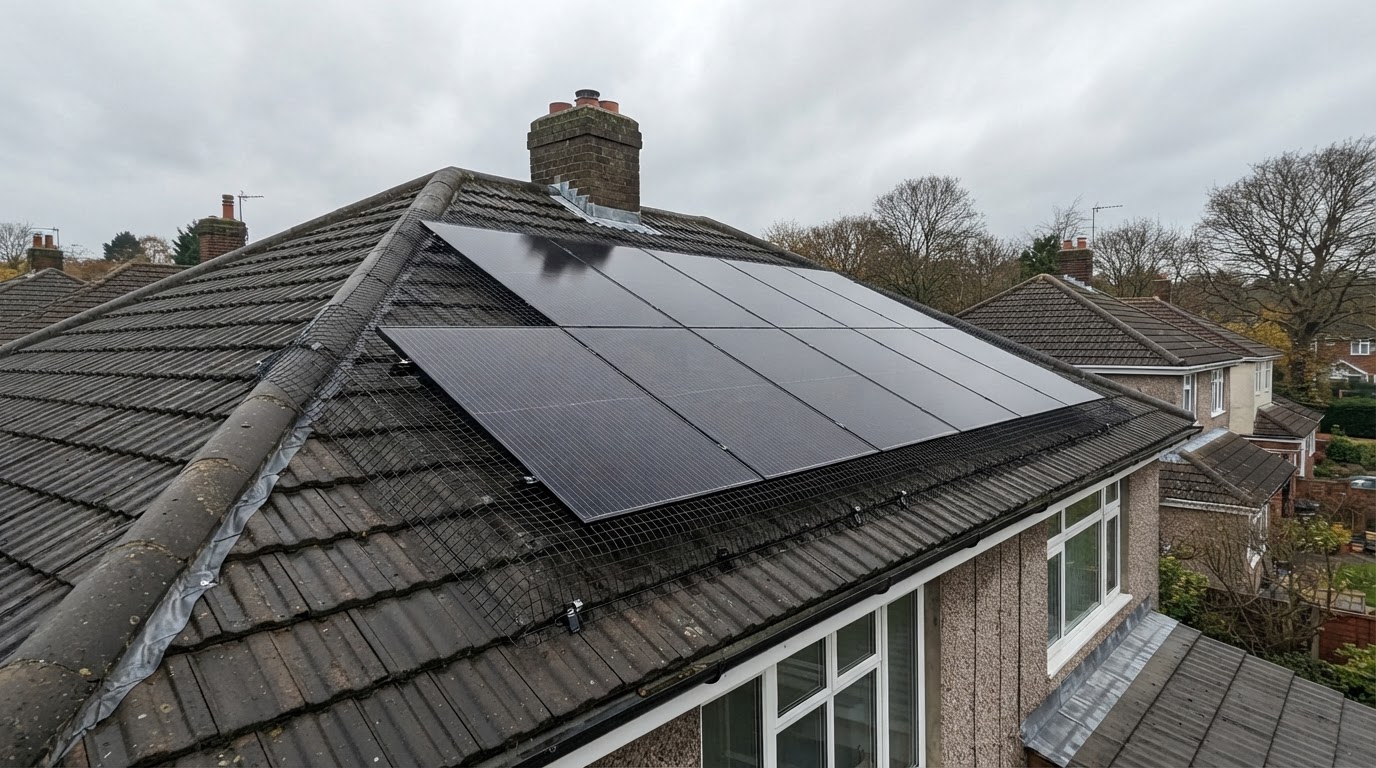
Solar panel bird proofing is the process of sealing the gap between the roof tiles and the underside of the solar array using a discreet, weather-resistant mesh. The mesh is clipped or fixed to the panel frame and runs along the perimeter of the array, preventing birds from accessing the sheltered space beneath.
The mesh is designed to be unobtrusive — it does not affect the appearance of the panels from the ground and does not interfere with airflow, drainage or the electrical performance of the system. Once installed, it acts as a physical barrier that stops pigeons and other birds from entering and building nests.
Bird proofing is not a chemical deterrent or a spike system. It is a permanent physical barrier that, when professionally installed, provides long-term protection without harming the birds.
Why Do Birds Choose Solar Panels?
The gap beneath a roof-mounted solar panel offers everything a nesting bird needs: warmth, shelter from the weather, elevation away from ground predators and a solid overhead cover. For pigeons, which are territorial and return to the same nesting site each season, a solar array is close to an ideal home.
Once a pigeon establishes a territory beneath a panel, it will defend the space, attract a mate and produce several broods in a year. The problem rarely resolves itself — instead, it tends to escalate as the birds become more established and the contamination spreads across the roof.
What Problems Can Nesting Create?
Bird activity beneath solar panels is not just a minor nuisance. Over time it can contribute to a range of issues that affect the panels, the roof and the gutters:
- Bird droppings on panels — opaque, acidic staining that bonds to the glass and is rarely shifted by rainfall.
- Debris collecting beneath panels — twigs, straw and nesting material trap moisture against the roof surface.
- Blocked gutters — nesting material frequently ends up in the gutters, causing blockages and overflowing water.
- Moss and organic growth around the roof — organic debris breaks down and encourages moss, algae and lichen on surrounding tiles.
- More frequent roof maintenance — the longer birds remain, the more widespread the contamination becomes.
- Noise and odours — pigeons are surprisingly noisy, particularly during breeding season, and accumulated droppings can create unpleasant smells.
Can Birds Affect Solar Panel Performance?
Yes, indirectly. Birds do not peck through or break solar panels, but the droppings they leave behind are thick and opaque. Unlike light dust or pollen, droppings block sunlight from reaching the photovoltaic cells beneath the glass. Even a relatively small amount of fouling in the right location can have a disproportionate effect on the panel's ability to generate electricity.
Over time, accumulated droppings can form a hardened crust that is difficult to remove without specialist cleaning products. This is why solar panel cleaning is often recommended alongside bird proofing — cleaning removes the existing contamination, whilst proofing prevents it from returning.
Why Gutters Often Become Blocked
One of the most common and overlooked consequences of bird nesting beneath solar panels is blocked guttering. Pigeons build their nests from twigs, grass and whatever material they can gather, and a significant amount of this material ends up in the gutters rather than staying beneath the panels.
Once in the gutter, the nesting material forms a dense mat that catches leaves, moss and other debris, accelerating the formation of blockages. Blocked gutters cause rainwater to overflow down the roof and the side of the property, which can contribute to staining on render, damp issues and accelerated organic growth on the surrounding roof. This is why gutter cleaning is frequently recommended as part of a complete bird proofing plan.
How Bird Proofing Protects the Whole Roof
Bird proofing is most effective when it is viewed as part of a complete roof maintenance programme rather than an isolated fix. The panels, the roof tiles and the gutters are all connected, and contamination in one area quickly spreads to the others.
For example, moss growing on the tiles around the array will shed spores onto the panel surface. Blocked gutters will cause water to overflow around the array. And droppings on the panels will, over time, etch into the glass. Solving only one of these problems leaves the others unresolved.
This is why Skyhawk Exterior Cleaning combines bird proofing with roof cleaning, gutter clearing and solar panel cleaning into one coordinated solution. The aim is to leave the entire roof system clean, functional and protected — not just to install mesh and walk away.
When Bird Proofing May Not Be Necessary
Bird proofing is not required on every property. If there are no signs of bird activity beneath your panels, and your roof and gutters are otherwise clean and well maintained, proofing may be an unnecessary expense.
However, if you have noticed pigeons roosting on your roof, droppings on the panels or nesting material in the gutters, the problem is likely to worsen rather than improve. In those situations, bird proofing is usually a worthwhile investment that prevents more costly maintenance further down the line.
The decision should always be based on a professional assessment of the property, the level of bird activity and the design of the solar installation — not a one-size-fits-all recommendation.
Why Professional Installation Matters
DIY bird proofing kits are available, but they frequently leave gaps that pigeons exploit. Pigeons are persistent and determined nesters — even a small gap in the mesh is enough for them to regain access and rebuild. Professional installation ensures the mesh is fitted securely around the entire perimeter of the array, including awkward corners and junctions.
It is also important to note that, under UK wildlife legislation, active nests and nesting birds are legally protected. Bird proofing should always be carried out responsibly and in accordance with the law — typically once nesting has finished and the young have fledged. Professional installers plan their work accordingly to ensure compliance and avoid disturbing active nests.
Looking After the Whole Roof
Bird proofing works best when it is combined with the other elements of roof maintenance. A complete approach includes:
- Roof cleaning — to remove moss, algae and lichen from the tiles surrounding the array.
- Solar panel cleaning — to remove existing droppings and restore maximum sunlight exposure.
- Gutter cleaning — to clear nesting material and allow rainwater to drain freely.
- Routine roof inspections — to identify bird activity, damaged tiles and contamination early.
Solving only one problem often leaves another unresolved. Cleaning the panels without removing the nesting problem means the birds simply return and recontaminate the surface within weeks. Installing proofing without clearing the gutters means existing blockages continue to cause overflow. A joined-up approach ensures the whole system stays cleaner and functions correctly for longer.
With or Without Bird Proofing
The table below summarises the difference between a roof maintained with professional bird proofing and one that is not.
| Without Bird Proofing | With Professional Bird Proofing |
|---|---|
| Birds repeatedly nesting each season. | Gap sealed; birds unable to re-establish nests. |
| Droppings continually building up on panels. | Panels stay cleaner for longer after professional cleaning. |
| Gutters filling with nesting material each year. | Gutters remain clearer and drain freely. |
| Reactive roof maintenance as problems escalate. | Planned maintenance keeps the whole roof system in better condition. |
| Overall appearance steadily deteriorates. | Roof, gutters and panels remain presentable and functional. |
Is Bird Proofing Likely to Help Your Situation?
Not every property benefits equally from bird proofing. The table below helps illustrate when it is most likely to be worthwhile.
| Situation | Bird Proofing Likely to Help? |
|---|---|
| Frequent pigeon activity around the roof. | Yes — proofing prevents nesting before contamination builds up. |
| No signs of birds or nesting. | Probably not necessary — monitor and reassess if activity develops. |
| New solar installation. | Worth considering as a preventative measure if pigeons are common in the area. |
| Repeated nesting each season. | Yes — proofing is the most effective long-term solution. |
| Heavy tree cover but no bird activity. | Focus on gutter cleaning and roof maintenance instead. |
Questions We Get Asked On Site
Will birds simply move elsewhere?
Birds may initially try to land on the roof, but without access to the sheltered gap beneath the panels they usually move on. Proofing removes the nesting environment that attracted them in the first place.
Does mesh affect the warranty?
Professionally installed bird proofing mesh is clipped to the panel frame without drilling or altering the panels, so it should not affect the manufacturer's warranty. Always check with your installer if you are unsure.
Will I still need panel cleaning?
Yes. Bird proofing prevents nesting, but panels still collect dust, pollen and atmospheric pollution. Periodic solar panel cleaning is still recommended.
Can birds damage my roof?
Birds rarely damage tiles directly, but nesting material, droppings and trapped moisture can accelerate moss growth, block gutters and create conditions that affect the surrounding roof.
How long does bird proofing last?
Quality mesh, professionally installed, typically lasts for many years. It is a good idea to have it inspected periodically to ensure it remains secure.
Common Mistakes Homeowners Make
- Waiting until several nests have formed. The longer birds remain, the more widespread the contamination becomes across the roof and gutters.
- Installing DIY mesh incorrectly. Gaps and loose edges allow pigeons back in, making the proofing ineffective.
- Cleaning the panels but leaving the nesting problem. The birds return and recontaminate the surface within weeks.
- Ignoring blocked gutters. Nesting material in the gutters continues to cause overflow even after the panels are cleaned.
Key Takeaways
- Solar panel bird proofing is worth it for homes with active or repeated bird nesting beneath the panels.
- It is not necessary for every property — the decision should be based on a professional assessment.
- Bird proofing works best as part of a complete roof maintenance plan including roof cleaning, gutter clearing and solar panel cleaning.
- Professional installation ensures the mesh is fitted securely and in accordance with UK wildlife legislation.
- Cleaning the panels without proofing is only a short-term fix if birds are actively nesting.
Frequently Asked Questions
Is bird proofing worth it?
For properties with active pigeon nesting, yes. Bird proofing is usually the most effective long-term solution because it prevents birds from returning and reduces ongoing maintenance.
Do all homes need bird proofing?
No. If there are no signs of bird activity, proofing may not be necessary. The decision should be based on a professional assessment of the property.
Will bird proofing stop pigeons?
Professional bird proofing seals the gap beneath the panels, preventing pigeons from accessing the nesting space. Pigeons usually move on once the nesting environment is removed.
Does bird proofing affect solar panel performance?
No. The mesh is fitted around the perimeter of the array and does not cover the panel surface, so it does not affect electricity generation.
Will I still need panel cleaning?
Yes. Panels still collect dust, pollen and pollution. Periodic professional cleaning is still recommended to maintain performance.
Can birds damage my roof?
Birds rarely damage tiles directly, but nesting material, droppings and trapped moisture can accelerate moss growth and block gutters.
Can I install bird proofing myself?
DIY installation often leaves gaps that pigeons exploit. Professional installation ensures the mesh is fitted securely and discreetly.
How long does bird proofing last?
Quality mesh, professionally installed, typically lasts for many years. Periodic inspections are recommended to ensure it remains secure.
Does bird proofing require maintenance?
Bird proofing itself requires little maintenance, but it is sensible to have it inspected periodically and to keep the gutters and panels clean.
When should I arrange professional bird proofing?
Bird proofing should be planned once nesting has finished and the young have fledged, in accordance with UK wildlife legislation.
Final Conclusion
Solar panel bird proofing is worth it for homes where birds are actively nesting — and it is most effective when combined with roof cleaning, gutter clearing and solar panel cleaning as part of a complete maintenance plan. It is not a solution every property needs, but for those affected by pigeon activity, it prevents a single nesting issue from escalating into a wider roof maintenance problem. If you have noticed birds around your solar panels, arrange a free video quotation and we will assess the whole roof system honestly before recommending the most appropriate solution.