
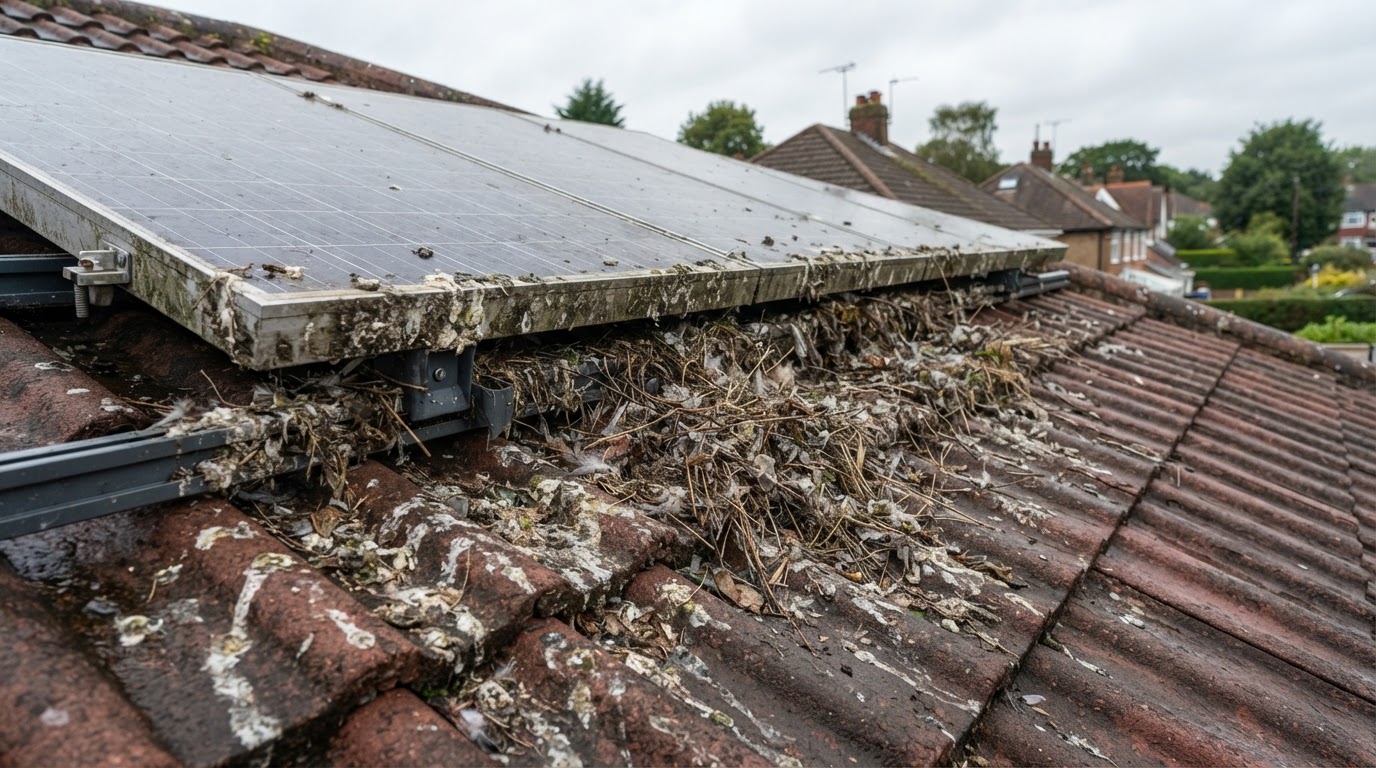
Signs You Have Pigeons Nesting Under Your Solar Panels
The most common signs that pigeons are nesting under your solar panels are droppings on the panel glass or surrounding roof, nesting material visible at the edges of the array, birds repeatedly seen landing on or entering beneath the panels, and unusual noise coming from the roof. Because the nesting space is hidden from view, the problem often goes unnoticed until contamination becomes visible.
Catching the signs early makes a real difference. The longer pigeons remain established beneath an array, the more contamination spreads across the panels, the roof tiles and the gutters — and the more involved the clean-up becomes. This guide explains the warning signs to look for and what to do if you suspect birds are nesting under your panels.
Visible Droppings on the Panels or Roof
Pigeon droppings are usually the first and most obvious sign. Unlike light dust or pollen, which washes off relatively easily in rain, pigeon droppings are thick, opaque and acidic. They bond to the panel glass and form a hardened crust that rainfall rarely shifts. If you can see white or greyish splashes and streaks concentrated around the array — particularly on the lower edges of the panels and the roof tiles directly beneath — that is a strong indicator of roosting or nesting birds above.
Droppings are not just a cosmetic issue. Because they block sunlight from reaching the photovoltaic cells, even a modest amount of fouling in the right place can reduce the panel's output. Our article on how dirty panels affect electricity bills explains this in more detail.
Nesting Material at the Panel Edges
Pigeons build nests from twigs, grass, straw and whatever material they can gather. If you can see twigs or debris protruding from beneath the edges of the array — visible from the ground on a single-storey roof or through binoculars on a taller property — that is a clear sign a nest has been built underneath. The material often extends beyond the panel frame and can be seen catching on the surrounding tiles.
Nesting material also tends to wash down into the gutters during rain, which leads to the next sign.
Gutters Filling or Overflowing Unexpectedly
A sudden increase in gutter blockages or overflowing water, particularly on the roof slope that carries the solar array, is a common secondary sign. Nesting material that dislodges from beneath the panels washes into the gutters and forms a dense mat that traps leaves, moss and debris. If your gutters were previously clear and have started overflowing, it is worth checking whether birds are the cause. Read more in our guide to signs your gutters need cleaning.
Birds Repeatedly on the Roof
If you regularly see pigeons landing on your roof, walking across the panels or disappearing beneath the array, they are very likely nesting there. Pigeons are creatures of habit and return to the same site each season, so repeated visits — particularly by a pair of birds — are a reliable indicator. You may notice them most in the early morning or at dusk when they return to roost.
Noise From the Roof
Pigeons are surprisingly noisy, particularly during the breeding season. If you hear cooing, scratching, fluttering or the sound of movement coming from the roof — especially from the area beneath the solar array — it may indicate nesting activity. The sound often travels through the loft space or is noticeable through upstairs windows on quiet days.
Moss and Organic Growth Around the Array
Over time, the organic debris from nesting — droppings, twigs and plant material — breaks down on the roof surface and encourages moss, algae and lichen growth on the surrounding tiles. If you notice that moss or green staining is more pronounced around the solar array than on the rest of the roof, bird activity may be contributing. Our guide to why moss grows around solar panels covers this connection in detail.
A Drop in Solar Generation
If you monitor your solar generation and notice an unexplained drop in output that does not correlate with the weather or the season, contamination from bird droppings may be a factor. Because droppings are opaque, they block light from reaching the cells beneath the glass. Combining the signs above with a generation drop makes a strong case for inspection and cleaning.
What to Do If You Spot These Signs
If you recognise several of these signs, the recommended next step is a professional assessment. It is important not to attempt to remove an active nest yourself — under the Wildlife and Countryside Act 1981, active nests with eggs or chicks are legally protected and should not be disturbed. A professional will confirm whether nesting is active, advise on the correct timing for any work, and recommend the most appropriate solution.
The long-term fix for established nesting is professionally installed perimeter mesh, which seals the gap beneath the panels and prevents pigeons from returning. Learn more in our guide on how to stop pigeons nesting under solar panels.
Concerned About Birds Under Your Solar Panels?
If you have noticed any of these signs, Skyhawk Exterior Cleaning provides specialist solar panel bird proofing and cleaning across Sussex and Surrey. We assess the whole roof system honestly and carry out all work in accordance with UK wildlife legislation.
Arrange a free video quotation and we will help you confirm whether birds are nesting and what the best next step is.