Why Is Moss Growing Around My Solar Panels?
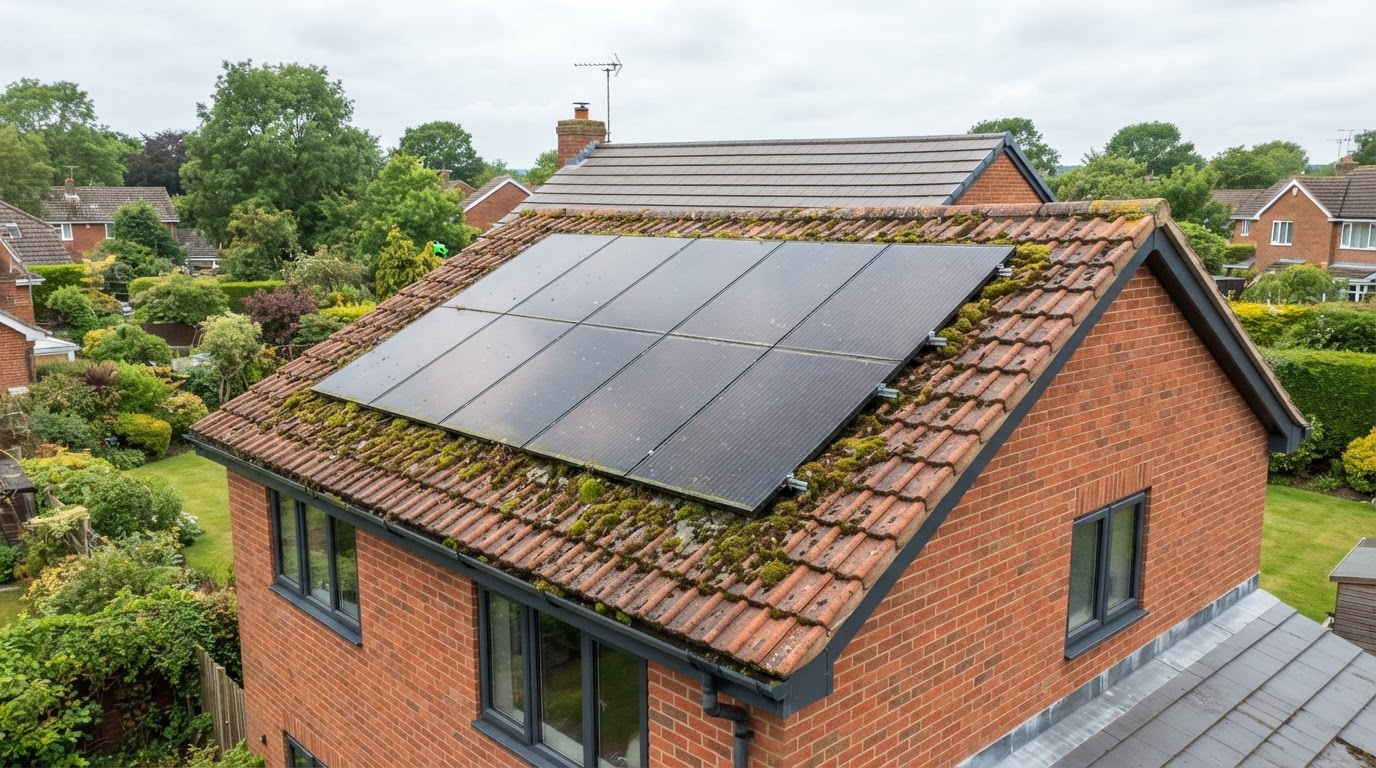
Moss doesn't usually grow because of the solar panels themselves. Instead, solar panels can create slightly shadier, damper conditions on certain roof areas. Combined with existing roof moss, nearby trees and trapped organic debris, this can encourage moss to become more noticeable around the solar array. The panels are not the root cause — but they can create an environment where moss is more likely to thrive on a roof that is already susceptible.
Across Sussex and Surrey, this is a question we are asked more and more often as solar installations become increasingly common. Homeowners notice a green or furry build-up developing around the edges of their panels and naturally wonder whether the panels are to blame. In almost every case, the moss was already present on the roof or the conditions for moss were already established — the panels have simply made it more visible or allowed it to develop more quickly in the immediate area.
In this guide, we will explain why moss often develops around solar panels, the contributing factors, and why maintaining the entire roof system — including roof cleaning, solar panel cleaning and bird proofing, and gutter cleaning — is the most effective long-term solution.
Do Solar Panels Cause Roof Moss?
No — solar panels do not directly cause moss to grow. Moss is a naturally occurring organism that thrives on damp, shaded roof surfaces. It does not appear simply because panels have been installed. However, solar panels can create conditions that allow existing moss to become more noticeable or spread more quickly on susceptible roofs.
The panels sit slightly above the roof surface, which means the area beneath and around them receives less direct sunlight and dries more slowly after rain. On a roof that is already prone to moss — perhaps because it is north-facing, shaded by trees, or already has moss growing on other areas — this slightly damper micro-environment can encourage moss to establish around the panel edges.
The key point is that the moss is responding to environmental conditions, not to the panels themselves. If the roof was already mossy, or if the conditions for moss growth were already present, the panels may simply make the problem more visible.
Why Moss Often Develops Around the Edges of Panels
Moss tends to establish around the edges and corners of solar panels for several reasons:
- Reduced sunlight: The area directly beneath and immediately around the panels receives less direct sunlight, meaning it stays damp for longer.
- Trapped moisture: Rainwater can collect around the panel frame edges, particularly if the roof has a shallow pitch, keeping the surrounding tiles wetter for longer.
- Organic debris: Leaves, pollen and airborne particles can collect around the panel edges where airflow is reduced, providing organic material that moss can grow on.
- Existing moss spores: If moss was already present on the roof before the panels were installed, the damp conditions around the panels allow it to spread.
This is why moss often appears as a green band or patchy growth around the perimeter of the solar array rather than evenly across the whole roof.
Does Shade Make a Difference?
Yes — shade is one of the most significant factors in moss growth on any roof. Moss thrives in damp, shaded conditions where the surface dries slowly. North-facing roof slopes, which receive less direct sunlight throughout the day, are particularly susceptible.
Solar panels add another layer of shading. The area beneath and around the panels receives less sun than the rest of the roof, which means it stays wetter for longer after rain. On a roof that is already shaded or north-facing, this additional shading can tip the balance and allow moss to establish more quickly.
If your roof is south-facing and receives plenty of direct sunlight, moss is far less likely to develop around the panels because the surface dries quickly. The combination of a shaded roof and solar panels is where moss problems are most commonly seen.
Can Birds Contribute to Moss Growth?
Yes — indirectly. When pigeons or other birds nest beneath solar panels, they introduce organic material to the roof area. This includes:
- Nesting material: Twigs, straw and grass collect beneath the panels and around the roof.
- Feathers: Feathers accumulate on the roof and in the gutters, retaining moisture.
- Organic debris: Bird activity brings additional organic matter onto the roof surface.
- Moisture retention: Nesting material and debris hold moisture against the tiles, creating ideal conditions for moss.
Birds do not cause moss directly, but the debris and moisture they introduce to the roof area can accelerate moss growth, particularly around the panels where the debris collects. This is one of the reasons why bird proofing is often recommended alongside roof cleaning — removing the source of the debris helps keep the roof cleaner and drier.
You can learn more in our guide: Why Do Birds Nest Under Solar Panels?
Why Blocked Gutters Can Make the Problem Worse
Blocked gutters contribute to moss growth around solar panels in a less obvious but important way. When gutters are blocked with moss, leaves or bird debris, rainwater cannot flow away properly. Instead, it backs up onto the roof, keeping the lower sections of the tiles wetter for longer.
If your solar panels are installed on the lower portion of the roof — as many are — this means the area around the panels stays damp because the gutters are not draining. The combination of trapped moisture from blocked gutters and the shading from the panels creates ideal conditions for moss.
Professional gutter cleaning ensures rainwater flows away from the roof properly, helping the surface dry more quickly and reducing the conditions moss needs to grow. You can read more in our guide: Why Are My Gutters Overflowing?
Can Roof Moss Affect Solar Panels?
Yes — roof moss can affect solar panels in several ways:
- Debris on panels: Moss fragments shed from the roof during rain and frost can land on the panel surface, reducing the amount of sunlight reaching the cells.
- Gutter blockages: Moss washing into the gutters causes blockages, which in turn cause water to back up onto the roof.
- Moisture retention: Heavy moss growth on the roof retains moisture, which can affect the surrounding roof structure and make the area around the panels damper.
- Increased maintenance: A mossy roof requires more frequent cleaning of both the roof and the panels to keep everything functioning properly.
This is why roof moss should not be ignored simply because the panels are the most visible part of the roof. The moss affects the whole system. You can read more in our guide: Is Roof Moss Damaging Your Roof?
Should Moss Be Removed Before Bird Proofing?
In most cases, yes. If a roof has heavy moss growth, it is usually best to remove the moss before installing bird proofing. There are several reasons for this:
- Cleaner working surface: Installing mesh on a clean roof is more straightforward and produces a better result.
- Reduced debris: Removing moss first means there is less organic material to wash into the gutters after the proofing is installed.
- Better long-term results: A clean roof stays drier, which means the conditions for moss to return are reduced.
- Combined visit: Many homeowners choose to have roof cleaning, solar panel cleaning, gutter cleaning and bird proofing carried out in a single visit, which is more efficient and cost-effective.
Every roof is different, so we always assess the condition of the roof before recommending the best sequence of work.
Why Maintaining the Whole Roof Matters
Moss around solar panels is rarely an isolated problem. It is usually a sign that the wider roof system needs attention. The most effective solution is to maintain the roof as a complete system rather than treating the moss in isolation.
This means considering:
- Roof cleaning: Removing moss at source so it does not continue to spread or wash into the gutters.
- Solar panel cleaning: Removing debris and contamination from the panels so they can receive maximum sunlight.
- Bird proofing: Preventing pigeons from nesting beneath the panels, which reduces debris and moisture on the roof.
- Gutter cleaning: Ensuring rainwater flows away properly so the roof does not stay unnecessarily damp.
- Roof drainage: Checking that downpipes and drainage are working correctly.
By addressing all of these together, the roof stays cleaner, drier and easier to maintain in the long term.
Looking After the Whole Roof
The best results usually come from maintaining the roof as a complete system rather than treating individual problems in isolation. When moss is removed from the roof, the panels are cleaned, the gutters are cleared and bird proofing is installed, the entire roof functions better.
Water drains away properly, the surface dries more quickly after rain, there is less organic debris to feed moss growth, and the panels receive more sunlight. This joined-up approach means the roof needs less frequent maintenance and the results of each visit last longer.
At Skyhawk Exterior Cleaning, we provide roof cleaning, solar panel cleaning and bird proofing, and gutter cleaning as part of one integrated roof maintenance programme. We assess the whole roof before recommending the best approach, rather than simply treating the most visible symptom.
Contributing Factors at a Glance
| Contributing Factor | Effect on Moss Growth |
|---|---|
| Shade | Reduces drying time, allowing moss to establish on damp surfaces |
| Tree cover | Adds shade, leaves and organic debris that feed moss growth |
| Existing moss | Spores spread to damp areas around panels where conditions are ideal |
| Bird activity | Introduces nesting material and moisture-retaining debris to the roof |
| Blocked gutters | Cause water to back up onto the roof, keeping tiles damp for longer |
Roof Maintenance Tasks and Why They Help
| Roof Maintenance Task | Why It Helps |
|---|---|
| Roof cleaning | Removes moss at source so it cannot spread or wash into gutters |
| Solar panel cleaning | Removes debris and contamination so panels receive maximum sunlight |
| Bird proofing | Prevents nesting that introduces debris and moisture to the roof |
| Gutter cleaning | Ensures water drains away so the roof surface dries more quickly |
| Roof inspection | Identifies moss, bird activity and drainage issues before they worsen |
Questions We Get Asked On Site
Did my solar panels cause the moss?
In almost all cases, no. The moss was either already present on the roof or the conditions for moss were already established. The panels may have created a slightly damper environment that allowed it to become more noticeable, but they are not the root cause.
Can moss reduce solar panel performance?
Moss on the roof itself does not directly reduce panel performance, but moss fragments and debris can land on the panel surface and reduce the amount of sunlight reaching the cells. Keeping the roof clean helps keep the panels clean.
Should roof moss be removed before bird proofing?
In most cases, yes. Removing moss first provides a cleaner working surface, reduces the debris that would otherwise wash into the gutters, and produces better long-term results. Many homeowners combine roof cleaning and bird proofing in a single visit.
Will the moss return?
Moss can return over time, particularly on shaded or north-facing roofs. However, professional roof cleaning combined with biocide treatment, gutter maintenance and bird proofing significantly reduces the rate of regrowth and keeps the roof cleaner for longer.
Should the gutters be cleaned too?
Yes. Blocked gutters cause water to back up onto the roof, keeping the tiles damp and encouraging moss. Cleaning the gutters as part of the same visit helps the roof dry more quickly and reduces the conditions moss needs to grow.
Common Mistakes Homeowners Make
- Blaming the solar panels instead of the roof conditions. The panels are rarely the cause — the roof was likely already susceptible to moss.
- Cleaning the panels but leaving roof moss. Moss on the roof will continue to shed debris onto the panels and into the gutters.
- Ignoring blocked gutters. Blocked gutters keep the roof damp, which encourages moss to grow.
- Installing bird proofing without removing heavy moss first. This leaves organic material on the roof that will continue to cause problems.
- Waiting until moss spreads across the roof. Early removal is easier, more effective and helps prevent gutter blockages.
Key Takeaways
- Solar panels do not directly cause moss, but they can create conditions that allow existing moss to become more noticeable on susceptible roofs.
- Moss growth is influenced by shade, moisture, nearby trees, existing roof moss, bird activity and blocked gutters.
- The most effective solution is to maintain the whole roof system — roof, panels, gutters and bird proofing — rather than treating moss in isolation.
- Roof moss should usually be removed before bird proofing is installed.
- Bird nesting beneath panels contributes debris and moisture that can accelerate moss growth.
- Blocked gutters keep the roof damp, creating ideal conditions for moss around the panels.
- Every roof is different and moss growth depends on multiple environmental factors, not simply the presence of solar panels.
Frequently Asked Questions
Do solar panels cause roof moss?
No. Solar panels do not cause moss to grow. However, they can create slightly shadier, damper conditions on the roof that allow existing moss to spread more quickly on susceptible surfaces.
Why is moss growing around my solar panels?
Moss develops around solar panels because the area beneath and around the panels receives less sunlight and dries more slowly. Combined with existing moss, nearby trees or bird activity, this creates ideal conditions for moss to establish.
Can moss affect solar panel performance?
Moss on the roof does not directly affect the panels, but moss fragments and debris can land on the panel surface and reduce the amount of sunlight reaching the cells. Keeping the roof clean helps keep the panels performing well.
Should moss be removed before bird proofing?
In most cases, yes. Removing moss first provides a cleaner surface for bird proofing installation, reduces debris that would otherwise enter the gutters, and produces better long-term results.
Can blocked gutters make moss worse?
Yes. Blocked gutters cause water to back up onto the roof, keeping the tiles damp for longer. This creates ideal conditions for moss, particularly around solar panels where the roof is already slightly shadier.
Does shade encourage moss?
Yes. Shade is one of the most significant factors in moss growth. North-facing roofs and areas shaded by trees or solar panels dry more slowly, creating the damp conditions moss needs to thrive.
Should I clean the roof before cleaning the panels?
It is often best to clean the roof first so that debris does not continue to shed onto the freshly cleaned panels. Many homeowners combine roof cleaning, panel cleaning and gutter cleaning in a single visit.
Can I remove roof moss myself?
Roof moss removal involves working at height and carries significant safety risks. Professional roof cleaning uses specialist equipment and appropriate methods to remove moss safely without damaging the tiles.
How often should roof moss be removed?
There is no fixed schedule. The frequency depends on the roof's orientation, shade, tree cover and environmental conditions. A professional assessment can help determine when cleaning is needed.
When should I arrange professional roof cleaning?
If you have noticed moss growing around your solar panels, debris collecting on the roof, or blocked gutters, it is worth arranging a professional assessment. Addressing the issue early helps prevent more extensive maintenance problems.
A Real Example From Sussex
A homeowner near Dorking contacted us after noticing moss building up around the edges of their solar panels. The roof was north-west facing and partially shaded by a mature oak tree, and the panels had been installed around three years earlier. The homeowner was concerned that the panels were causing the moss and asked whether they should be removed.
On inspection, we found that the roof already had light moss growth across several areas before the panels were installed — the shading from the panels had simply allowed it to become more concentrated around the array. We also found clear evidence of pigeon nesting beneath the panels, with feathers and nesting material collecting on the roof and in the gutters. The gutters were partially blocked with a mix of moss, leaves and bird debris, which was causing water to back up onto the lower roof tiles.
We carried out a combined maintenance visit that included professional roof cleaning to remove the moss at source, gutter clearance on all elevations, solar panel cleaning to remove debris and contamination, and bird proofing installation to prevent further pigeon nesting. The moss was removed, the gutters were flowing freely, the panels were clean, and the conditions that had allowed the moss to thrive were addressed.
Had the panels simply been cleaned in isolation, the moss would have continued to shed debris onto them and the gutters would have remained blocked. By treating the roof as one complete system, the homeowner was left with a cleaner, drier roof that would require less ongoing maintenance.
Final Conclusion
Moss growing around solar panels is rarely caused by the panels themselves. In almost every case, the roof was already susceptible to moss — whether because of shade, nearby trees, existing growth or blocked gutters — and the panels have simply created conditions that allowed it to become more noticeable.
The most effective solution is to maintain the roof as a complete system. Roof cleaning removes moss at source, gutter cleaning ensures water drains away properly, solar panel cleaning removes debris and contamination, and bird proofing prevents the nesting that introduces debris and moisture to the roof. Together, these services keep the roof cleaner, drier and easier to maintain.
If you have noticed moss growing around your solar panels, arrange a free video quotation with Skyhawk Exterior Cleaning. We will assess the roof, the panels, the gutters and any bird activity, and provide honest recommendations based on what your property actually needs. You can also read our FAQs for more information about our services.