
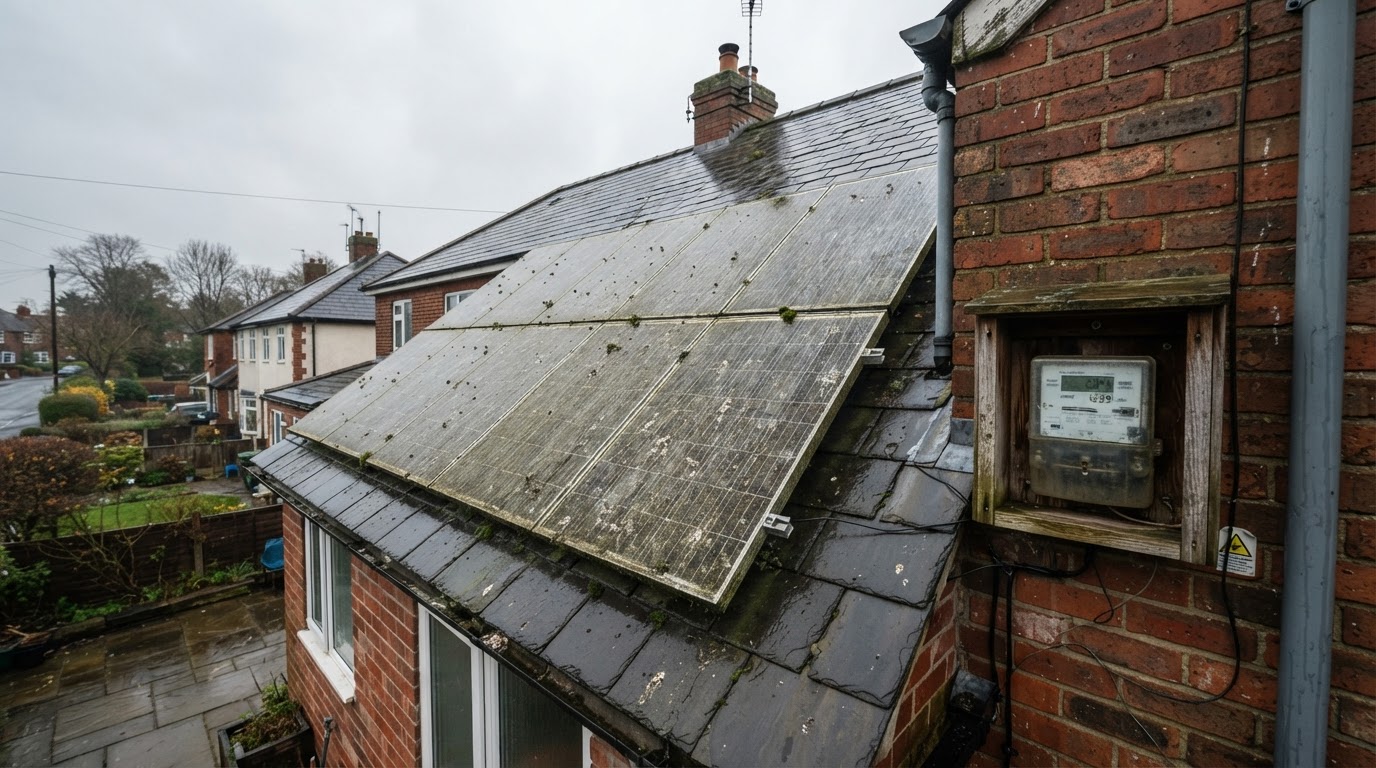
Do Dirty Solar Panels Affect Your Electricity Bills?
Potentially, yes. Dirt, bird droppings, pollen and other debris can reduce the amount of sunlight reaching your solar panels, which may reduce the electricity they generate. The impact varies depending on the amount and type of contamination, the location of the panels and the surrounding environment. No two properties are exactly the same, which is why it is difficult to put a single figure on the effect.
Across Sussex and Surrey, thousands of homes now have roof-mounted solar arrays. Many homeowners install panels expecting decades of trouble-free generation, only to discover that within a year or two the glass has become dull, streaky and dotted with bird mess. This guide explains how contamination builds up, which types of soiling have the biggest impact, and why cleaning the panels is only one part of looking after the whole roof system.
How Solar Panels Generate Electricity
Solar panels generate electricity by converting sunlight into direct current (DC) through photovoltaic cells embedded beneath the glass surface. An inverter then converts this DC electricity into alternating current (AC), which powers your home. The amount of electricity generated depends on how much sunlight reaches the cells, so anything that blocks or scatters that light — even a thin film of dust — can reduce output.
It is important to remember that performance depends on many factors beyond cleanliness. Panel orientation, shading from nearby trees or buildings, the angle of the roof, the efficiency of the inverter and, of course, the weather all play a part. Cleaning helps ensure the panels can receive as much available sunlight as possible, but it is not a guarantee of a specific increase in generation.
What Happens When Panels Become Dirty?
When contamination settles on the glass surface of a solar panel, it creates a barrier between the sun and the photovoltaic cells. Even a relatively thin layer of dust or pollen can scatter light before it reaches the cells, while thicker deposits such as bird droppings can block light entirely in localised areas. This creates what is sometimes called a "hot spot" effect, where shaded cells work harder and can become less efficient over time.
The effect is rarely uniform across the whole array. One panel may be heavily fouled by bird droppings while another is relatively clean, which means the overall system performance is dragged down by the dirtiest panel. This is why professional cleaning usually addresses the entire array rather than just the most visible areas.
Which Contaminants Have the Biggest Impact?
Not all soiling has the same effect. Light dust may reduce light transmission slightly, while thick, opaque deposits can have a much more significant impact. The table below summarises the most common contaminants found on solar panels in Sussex and Surrey and their possible effect on generation.
| Contamination | Possible Effect |
|---|---|
| Bird droppings | Opaque and thick; blocks sunlight entirely in localised areas and can bake onto the glass. |
| Dust | Creates a fine film that scatters light; more noticeable during dry spells. |
| Pollen | Forms a visible yellow-green layer that can cover large areas of the array. |
| Tree sap | Bonds stubbornly to the glass and is not removed by rainfall alone. |
| Moss debris | Spores and fragments shed from the surrounding roof settle on the panels and trap moisture. |
Do Bird Droppings Make a Difference?
Bird droppings are one of the most significant contaminants found on solar panels. Unlike dust or pollen, which form a relatively even film, droppings are thick, opaque and often concentrated in specific areas. A single large dropping can block light to a section of cells entirely, and because droppings are not easily dissolved by rain, they tend to accumulate over time rather than wash away.
Properties with pigeons nesting beneath the panels are particularly affected. Pigeons roosting under the array will foul the panels above them repeatedly, meaning the contamination returns quickly no matter how often the glass is cleaned. In these cases, solar panel bird proofing is usually recommended alongside cleaning to prevent the problem recurring.
Can Moss on the Roof Contribute?
Yes. A mossy roof and dirty solar panels are often connected. Moss growing on roof tiles releases spores, particularly during damp weather, and these spores settle on the glass surface of the panels. Over time, moss fragments can also break away from the tiles and collect around the edges of the array or in the gaps beneath the panels.
This is why roof cleaning is often recommended alongside solar panel cleaning. Removing moss from the surrounding roof helps reduce the amount of organic debris landing on the panels, keeping them cleaner for longer and reducing the frequency of cleaning required.
Why Blocked Gutters and Roof Maintenance Matter
Solar panels do not exist in isolation. If the gutters are blocked, overflowing rainwater runs across the roof and panels, leaving mineral deposits and streaks that re-soil the glass after cleaning. If birds are nesting beneath the panels, they will continue to foul the surface no matter how many times it is cleaned. If moss is growing on the tiles, it will keep shedding debris onto the panels.
The table below summarises the key roof maintenance tasks and why each one helps keep the panels performing as they should.
| Roof Maintenance Task | Why It Helps |
|---|---|
| Solar panel cleaning | Removes contamination that blocks sunlight from reaching the photovoltaic cells. |
| Bird proofing | Prevents pigeons nesting beneath the panels, which is the single biggest cause of heavy fouling. |
| Roof cleaning | Removes moss that sheds spores and fragments onto the panels. |
| Gutter cleaning | Prevents overflowing water from running across the roof and leaving streaks on the glass. |
| Roof inspection | Identifies early signs of bird activity, moss growth and drainage issues before they worsen. |
Can Rain Clean Solar Panels?
Rain helps rinse away loose, light dust, and during wet winters this can be enough to keep panels relatively clean. However, rain is not effective at removing bird droppings, tree sap, pollen films or bonded pollution. These contaminants tend to bake onto the glass during dry, sunny periods and become more difficult to remove over time.
This is one of the reasons why the "rain will clean them" assumption can lead to disappointment. Homeowners who rely on rainfall alone often find that by the time they notice a drop in generation, the panels are already heavily soiled and require professional cleaning to restore them.
How Professionals Clean Solar Panels Safely
Professional solar panel cleaning is typically carried out using purified water and soft, non-abrasive brushes applied from a secure platform or reach-and-wash pole. Purified water is deionised, meaning it contains no minerals that would leave streaks or deposits on the glass. This allows the panels to be cleaned effectively without the need for harsh chemicals or high pressure.
The process is designed to protect the seals, coatings and electrical components that keep the panels weatherproof. It is also an opportunity to inspect the wider roof system — checking for bird activity, moss growth, blocked gutters and any signs of damage that could affect the panels or the roof itself.
Looking After the Whole Roof
Solar panels are only one part of the roof. The condition of the surrounding roof directly affects how quickly the panels become dirty again, which is why treating the roof as one complete system often produces better long-term results than treating each element in isolation.
Regular maintenance may also include:
- Roof cleaning — removing moss that sheds spores onto the panels.
- Gutter cleaning — preventing overflowing water from re-soiling the glass.
- Bird proofing — stopping pigeons from nesting beneath the array.
- Roof inspections — identifying issues early before they affect generation.
- Solar panel cleaning — removing contamination that blocks sunlight.
By combining these services, homeowners can keep the entire roof system in better condition and reduce the frequency of individual maintenance visits.
Questions We Get Asked On Site
Will dirty panels stop working?
No, dirty panels will continue to generate electricity, but they may generate less than they would if clean. The reduction depends on the type and amount of contamination.
Does rain clean them?
Rain rinses away loose dust but does not remove bird droppings, tree sap or bonded pollution. Periodic professional cleaning is still recommended.
Do pigeon droppings really matter?
Yes. Pigeon droppings are thick and opaque, and they block sunlight from reaching the cells. Properties with pigeon activity beneath the panels are typically the most heavily soiled.
Should I clean the roof at the same time?
In many cases, yes. Moss on the roof sheds spores onto the panels, so cleaning the roof helps keep the panels cleaner for longer.
How do I know when they need cleaning?
If the panels look dull, streaky or dotted with bird mess, or if you notice a drop in generation during a period of consistent weather, it may be time to arrange a professional clean.
Common Mistakes Homeowners Make
- Assuming rain keeps panels clean. Rain helps with light dust but does not remove bird droppings or bonded contamination.
- Ignoring heavy bird fouling. Droppings are the most opaque contaminant and have the biggest impact on light transmission.
- Cleaning the panels but leaving pigeons nesting underneath. The fouling will return quickly if the nesting problem is not addressed.
- Forgetting about blocked gutters. Overflowing water runs across the roof and panels, leaving streaks and mineral deposits.
- Waiting until the panels are heavily contaminated. Regular maintenance prevents contamination from becoming baked onto the glass.
Key Takeaways
- Dirt, bird droppings and debris can reduce the amount of sunlight reaching solar panels, which may reduce generation.
- The impact varies from property to property and depends on the type and amount of contamination.
- Bird droppings are the most significant contaminant because they are opaque and do not wash off in rain.
- Moss on the roof and blocked gutters contribute to panel soiling and should be addressed at the same time.
- Professional cleaning uses purified water and soft brushes to protect the panels, seals and coatings.
- Looking after the whole roof — panels, roof, gutters and bird proofing — produces better long-term results than cleaning the panels alone.
A Real Example From Sussex
A homeowner near Horsham contacted us after noticing their solar generation had dropped noticeably over the summer. On inspection, the panels were heavily fouled with pigeon droppings — pigeons had been nesting beneath the array for several months. The surrounding roof had moss growth along the verges, and the gutters were partially blocked with feathers and nesting material.
Rather than simply cleaning the panels and leaving, we carried out a full roof maintenance visit. The panels were cleaned using purified water and a soft brush, the gutters were cleared of nesting debris, the roof was treated to remove moss, and bird proofing mesh was installed around the perimeter of the array to prevent the pigeons returning. The homeowner was left with clean panels, clear gutters, a moss-free roof and a long-term solution to the bird activity that had been causing the problem in the first place.
Frequently Asked Questions
Do dirty solar panels affect electricity bills?
Potentially, yes. Contamination reduces the amount of sunlight reaching the cells, which may reduce the electricity generated. The impact varies depending on the property and the level of contamination.
Can bird droppings reduce solar panel performance?
Yes. Bird droppings are opaque and block sunlight from reaching the cells. They do not wash off easily in rain and tend to accumulate over time.
Does rain clean solar panels?
Rain rinses away loose dust but does not remove bird droppings, tree sap or bonded pollution. Periodic professional cleaning is still recommended.
Can roof moss affect my panels?
Yes. Moss releases spores and fragments that settle on the panels and trap moisture. Roof cleaning helps reduce this contamination.
Should I clean my gutters too?
In most cases, yes. Blocked gutters cause overflowing water that runs across the roof and panels, leaving streaks and deposits that re-soil the glass.
How often should solar panels be cleaned?
There is no fixed schedule. The ideal frequency depends on bird activity, tree cover, roof condition and how quickly contamination builds up. Most properties benefit from periodic cleaning when the panels begin to look soiled.
Can I clean them myself?
Some homeowners can clean safely accessible panels, but roof-mounted systems often benefit from professional cleaning due to safe access, specialist equipment and the opportunity to inspect the wider roof.
Do all homes need bird proofing?
No. Bird proofing is recommended where pigeons or other birds are actively nesting beneath the panels. If there are no signs of bird activity, it may not be necessary.
When should I arrange professional cleaning?
If your panels look dull, streaky or dotted with bird mess, or if you notice a drop in generation during a period of consistent weather, it is usually time to arrange a professional clean.
Is solar panel cleaning worth it?
For most homeowners with roof-mounted panels, yes. Professional cleaning helps ensure the panels receive as much available sunlight as possible while also providing an opportunity to inspect the roof, gutters and bird activity.
If your solar panels are looking dull or you suspect bird activity is affecting your roof, book a free video call with Skyhawk Exterior Cleaning. We assess every property individually and provide honest advice on the most appropriate maintenance for your roof, gutters and solar panels. You can also read our FAQs for more information.