
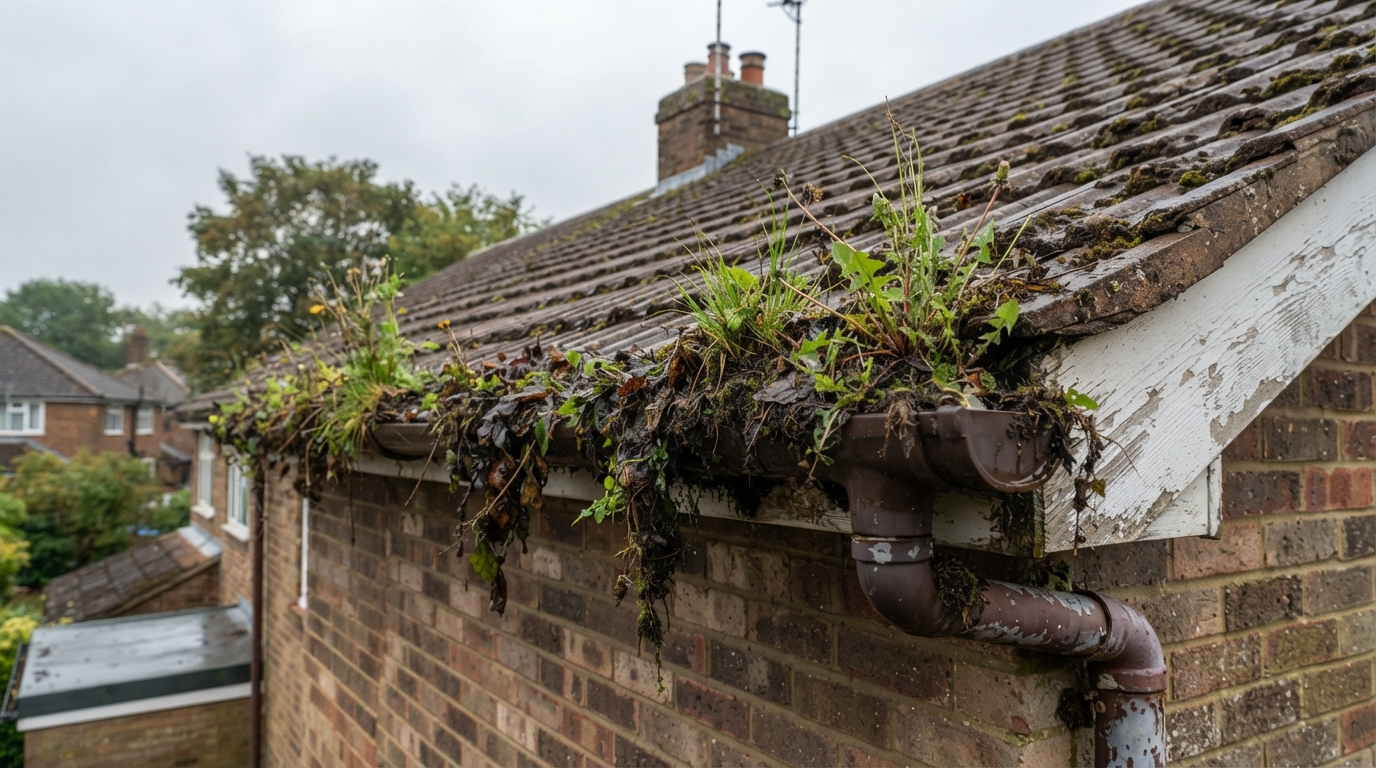
Gutters perform a vital, often understated role in protecting residential properties across Sussex and Surrey. By channelling thousands of litres of rainwater away from rooflines, exterior walls, and foundation footings each year, well-maintained gutters keep your home dry and structurally sound. However, because gutters sit high up out of direct line of sight, blockages frequently build up unnoticed until rainwater begins spilling over the edges.
The good news is that gutters rarely block overnight. Most homes display clear, early warning signs your gutters need cleaning long before serious problems develop. By learning to recognise these subtle indicators, homeowners can arrange simple, routine gutter clearing before trapped debris causes damp patches, sagging rainwater pipes, or fascia deterioration.
Short Answer:
The most common signs your gutters need cleaning include overflowing rainwater, visible moss or plant growth in the channels, water staining on external walls, sagging guttering, bird activity around the roofline, and damp patches inside or outside your home. Routine gutter clearing every 6–12 months prevents trapped debris from causing costly structural maintenance.
Why Recognising Blocked Gutters Early Matters
A functional rainwater drainage system relies on gravity and clear channels. When leaves, twigs, pine needles, moss, and roof tile grit accumulate inside the guttering, they create physical dams. During typical UK downpours, this trapped organic matter restricts water flow, forcing rainwater to back up and spill over the front or rear edges of the guttering.
Taking a proactive, preventative approach to professional gutter cleaning ensures rainwater continues to drain cleanly into downpipes. Catching minor blockages early protects fascias and soffits, prevents water penetration into brickwork, and saves homeowners across Sussex and Surrey from expensive reactive repairs.
1. Water Overflowing During Rainfall
The most immediate and obvious sign that your gutters need attention is water cascading over the sides like a waterfall during moderate or heavy rain. If rainwater is spilling over the front lip of the guttering instead of flowing smoothly towards the corner outlets, a physical obstruction is blocking the channel.
Even partial blockages reduce the capacity of your guttering system. During winter or intense autumn storms, overflowing water can saturate rendering, stain exterior brickwork, and splash heavily onto ground-level patios and driveways.
2. Plants, Moss, or Weeds Growing in the Gutters
If you notice small green shoots, grass, weeds, or clumps of moss sprouting above the rim of your guttering, your channels have accumulated a rich layer of organic silt. Winds and birds carry seeds that land in the damp, nutrient-rich compost formed by decomposing leaves and roof moss.
Root systems from growing plants hold onto moisture and create dense dams that completely stop water movement. If vegetation is visible from ground level, the gutters require thorough clearing to remove the silt and plant growth down to the clean plastic or metal channel.
3. Water Stains on External Walls or Fascias
Water stains appearing on exterior walls, rendered surfaces, or beneath timber or uPVC fascia boards are strong indicators of hidden gutter leaks or overflows. As rainwater repeatedly spills over the back or front edge of a blocked channel, it runs down the face of the building, leaving dark, unsightly streaks or greenish algae marks.
Over time, constant water exposure can soften timber fascias, cause paintwork to bubble, and lead to penetrating damp in solid or cavity brick walls. Addressing blocked gutters quickly allows exterior surfaces to dry out naturally before permanent damage occurs.
4. Gutters Sagging or Pulling Away From the Roofline
Rainwater channels are engineered to support flowing water, not kilograms of wet, heavy sludge. When gutters become clogged with wet leaves, moss, and standing water, the accumulated weight puts immense strain on the fixing brackets and fascia screws.
If you notice a section of guttering dipping in the middle or bowing outward away from the roofline, the brackets are warping under excess weight. Clearing the heavy obstruction restores the correct fall towards the downpipe and prevents brackets from snapping completely.
5. Birds Regularly Picking at Your Gutters
Birds frequently landing on your guttering or picking at the channels are often searching for food or nesting material. Clogged gutters harbour earthworms, insects, spiders, and abundant moss—an ideal feeding ground and nesting resource for local wildlife.
If starlings, sparrows, or pigeons are persistently congregating along your roofline, it is worth inspecting the channels from the ground with binoculars. Increased bird activity almost always coincides with standing organic debris inside the guttering.
6. Moss Collecting Below the Downpipes
When roof moss loosens during heavy rain, it washes down the slope and collects inside the gutters. If small clumps or balls of green moss begin accumulating on the ground directly beneath downpipe shoes or drain gullies, moss is migrating through your drainage system.
This is a clear indicator that both your roof tiles and your gutters require attention. As explained in our guide on whether roof moss damages roof tiles, removing roof moss prevents a continuous supply of debris from clogging your rainwater downpipes.
7. Water Isn't Flowing Properly Through Downpipes
When rain falls, water should flow promptly out of the bottom downpipe shoe into ground gullies or soakaways. If water only trickles slowly out during a heavy shower, or if you can hear water bubbling and gurgling inside the vertical pipe, a partial blockage has formed in the neck or bend of the downpipe.
Downpipe bends near the eaves are prime locations for twigs and moss balls to lodge. Clearing vertical downpipes using specialized clearance rods ensures rainwater exits the roofline cleanly without backing up into upper gutter runs.
8. Damp Patches Appearing Near External Walls
Interior damp patches on upper-floor ceilings, near window heads, or along external walls often trace back to blocked rainwater goods directly outside. When water overflows at fascia level, it can seep beneath tile eaves or penetrate brickwork mortar joints.
If you notice musty smells, peeling wallpaper, or discoloured patches indoors near the top of external walls, inspecting and clearing the adjacent exterior gutters is an essential first diagnostic step.
9. You Can't Remember the Last Time They Were Cleaned
Gutter maintenance is easily forgotten during busy household schedules. If more than 12 months have passed since your gutters were last cleared, a significant volume of leaf litter, dust, and organic debris will naturally have settled inside the channels.
Surrey and Sussex experience varied seasonal weather—from autumn leaf falls to summer storms—making annual or bi-annual clearing a essential part of standard property maintenance. Routine clearing is far simpler and more economical than dealing with reactive emergency blockages.
10. Your Neighbours' Gutters Have Recently Been Cleaned
Residential avenues across Sussex and Surrey often share similar surrounding tree cover, roof ages, and weather exposure. If your immediate neighbours are having their gutters or roofs professionally cleared, your own property has likely accumulated a similar volume of organic debris.
Coordinating gutter clearing with neighboring properties is a practical way to ensure entire terrace or semi-detached rooflines remain clear and free-flowing.
What Happens If Blocked Gutters Are Ignored?
Ignoring the early signs of clogged guttering can lead to preventable secondary issues around the home. While a minor overflow during a brief summer shower is easily resolved, persistent water spillage over months or years can cause:
- Fascia and Soffit Deterioration: Constant moisture against timber or uPVC backing boards encourages rot, discoloration, and bracket failure.
- Penetrating Wall Damp: Water running down external brickwork or render breaks down mortar joints and creates internal damp patches.
- Saturated Ground Conditions: Water pooling at ground level can wash out patio jointing sand, stain block paving, and oversaturate soil around foundations.
- Foundation Stress: Concentrated water discharge directly adjacent to footings can contribute to ground movement in clay-heavy Sussex soils.
Can Every Gutter Be Cleaned Safely?
Modern professional gutter cleaning utilizes powerful high-reach gutter vacuum systems with lightweight carbon-fiber poles, allowing technicians to clear gutters safely up to three or four storeys high directly from ground level. Integrated inspection cameras enable precise monitoring inside the channels to guarantee complete debris removal.
At Skyhawk Exterior Cleaning, our comprehensive gutter clearing service includes:
- Full removal of moss, leaves, silt, twigs, and weeds from horizontal runs.
- Thorough testing and rod clearance of vertical downpipes and swan-neck bends.
- Exterior wipe-down of uPVC gutters, fascias, and soffits where requested.
- Inspection of joint seals and end caps to ensure watertight integrity.
Furthermore, because roof moss is the primary source of recurring gutter blockages, many homeowners choose to combine gutter clearing with our professional roof cleaning or waterless roof cleaning services to address the root cause of organic debris.
Key Takeaways
- Overflowing Water is Rule #1: Water cascading over gutter edges during rainfall is the clearest sign of a physical blockage.
- Plants Mean Silt: Weeds, grass, or moss growing in channels indicate decomposing organic matter holding moisture.
- Protect Your Fascias: Timely gutter clearing prevents rainwater from damaging timber fascias, soffits, and brickwork.
- Schedule Annually: Clearing gutters once or twice a year—especially after autumn leaf fall—keeps drainage systems functioning perfectly.
- Ground-Level Safety: Professional high-reach vacuum technology clears multi-storey gutters safely without risky ladder work.
Frequently Asked Questions
How do I know if my gutters are blocked without climbing a ladder?
Look for visible indicators during rainfall, such as water overflowing the sides, trickling down exterior walls, or dripping from joints. On dry days, look for weeds growing in the channels, moss on ground surfaces below downpipes, or sagging gutter brackets.
Can blocked gutters cause internal damp?
Yes. When gutters overflow, water runs down external brickwork and can seep through porous bricks, failed mortar joints, or window head flashings, causing damp patches on internal ceilings and walls.
How often should gutters be cleaned in Sussex and Surrey?
We recommend cleaning gutters at least once a year. Properties surrounded by mature trees or located near wooded areas may require bi-annual cleaning in late spring and late autumn. For detailed local guidance, read our article on how often gutters should be cleaned in Sussex.
Can moss from the roof block gutters?
Yes. Moss is one of the leading causes of gutter and downpipe blockages. Heavy rainfall dislodges moss clumps from roof tiles, which slide directly into the guttering and collect in downpipe outlets.
Do downpipes get blocked as well as horizontal gutters?
Yes. Downpipe bends (swan necks) near eaves level frequently trap moss balls and twigs. Professional gutter cleaning always includes checking and clearing downpipes to ensure unrestricted flow.
Should gutters be cleaned after roof cleaning?
Yes. Every Skyhawk roof clean automatically includes a complete gutter clearance at the end of the process to ensure all moss and debris removed from the roof tiles are completely cleared from the drainage system.
Can I inspect my gutters safely from the ground?
Yes. Homeowners can safely inspect gutters using binoculars, a camera with a telephoto zoom, or smart phone video from ground level. You can also book a free video survey with Skyhawk for a professional assessment.
How long does professional gutter cleaning take?
A standard two-storey residential property typically takes between 45 and 90 minutes to clear thoroughly using high-reach gutter vacuum systems, depending on the property size and volume of debris.
Are plastic uPVC gutters maintenance-free?
While uPVC gutters do not rust like historic cast iron, they still collect leaves, moss, and silt. Regular clearing is necessary to prevent structural sagging and joint leaks.
Is gutter cleaning included with Skyhawk's roof cleaning service?
Yes! Every roof clean carried out by Skyhawk Exterior Cleaning—whether low pressure washing or waterless manual scraping—includes full gutter clearing, fascia wipe-down, and biocide treatment as standard.
Arrange Your Free Gutter Cleaning Quotation
Don't wait for heavy downpours to reveal hidden gutter blockages. Skyhawk Exterior Cleaning provides professional, safe, and fully insured gutter clearing services across Crawley, Horsham, Guildford, Reigate, Brighton, and 130+ locations throughout Sussex and Surrey.
Book a free video call quotation with our team today, explore our gutter cleaning services, find out how much gutter cleaning costs, or call us directly on 01293 922 243 for friendly, honest advice.