
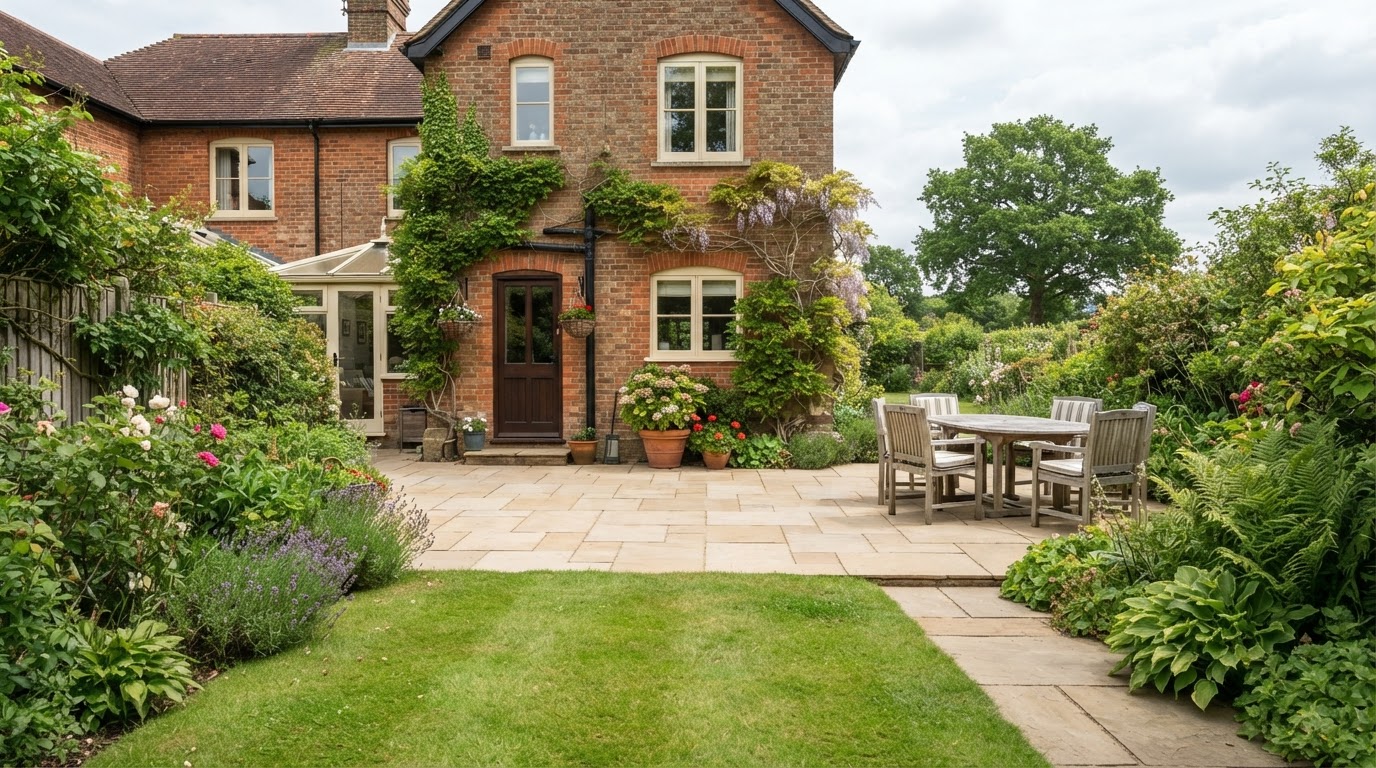
A clean patio transforms the way a garden looks and feels. Whether you have a sleek porcelain terrace, a warm Indian sandstone seating area or a practical concrete patio, professional cleaning removes the algae, moss, black spot and dirt that gradually build up over time. But one of the most common questions homeowners ask before booking is simple: how long will the results actually last?
Professional patio cleaning can keep your patio looking significantly cleaner for years, but there isn't one answer for every property. How long the results last depends on the paving material, surrounding environment, shade, tree cover and ongoing maintenance. Some patios stay looking fresh for several years after a single professional clean, whilst others—particularly those in damp, shaded gardens beneath mature trees—may show signs of algae returning sooner.
In this guide, we explain what influences how long patio cleaning lasts, why some surfaces stay cleaner than others and how to get the most from your investment. If you are considering patio restoration across Sussex and Surrey, this guide will help you set realistic expectations.
How Long Should Professional Patio Cleaning Last?
For most patios, professional cleaning keeps the surface looking noticeably cleaner for several years. However, the exact lifespan of a clean depends on a combination of factors that are unique to each property. A sunny, open porcelain patio with good drainage may stay looking fresh far longer than a shaded sandstone patio beneath a row of mature oak trees.
The key point is that there is no fixed expiry date on a professional patio clean. The best approach is to monitor the surface and arrange cleaning when algae, moss or staining begins to appear—rather than waiting for a specific number of years to pass.
What Affects How Long the Results Last?
Several factors influence how quickly a patio becomes dirty again after cleaning. Understanding these helps explain why two similar-looking patios in neighbouring Sussex or Surrey streets can age very differently:
- Patio material: Dense surfaces like porcelain resist staining better than porous natural stone.
- Shade: North-facing or heavily shaded patios stay damp for longer, creating ideal conditions for algae and moss.
- Tree cover: Overhanging trees drop leaves, seeds and organic matter that feed algae growth and accelerate staining.
- Drainage: Patios that retain standing water become dirty more quickly than those with effective runoff.
- Foot traffic: High-traffic areas collect dirt and organic matter faster than rarely used sections.
- Weather exposure: Damp, humid conditions promote organic growth, whilst prolonged sunlight naturally inhibits it.
- Previous maintenance: Patios that are cleaned regularly tend to stay cleaner for longer because contamination never becomes deeply established.
Does the Patio Material Matter?
Yes, the paving material has a significant influence on how long cleaning results last. Different surfaces absorb moisture and contaminants at different rates, which affects how quickly algae, moss and black spot return.
| Patio Material | Typical Longevity Considerations |
|---|---|
| Porcelain | Very low porosity means algae and dirt sit on the surface. Results often last the longest of all paving types. |
| Indian Sandstone | Naturally porous, so absorbs moisture and organic matter. May require more frequent cleaning in shaded areas. |
| Limestone | Similar to sandstone but often lighter in colour, making algae and staining more visible sooner. |
| Concrete | Moderately porous. Holds up reasonably well but can develop algae in damp conditions. |
| Block Paving | Joints between blocks collect debris and seeds, making weeds and moss return faster without ongoing maintenance. |
This is why porcelain patio cleaning often produces longer-lasting results than cleaning more porous natural stone surfaces, particularly in similar garden environments.
Why Shaded Patios Become Dirty More Quickly
Shade is one of the biggest factors affecting how long patio cleaning lasts. When a patio is shaded for much of the day—whether by the house itself, neighbouring buildings or mature trees—the surface stays damp for longer after rainfall. Algae, moss and lichen thrive in these damp, low-light conditions.
A north-facing patio in a leafy Surrey garden may begin showing green algae within months of a professional clean, whilst a south-facing patio in the same garden may stay looking fresh for years. This is simply because sunlight naturally dries the surface and inhibits organic growth.
| Factor | Effect on How Long Results Last |
|---|---|
| North-facing patio | Reduced sunlight means the surface stays damp longer, so algae and moss return sooner. |
| South-facing patio | Extended sunlight naturally dries the surface and inhibits organic growth, helping results last longer. |
| Heavy tree cover | Falling leaves, seeds and organic debris feed algae and moss, accelerating regrowth. |
| Open sunny garden | Excellent natural inhibition of organic growth. Results typically last the longest. |
| Damp garden | Persistent moisture creates ideal conditions for algae, so cleaning may need repeating sooner. |
Does Tree Cover Make a Difference?
Nearby trees have a significant impact on how long patio cleaning lasts. Overhanging branches drop leaves, berries, seeds and twigs throughout the year. As this organic matter decomposes on the patio surface, it provides a constant food source for algae, moss and lichen.
Homes across Sussex and Surrey—particularly those in established, leafy areas—often find that patios beneath mature trees become dirty again more quickly than those in open gardens. This is not a sign that the cleaning was ineffective; it is simply the natural result of organic debris continually landing on the surface.
Regular sweeping between professional cleans helps remove this debris before it breaks down and feeds organic growth. This simple step alone can noticeably extend the lifespan of a patio clean.
Can Black Spot Return?
Black spot is a form of lichen that anchors itself firmly to the surface of paving. Professional treatment can significantly reduce black spot, but because lichen spores are airborne, it is possible for black spot to return over time—particularly on porous surfaces in damp, shaded environments.
A biocidal treatment applied during professional cleaning helps kill remaining spores and slow regrowth, but no treatment can permanently prevent black spot from ever returning. The key is monitoring the surface and arranging cleaning when black spot begins to reappear, rather than waiting until it becomes deeply established. Learn more in our guide on how to remove black spot from a patio.
How Regular Maintenance Helps
Ongoing maintenance plays a major role in extending the life of a professional patio clean. Homeowners who sweep their patio regularly, remove fallen leaves and address small patches of algae before they spread will always get more longevity from each clean than those who ignore the surface entirely between visits.
For patios in challenging environments—such as shaded gardens with heavy tree cover—more frequent professional cleaning may be beneficial. The goal is to prevent organic growth from becoming established rather than waiting until the patio becomes slippery or heavily stained. Our guide on how often patios should be cleaned explains this in more detail.
Signs Your Patio Is Ready for Cleaning Again
Rather than waiting for a fixed number of years, the best approach is to watch for the signs that your patio is ready for another clean:
- Green algae: A visible green film or slick patches, particularly after rain.
- Slippery surface: The patio feels slippery underfoot when wet. See our guide on why patios become slippery for more detail.
- Black spot returning: Small dark dots appearing on the surface, particularly in shaded areas.
- Moss growth: Moss beginning to establish in joints or damp corners.
- Dull appearance: The surface has lost its original colour and looks tired compared to how it looked after the last clean.
When you notice these signs, it is time to arrange another professional clean—regardless of how long it has been since the last visit.
Questions We Get Asked on Site
Will my patio stay clean permanently?
No outdoor surface stays clean permanently. Patios are exposed to the British climate year-round, so algae, dirt and organic matter will gradually return. Professional cleaning keeps the surface looking its best for as long as possible, but ongoing maintenance is always part of the process.
Will algae come back?
Algae spores are airborne, so they can return over time—particularly in shaded or damp areas. A biocidal treatment applied during professional cleaning helps slow regrowth significantly, but algae will eventually reappear if conditions favour it.
Can black spot return?
Yes. Black spot is caused by airborne lichen spores. Professional treatment reduces it dramatically, but because spores travel through the air, black spot can return over time. Regular monitoring and periodic cleaning keep it under control.
Does sealing help?
Sealing can help some surfaces resist staining and slow organic growth, but it is not necessary for every patio. Porcelain, for example, is naturally low-porosity and often does not require sealing. We assess each patio individually before recommending whether sealing is worthwhile.
How often should I have it cleaned?
There is no fixed interval. The best approach is to arrange cleaning when you notice algae, moss or staining returning. For most patios, this falls somewhere between one and three years, but shaded or tree-covered patios may benefit from more frequent cleaning.
Common Mistakes Homeowners Make
- Waiting until the patio becomes slippery: Algae can make patios hazardous. It is better to clean before the surface becomes dangerous rather than waiting for a slip to prompt action.
- Assuming every patio lasts the same amount of time: A sunny porcelain patio and a shaded sandstone patio will age very differently. Setting expectations based on the specific surface and environment is essential.
- Ignoring early algae growth: Small patches of algae are far easier to treat than a patio that has been green for years. Early intervention keeps maintenance simpler and more cost-effective.
- Believing pressure washing alone prevents future growth: Pressure washing removes visible contamination, but without a biocidal treatment, spores remain and regrowth begins sooner.
Key Takeaways
- Professional patio cleaning can keep a patio looking cleaner for years, but there is no fixed lifespan for every surface.
- Porcelain typically stays cleaner for longer than porous natural stone because it resists moisture absorption.
- Shade, tree cover, drainage and weather exposure all influence how quickly algae and moss return.
- A biocidal treatment applied during professional cleaning helps slow regrowth significantly.
- The best time to have a patio cleaned again is when signs of algae, moss or staining appear—not simply because a certain amount of time has passed.
- Regular sweeping and maintenance between professional cleans extends the life of each clean.
Frequently Asked Questions
How long does patio cleaning last?
Results vary depending on the patio material, shade, tree cover and weather exposure. Most patios stay looking noticeably cleaner for several years, but damp or shaded surfaces may need cleaning sooner.
Will black spot come back?
Black spot is caused by airborne lichen spores, so it can return over time. Professional treatment significantly reduces it, and a biocide helps slow regrowth, but no treatment permanently prevents it.
Can algae return after cleaning?
Yes. Algae spores are airborne and thrive in damp, shaded conditions. A biocidal treatment slows regrowth, but algae will eventually return if the environment favours it.
Does sealing help patio cleaning last longer?
Sealing can help some surfaces resist staining and slow organic growth, but it is not necessary for every patio. We assess each patio individually before recommending sealing.
How often should patios be cleaned?
There is no fixed interval. Most patios benefit from cleaning every one to three years, but the best approach is to arrange cleaning when algae, moss or staining begins to appear.
Does porcelain stay cleaner for longer?
Generally yes. Porcelain has very low porosity, so algae and dirt sit on the surface rather than penetrating. This means it tends to stay looking cleaner for longer than porous natural stone.
Can sandstone become dirty quicker?
Yes. Indian sandstone and other natural stones are porous, so they absorb moisture and organic matter. In shaded or damp areas, sandstone may show algae and staining sooner than porcelain.
Can I make the results last longer?
Yes. Regular sweeping, removing fallen leaves and addressing early algae growth all help extend the life of a professional clean. Ongoing maintenance is the single most effective way to keep a patio looking its best.
When should I book another patio clean?
Arrange another clean when you notice algae, moss, black spot or a dull appearance returning. Do not wait for a fixed number of years—cleaning based on the condition of the surface produces the best results.
Is professional patio cleaning worth it?
Yes. Professional cleaning removes deeply embedded contamination using the correct methods and products for the surface, achieving results that are difficult to replicate with domestic equipment. It also helps maintain the appearance and safety of the patio for longer.
Conclusion
Professional patio cleaning is one of the most effective ways to restore the appearance of an outdoor space, but how long the results last depends on the paving material, the surrounding environment and how well the surface is maintained between cleans. A sunny porcelain patio in an open Sussex garden may stay looking fresh for years, whilst a shaded sandstone patio beneath mature Surrey trees may need attention sooner.
The key is to set realistic expectations based on your specific surface and environment, and to arrange cleaning when the patio begins showing signs of algae, moss or staining—rather than waiting for a fixed timescale to pass. If your patio is ready for a refresh, arrange a free video quotation with Skyhawk Exterior Cleaning. We assess every patio individually and provide honest recommendations based on the surface, the level of contamination and the surrounding environment.