
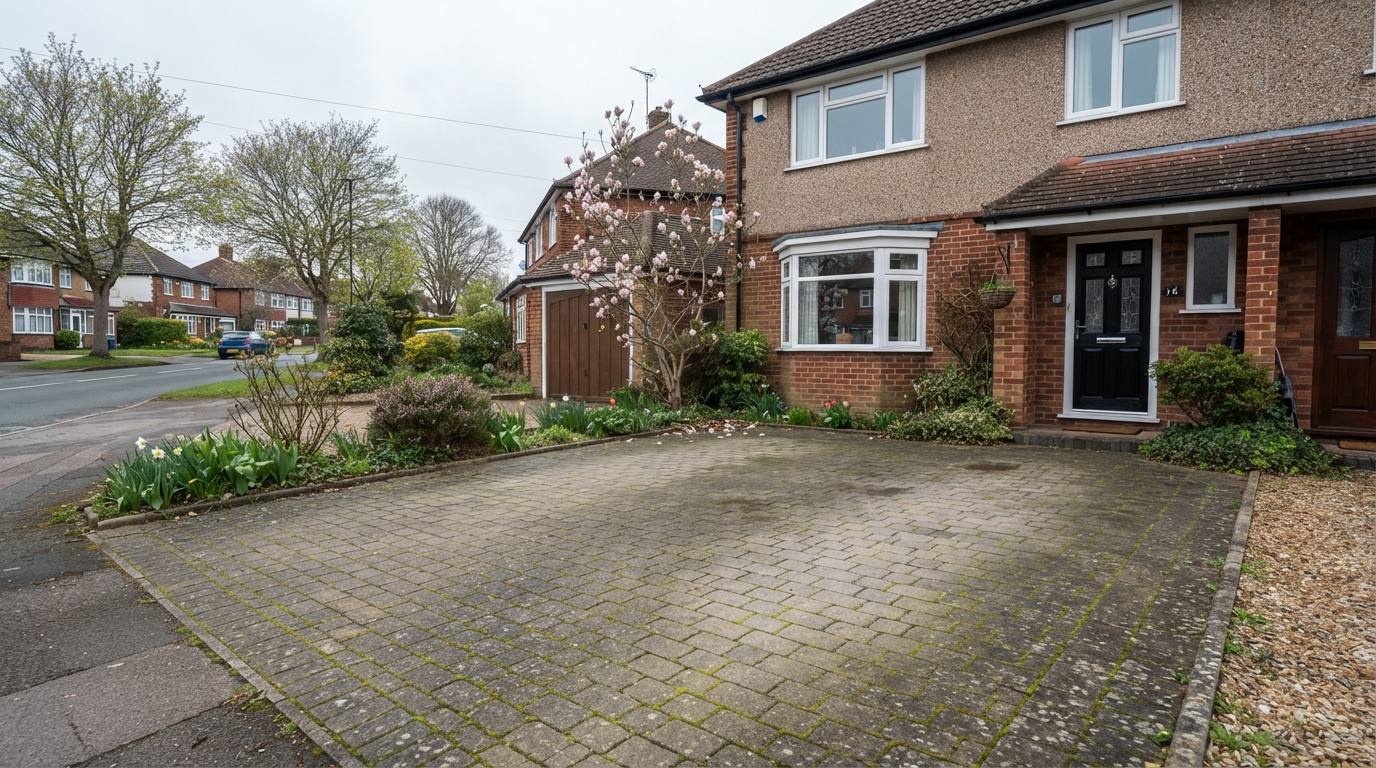
If you own a home in Sussex or Surrey, you may have found yourself wondering whether there is a "right" time to have your driveway professionally cleaned. Perhaps you have noticed moss spreading across the surface, weeds appearing between the blocks, or a green film of algae forming in the shaded corners. It is tempting to wait for warmer, drier weather before booking a professional clean.
But here is the honest answer: the best time to clean your driveway was yesterday. The second best time is today.
Whilst that may sound light-hearted, the reasoning is practical. Moss, algae, weeds and oil stains do not disappear simply because we wait for spring or summer. In fact, delaying cleaning often allows organic growth to become more deeply established, making the eventual restoration harder and more time-consuming. Professional driveway cleaning can be carried out throughout much of the year whenever conditions are safe, and the condition of the driveway is far more important than the month on the calendar.
Does the Time of Year Really Matter?
There is a common belief that driveway cleaning should only be carried out in spring or summer. This is understandable—nobody wants to clean a driveway in pouring rain—but it is not entirely accurate. The time of year matters far less than the condition of the surface and the weather on the day of cleaning.
Every season in Sussex and Surrey presents different conditions, but none of them prevent professional driveway cleaning from being carried out safely. What matters most is choosing a day when the surface can be worked on effectively and when the cleaning method selected is appropriate for the material and the conditions.
If your driveway is slippery, heavily stained, or visibly deteriorating, waiting for a "better" season will only allow the problem to worsen. The best time to act is when the driveway shows signs that it needs attention.
Can Driveways Be Cleaned All Year Round?
Yes. Professional driveway cleaning can be carried out throughout much of the year. The key factors are safety, access and weather conditions on the day, rather than the season itself.
Skyhawk Exterior Cleaning professionally cleans a wide range of driveway surfaces, including:
- Block paving
- Concrete
- Resin-bound surfaces
- Natural stone
- Pattern imprinted concrete
- Tarmac, using appropriate cleaning methods
Every driveway is assessed individually based on the surface type, shade, moss growth, algae, tree cover, existing stains and weather conditions. This ensures the safest and most effective cleaning method is chosen for the specific driveway rather than applying the same approach to every surface.
Spring Driveway Cleaning
Spring is often seen as the natural time for exterior maintenance. The weather begins to improve, days lengthen, and many homeowners start thinking about preparing their property for the months ahead.
Spring cleaning can be a sensible choice because it removes the organic growth that has built up over the damp winter months. Moss and algae thrive in wet, shaded conditions, so by the time spring arrives, they are often well established. Cleaning at this stage helps freshen the driveway before the warmer, drier weather encourages further growth.
However, spring is not the only suitable time. If your driveway needed cleaning in February, waiting until April simply allows moss and algae another two months to spread.
Summer Driveway Cleaning
Summer offers the advantage of longer, drier days, which means surfaces dry quickly after cleaning. This is particularly helpful for block paving, because re-sanding the joints is far more effective when the surface is completely dry.
Summer is also a popular time for homeowners preparing to sell their property, as a clean driveway significantly improves kerb appeal. If you are planning to put your home on the market, a summer clean can help create the strongest first impression.
The downside of summer is that the longer you wait, the more established moss and algae become. If your driveway is already showing signs of growth in spring, waiting until summer gives those organisms more time to spread.
Autumn Driveway Cleaning
Autumn is the season when leaves, twigs and organic debris begin to fall in large quantities, particularly across homes in Sussex and Surrey surrounded by mature trees. This debris settles onto driveways and into block paving joints, where it breaks down and creates the perfect growing conditions for moss, algae and weeds.
Cleaning in autumn helps remove this build-up before it has the chance to decompose and establish itself over winter. It also clears the surface before the wettest months of the year, reducing the risk of slippery, hazardous surfaces.
However, autumn cleaning needs to be timed carefully. If leaves are still falling heavily, it may be worth waiting until the majority have dropped before cleaning, otherwise the driveway may need clearing again shortly afterwards.
Winter Driveway Cleaning
Many homeowners assume winter is off-limits for driveway cleaning, but this is not necessarily the case. Professional cleaning can be carried out during winter whenever the weather is safe and the surface is accessible.
Winter cleaning has a distinct advantage: it removes moss and algae before they have the chance to flourish in the damp spring conditions. A driveway cleaned in January or February will head into spring already in good condition, making ongoing maintenance far easier.
For example, we recently cleaned a block paved driveway in Horsham during a dry spell in late January. The homeowner had been planning to wait until spring, but the moss had become noticeably slippery. By cleaning in winter, the surface was restored before the spring growth season began. When spring arrived, the driveway stayed cleaner for longer because the moss and algae had already been removed and treated, rather than being left to spread through the wettest months.
Why Waiting Often Makes Cleaning Harder
The biggest issue with waiting for a "better" season is that organic growth does not pause. Moss continues to spread, algae continues to form, and weeds continue to establish themselves in the joints of block paving. The longer these are left, the more deeply rooted they become.
This means that a driveway which could have been cleaned relatively easily in winter may require significantly more work by the time spring arrives. Oil stains also penetrate more deeply into porous surfaces over time, making them harder to remove. For more on this, see our guide on how to remove oil stains from a driveway.
Waiting does not save money or effort. It usually increases both.
Does Tree Cover Affect the Timing?
Homes surrounded by mature trees—common across many parts of Sussex and Surrey—face different maintenance challenges from those on open, exposed estates. Trees drop leaves, seeds and organic debris throughout the year, which settles into driveway surfaces and creates ideal conditions for moss and weeds.
If your property is surrounded by trees, your driveway will likely need cleaning more frequently, and the timing may need to align with when the heaviest leaf fall has finished. However, this does not mean you should ignore moss or algae growth simply because leaves are still falling. If the surface is becoming slippery or stained, it is time to clean it.
Does the Driveway Material Matter?
The material of your driveway influences the cleaning method and the conditions required, but it does not dictate the season. Different surfaces respond differently to moisture, pressure and treatment:
- Block paving benefits from dry conditions for re-sanding, but the cleaning itself can be carried out year-round.
- Concrete and resin-bound surfaces can be cleaned in most conditions, provided the surface is safe to work on.
- Natural stone may require gentler methods, particularly in wet or frosty conditions.
- Tarmac requires careful, low-temperature cleaning to avoid damaging the surface.
Professional assessment ensures the correct method is selected for the material and the weather on the day, regardless of the season.
Signs Your Driveway Shouldn't Wait Any Longer
If you are unsure whether to book cleaning now or wait, look for these signs:
- Moss is visibly spreading across the surface
- Algae is making the driveway slippery underfoot
- Weeds are growing between block paving joints
- Oil stains are becoming more noticeable
- The original colour of the driveway has disappeared beneath dirt and organic growth
- Jointing sand is missing and blocks are becoming loose
- You cannot remember the last time the driveway was professionally cleaned
If any of these apply, the best time to book is now. For a full checklist, see our article on the signs your driveway needs professional cleaning.
Seasonal Comparison Table
| Season | Advantages | Considerations |
|---|---|---|
| Spring | Removes winter build-up of moss and algae before warmer weather encourages further growth | If the driveway needed cleaning in winter, waiting until spring allows two extra months of growth |
| Summer | Longer, drier days mean faster drying and ideal conditions for re-sanding block paving | Waiting until summer may allow moss and algae to become more deeply established |
| Autumn | Clears leaf debris and organic build-up before winter wet conditions | May need to wait until the majority of leaves have fallen to avoid repeat clearing |
| Winter | Removes moss and algae before spring growth season, keeping the driveway cleaner for longer | Cleaning needs to be timed around dry, safe weather windows |
Common Mistakes Homeowners Make
- Waiting until the driveway becomes slippery. By the time a surface is hazardous underfoot, moss and algae are already well established. Acting earlier prevents this risk.
- Waiting for spring because they believe it's the only suitable season. Driveways can be cleaned safely year-round. Waiting often makes the job harder, not easier.
- Ignoring early moss growth. Small patches of moss spread quickly, particularly in shaded areas. Removing it early is simpler and more cost-effective.
- Leaving oil stains for months before treating them. Fresh stains are far easier to remove. The longer oil sits, the deeper it penetrates into porous surfaces.
Key Takeaways
- The best time to clean your driveway is when it needs cleaning, not when the calendar says so.
- Professional driveway cleaning can be carried out throughout much of the year whenever conditions are safe.
- Every season has advantages, but waiting often allows moss, algae and stains to become more established.
- The driveway material influences the cleaning method, but it does not dictate the season.
- Homes surrounded by trees may need more frequent cleaning, but ignoring growth because leaves are still falling is a mistake.
- Acting early keeps maintenance simpler, more effective and more cost-efficient.
Frequently Asked Questions
What is the best month to clean a driveway?
There isn't one. The best time to clean a driveway is when it needs cleaning. If moss, algae, weeds or stains are visible, booking sooner rather than later prevents the problem from worsening, regardless of the month.
Should I wait until spring?
Not necessarily. Spring is a popular time for exterior maintenance, but if your driveway needs cleaning in winter, waiting until spring only gives moss and algae more time to spread. Act when the signs appear.
Can driveways be cleaned in winter?
Yes. Professional driveway cleaning can be carried out in winter whenever the weather is safe and the surface is accessible. Winter cleaning has the advantage of removing moss and algae before the spring growth season.
Can moss be removed in summer?
Yes. Moss can be removed at any time of year. Summer offers the advantage of faster drying times, which is particularly helpful for re-sanding block paving after cleaning.
How often should driveways be cleaned?
Most driveways benefit from professional cleaning every one to three years, depending on the surface, surrounding trees, shade and how quickly organic growth returns. See our guide on how often you should have your driveway professionally cleaned for more detail.
Does tree cover make a difference?
Yes. Homes surrounded by mature trees tend to accumulate more organic debris, which creates ideal conditions for moss and weeds. These driveways often need cleaning more frequently.
Can driveway cleaning remove algae?
Yes. Professional cleaning removes algae from the surface, and a suitable treatment helps slow its return, particularly in shaded areas where algae thrives.
Should I wait until the weather improves?
Not if the driveway is already showing signs of moss, algae, weeds or staining. Waiting allows these issues to worsen. Professional cleaning can be carried out in a wide range of conditions, provided it is safe to do so.
Can professionals clean driveways after rain?
In many cases, yes. The cleaning method may be adjusted based on the conditions, but rain does not automatically prevent driveway cleaning. Surfaces can often be worked on once standing water has drained.
When should I book driveway cleaning?
Book when you first notice the warning signs—moss, algae, weeds, stains or a dulling of the surface colour. Acting early keeps the process straightforward and prevents unnecessary deterioration.
Final Conclusion
The idea that there is a perfect season for driveway cleaning is one of the most common misconceptions homeowners hold. In reality, the best time to clean your driveway is when it actually needs cleaning. Every season in Sussex and Surrey offers opportunities for maintenance, and delaying simply because of the calendar often allows moss, algae and staining to become more deeply established.
Whether your driveway is block paving, concrete, resin-bound, natural stone or tarmac, professional cleaning tailored to the surface can be carried out safely throughout much of the year. If you have noticed any of the warning signs, the best time to act is now.
Explore our driveway cleaning services, learn about our pressure washing options, or find out more about our patio restoration solutions.
To get an accurate, upfront price, book a free video call quote or call our expert team on 01293 922 243. You can also view our frequently asked questions for more information.
Skyhawk Exterior Cleaning Ltd
9 Hylands Close, Crawley, RH10 6RX
Phone: 01293 922 243
Website: skyhawkexteriorcleaning.co.uk
Serving 130+ locations across Surrey & Sussex
Skyhawk Exterior Cleaning – A Hawk Eye for Detail.