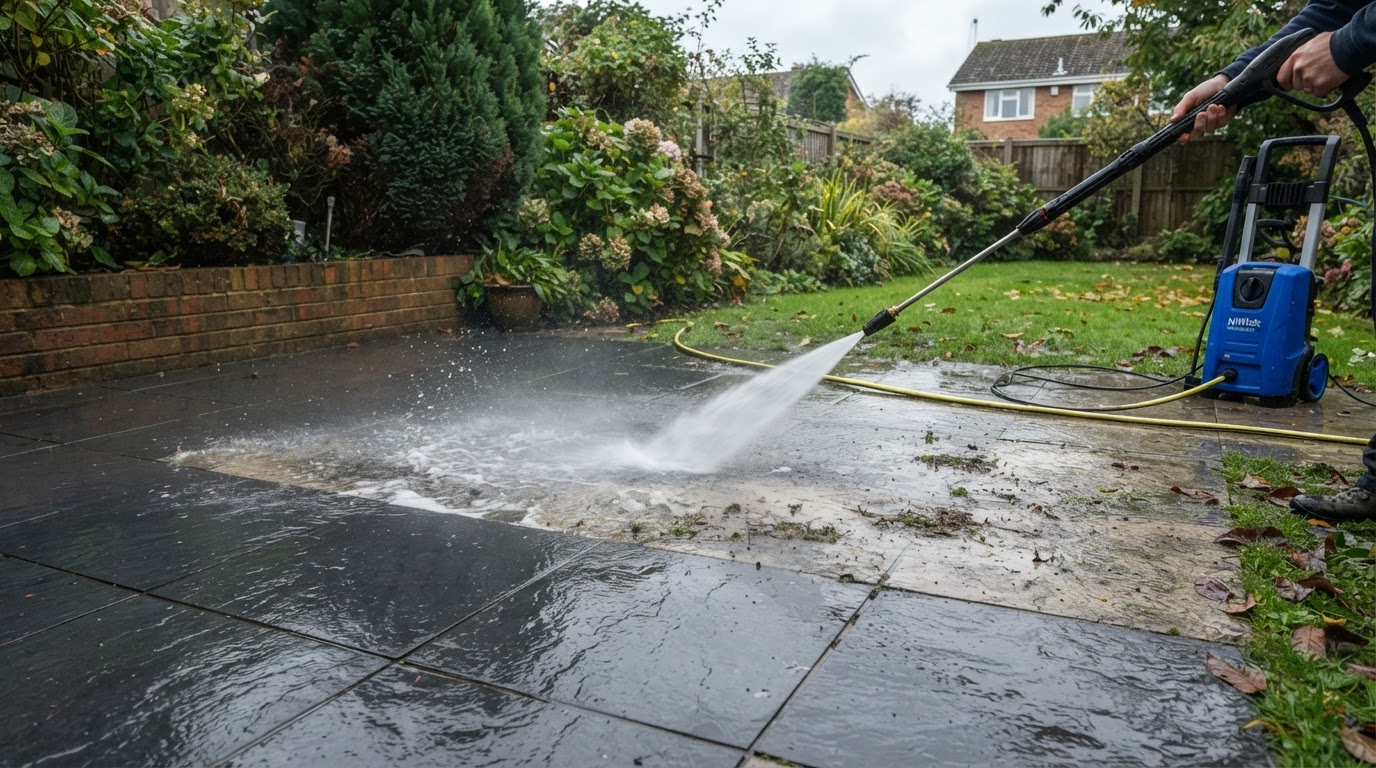
Porcelain has become one of the most popular paving materials for homeowners across Sussex and Surrey, and it is easy to see why. It is dense, stylish, available in a wide range of finishes and requires less maintenance than many natural stone alternatives. But like any surface exposed to the British climate, it still collects algae, dirt, black spot and atmospheric pollution over time.
Yes, porcelain patios can often be cleaned using pressure washing, but that doesn't mean every patio should be cleaned in exactly the same way. Using the correct equipment, pressure and technique is far more important than simply using maximum force. The safest cleaning process depends on the condition of the patio, the level of contamination, the equipment being used, the pressure setting and the operator's experience.
In this guide, we explain when pressure washing is appropriate for a porcelain patio, when extra care is needed and why choosing the correct cleaning method is more important than simply turning up the pressure. If you are researching patio restoration across Sussex and Surrey, this guide will help you understand what is involved.
Why Homeowners Worry About Pressure Washing Porcelain
Many homeowners are understandably cautious about pressure washing porcelain. The material has a reputation for being premium and relatively delicate, and there is plenty of conflicting advice online about whether high-pressure cleaning is safe.
In reality, porcelain is one of the more resilient paving surfaces when cleaned correctly. The concern is not usually the porcelain itself but rather the way it is cleaned. Using excessive pressure, holding the lance too close to the surface or using the wrong nozzle can all create problems that a more measured approach would avoid.
The key is understanding that pressure washing is a tool, not a one-size-fits-all solution. When used correctly by someone who understands the surface, it can produce excellent results. When used carelessly, it can cause damage that would otherwise be entirely avoidable.
Is Porcelain Stronger Than Natural Stone?
In many respects, yes. Porcelain paving is manufactured at extremely high temperatures, which produces a dense, hard-wearing surface with very low porosity. Unlike Indian sandstone, which absorbs water and contaminants into its surface, porcelain resists absorption far more effectively.
This lower porosity means algae, dirt and organic staining tend to sit on the surface rather than penetrating deep into the material. As a result, porcelain is generally easier to clean than natural stone and often responds well to controlled pressure washing.
However, being dense does not mean being indestructible. The grout or jointing material between porcelain slabs is often more vulnerable than the slabs themselves, and certain types of staining—such as rust or black spot—may still require specialist treatment rather than pressure alone.
Can Pressure Washing Damage Porcelain?
Pressure washing can damage a porcelain patio if it is carried out incorrectly. The most common causes of damage are not the porcelain itself but the surrounding elements and poor technique:
- Grout and jointing damage: High-pressure water directed at the joints can wash out resin grout or kiln-dried sand, leading to loose slabs and unstable paving.
- Surface etching: Holding the lance too close or using an aggressive nozzle can, over time, affect the surface texture of some finishes.
- Uneven cleaning: Inconsistent pressure or technique can leave visible streaks and patches across the patio.
- Staining exposure: Blasting away surface dirt without treating the underlying cause can sometimes reveal deeper staining that pressure alone cannot remove.
Professional cleaning is about avoiding these issues by selecting the correct pressure, maintaining a safe distance and using the right equipment for the surface.
What Pressure Levels Are Appropriate?
There is no single pressure setting that is correct for every porcelain patio. The appropriate pressure depends on the condition of the surface, the type of contamination and the equipment being used.
As a general principle, the aim is to use the lowest effective pressure that removes the contamination without risking damage to the slabs or jointing. For most porcelain patios, a controlled pressure with a suitable surface cleaner or fan lance is more than sufficient to remove algae, dirt and organic build-up.
Specialist surface cleaners—circular attachments that clean evenly without directing water directly at the joints—are often preferred for porcelain because they reduce the risk of grout damage and produce a more consistent finish.
What Causes Porcelain Patios to Become Dirty?
Despite its low porosity, porcelain still develops contamination over time. The most common causes include:
- Algae: Forms a green film on the surface, particularly in shaded or north-facing areas.
- Black spot (lichen): Deeply rooted organisms that can establish themselves on the surface over time.
- Rust stains: Caused by metal furniture, fire pits or garden ornaments left on the patio.
- Organic staining: Fallen leaves, berries and plant matter leach tannins onto the surface.
- Food stains: BBQ spills, wine and cooking oil can leave marks if not treated promptly.
- General dirt: Atmospheric pollution, foot traffic and weather gradually dull the surface.
Because different contaminants behave differently, the cleaning method must be tailored to what is actually on the surface. Pressure washing alone may remove algae and dirt, but rust stains and black spot often require specialist cleaning products to achieve the best results.
How Professionals Clean Porcelain Patios
Skyhawk Exterior Cleaning assesses every porcelain patio individually before selecting the most appropriate cleaning process. The assessment considers the condition of the surface, the type of contamination present, the integrity of the grout and jointing and whether specialist stain removal is required.
Professional cleaning may involve a combination of:
- Controlled pressure washing using a suitable surface cleaner
- Specialist biocidal treatments for algae and black spot
- Dedicated rust removers safe for use on porcelain
- Targeted organic stain treatments
- Low-pressure rinsing to remove residue without disturbing jointing
The aim is always to restore the appearance of the porcelain without compromising the surface or the grout. This is why professional cleaning is about selecting the correct method rather than relying on maximum pressure.
When Specialist Cleaning Products Are Needed
Not every stain can be removed with water alone. Some of the most common contaminants on porcelain patios require specialist treatment to achieve the best results:
| Contamination | Typical Cleaning Method | Notes |
|---|---|---|
| Green algae | Controlled pressure washing with biocidal treatment | Often responds well to pressure; biocide helps slow regrowth |
| Black spot | Specialist biocidal treatment | Pressure alone rarely removes established lichen |
| Rust stains | Dedicated rust remover safe for porcelain | Acid-based products can damage the surface |
| Food stains | Specialist organic stain remover | Prompt treatment prevents deeper staining |
| General dirt | Controlled pressure washing | Usually straightforward with the correct equipment |
Using the wrong product—particularly acid-based cleaners—can permanently affect the appearance of porcelain. This is why specialist assessment is recommended before applying any cleaning product to the surface.
How to Keep Porcelain Cleaner for Longer
Whilst professional cleaning restores the appearance of a porcelain patio, ongoing maintenance helps keep it looking its best for longer:
- Sweep regularly: Removing leaves and debris prevents tannin staining and reduces the food source for algae.
- Move furniture periodically: Preventing rust stains from metal legs sitting in damp conditions.
- Clean spills promptly: Treating food and drink stains before they set is far easier than removing established marks.
- Arrange periodic professional cleaning: Regular maintenance prevents algae and black spot from becoming established. Learn more in our guide on how often patios should be cleaned.
For patios in heavily shaded areas, more frequent cleaning may be beneficial. The best approach is to monitor the surface and arrange cleaning when the patio begins to look dull or slippery rather than waiting until it becomes heavily soiled.
DIY Pressure Washing vs Professional Cleaning
| DIY Pressure Washing | Professional Cleaning |
|---|---|
| Hired or domestic equipment with limited control | Commercial equipment with adjustable pressure and surface cleaners |
| No surface assessment before cleaning | Full assessment of patio condition, contamination and grout integrity |
| Limited access to specialist cleaning products | Specialist biocides, rust removers and stain treatments |
| Higher risk of grout damage or uneven results | Consistent, even cleaning with minimal risk |
| Often removes surface dirt only | Targets the underlying cause of staining for longer-lasting results |
Questions We Get Asked on Site
Can pressure washing scratch porcelain?
Porcelain is extremely hard, so scratching from the water itself is very unlikely. However, using the wrong nozzle, holding the lance too close or using abrasive attachments can affect the surface finish. Professional equipment and technique minimise this risk entirely.
Can you damage the grout?
Yes, this is the most common risk when pressure washing porcelain. Directing high-pressure water at the joints can wash out resin grout or kiln-dried sand. Using a surface cleaner and maintaining an appropriate distance helps protect the jointing material.
Can rust stains be removed?
Yes, dedicated rust removers that are safe for porcelain can significantly improve rust staining. Acid-based products should be avoided as they can etch the surface. The success depends on how long the rust has been present.
Why is my porcelain still slippery after cleaning?
If a patio remains slippery after cleaning, it usually means a thin film of algae or organic matter is still present on the surface. A biocidal treatment helps remove this residual growth and restore grip. Learn more in our guide on why patios become slippery.
Should porcelain be sealed?
Porcelain is naturally low-porosity, so sealing is not always necessary. However, some homeowners choose to apply a suitable sealer for additional protection against staining. This should be considered on a case-by-case basis rather than as a standard requirement.
Common Mistakes Homeowners Make
- Using maximum pressure: Assuming that more pressure equals better results, when in reality it increases the risk of damage.
- Holding the lance too close: Bringing the nozzle within a few inches of the surface can damage grout and affect the finish.
- Using the wrong nozzle: A zero-degree or turbo nozzle is far too aggressive for porcelain patios and should be avoided.
- Ignoring specialist stains: Attempting to remove rust or black spot with pressure alone rarely works and can make the problem more visible.
- Assuming porcelain is maintenance-free: Whilst it requires less maintenance than natural stone, it still benefits from periodic professional cleaning.
A Realistic Homeowner Example
We recently cleaned two porcelain patios on neighbouring properties in Surrey. The first had light algae across the surface but no deep staining. Controlled pressure washing with a surface cleaner was sufficient to restore the patio to its original appearance, and the process was completed quickly with minimal risk.
The second patio had developed rust stains from metal garden furniture left out over winter, along with black spot in the shaded corners. Pressure washing alone would not have removed the rust or the lichen. Instead, a specialist rust remover was applied to the affected areas, followed by a biocidal treatment for the black spot, before a controlled rinse removed the residue. Both patios were restored safely, but they required entirely different approaches based on what was actually on the surface.
This is why we assess every patio individually rather than applying the same method to every property. The correct cleaning process depends on the condition of the surface and the type of contamination present.
Key Takeaways
- Porcelain patios can usually be pressure washed, but the correct pressure and technique are essential.
- The grout and jointing are often more vulnerable than the porcelain slabs themselves.
- Different contaminants require different treatments—pressure alone will not remove rust or black spot.
- Specialist cleaning products safe for porcelain are needed for stubborn stains.
- Professional assessment ensures the safest and most effective cleaning process for the individual patio.
Frequently Asked Questions
Can you pressure wash porcelain patios?
Yes, porcelain patios can generally be pressure washed using controlled pressure and the correct equipment. The key is using an appropriate pressure that removes contamination without damaging the surface or the grout.
Can pressure washing scratch porcelain?
Porcelain is extremely hard, so scratching from water alone is very unlikely. However, using the wrong nozzle or holding the lance too close can affect the surface finish. Professional technique minimises this risk.
Can grout be damaged by pressure washing?
Yes, directing high-pressure water at the joints can wash out grout or jointing sand. Using a surface cleaner and maintaining an appropriate distance helps protect the jointing material.
Can black spot be removed from porcelain?
Black spot can be significantly reduced using specialist biocidal treatments. Pressure washing alone rarely removes established lichen because the organisms anchor themselves to the surface.
Can porcelain become slippery?
Yes. Algae forms a thin film on the surface that becomes extremely slippery when wet. Regular cleaning and biocidal treatment help prevent this from developing.
Should porcelain be sealed?
Sealing is not always necessary because porcelain is naturally low-porosity. However, some homeowners choose to apply a suitable sealer for additional stain protection. This should be considered on a case-by-case basis.
Can I pressure wash porcelain myself?
Light cleaning is achievable for many homeowners, but care must be taken with pressure settings, nozzle selection and distance from the surface. Established staining and delicate grout often benefit from professional equipment and experience.
How often should porcelain be cleaned?
Most porcelain patios benefit from professional cleaning every one to three years, depending on shade, tree cover and how quickly algae and dirt develop.
When should I use professional cleaning?
If your patio has black spot, rust stains, slippery algae or delicate grout, professional assessment is recommended. Professional cleaning achieves longer-lasting results with minimal risk of damage.
How long do the results last?
Results vary depending on shade, tree cover and weather exposure. A biocidal treatment helps slow regrowth, and regular maintenance keeps the patio looking its best for longer.
Conclusion
Porcelain patios are one of the most resilient paving surfaces available, but they still require careful, informed cleaning to keep them looking their best. Pressure washing can be safe and effective when carried out correctly, but the key is selecting the right pressure, equipment and cleaning products for the individual surface.
If your porcelain patio has become dull, slippery or stained, professional assessment ensures the safest and most effective cleaning process is used. Arrange a free video quotation with Skyhawk Exterior Cleaning, and we will assess your patio and recommend the most appropriate approach for your property across Sussex and Surrey.