
What Is Solar Panel Bird Mesh and How Does It Work?
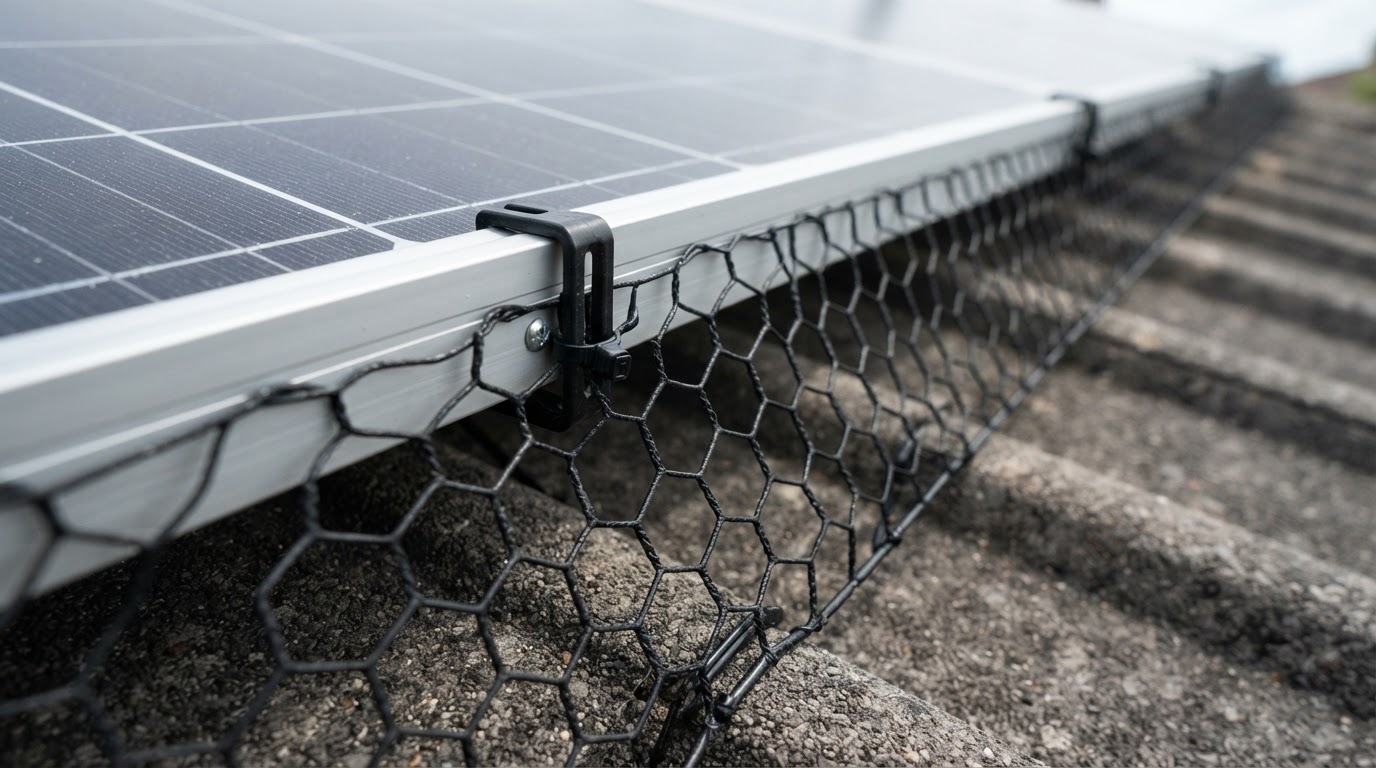
Solar panel bird mesh is a weather-resistant physical barrier fitted around the perimeter of a roof-mounted solar array to prevent birds — particularly pigeons — from accessing the sheltered gap between the panels and the roof tiles. It is the most widely used and effective method of bird proofing for solar installations, and it works by sealing the nesting space without covering the panel surface.
This guide explains what the mesh is made from, how it is fitted, why it does not affect panel performance, and how it compares with other bird deterrent methods.
What Solar Panel Bird Mesh Is Made From
The mesh used for solar panel bird proofing is typically a galvanised steel wire mesh with a PVC or powder-coated finish. The galvanised core provides strength and structural integrity, while the coating protects against corrosion from rain, UV exposure and the acidic nature of bird droppings. This combination is designed to last for many years on the roof without rusting or degrading.
The mesh aperture — the size of the gaps in the grid — is small enough to prevent pigeons and smaller birds from passing through, yet open enough to allow airflow beneath the panels. Maintaining ventilation around the array is important, as solar panels rely on air circulation to regulate temperature and operate efficiently.
How Bird Mesh Is Fitted
The mesh is cut to length and fixed around the full perimeter of the solar array. It attaches to the aluminium frame of the panels using purpose-made clips or fasteners, and the lower edge sits against or over the roof tiles to close the gap beneath. Crucially, the mesh does not require drilling into the panels themselves or into the roof structure — the fixings attach to the existing panel frame, so the installation does not damage the solar system or compromise the roof waterproofing.
A proper installation runs continuously around the entire perimeter, including corners, valleys and junctions where the array meets roof features such as chimneys or velux windows. These junction points are where pigeons most often attempt to regain entry, so sealing them thoroughly is what separates an effective installation from one that fails.
Why Mesh Does Not Affect Solar Panel Performance
A common concern is whether fitting mesh around the panels will reduce their electricity generation. It does not, for two reasons. First, the mesh is fitted around the perimeter of the array rather than over the glass surface, so it does not block sunlight from reaching the photovoltaic cells. Second, the mesh aperture allows air to circulate freely beneath the panels, preserving the ventilation the system relies on.
In practice, bird mesh often improves long-term panel performance indirectly — by preventing the droppings and contamination that would otherwise accumulate on the glass and reduce light transmission. You can read more about how contamination affects output in our guide to whether solar panel cleaning improves performance.
How Bird Mesh Compares With Other Methods
Several bird deterrent methods exist, but they are not equally effective for solar panels:
| Method | Effectiveness for Solar Panels |
|---|---|
| Perimeter mesh | Most effective — seals the nesting space physically and permanently without affecting the panels. |
| Bird spikes | Limited — useful on ledges but does not seal the gap beneath panels, so birds can still nest underneath. |
| Reflective tape or visual deterrents | Weak — pigeons habituate quickly and these do not block physical access to the nesting space. |
| Ultrasonic devices | Unreliable — effectiveness is debated and they do not prevent access to the gap beneath the array. |
| Chemical repellents | Not recommended — difficult to apply safely beneath panels and not a physical barrier. |
The reason mesh outperforms these alternatives is straightforward: it removes the nesting space entirely. Deterrents that rely on discouraging birds do not work when the space beneath the panels remains accessible, because the shelter and warmth are too attractive for pigeons to abandon.
How Long Does Solar Panel Bird Mesh Last?
Quality PVC-coated galvanised mesh, professionally installed, is designed to last for many years. The coating protects the wire from corrosion, and the fixings are engineered to remain secure through wind, rain and temperature changes. Periodic inspections are sensible — particularly after severe weather — to confirm the mesh remains firmly in place, but the material itself is not a recurring cost. For more detail, see our guide on how long solar panel bird proofing lasts.
Is Bird Mesh Suitable for All Solar Installations?
Perimeter mesh is suitable for the vast majority of roof-mounted residential solar arrays, including systems fitted on tiled and slate roofs. The key requirement is that the panels are mounted on a frame with a gap beneath them — which is standard for most roof-mounted installations. A professional assessment will confirm whether your particular array is suitable and identify any access considerations that affect the installation.
Concerned About Birds Under Your Solar Panels?
If you are considering bird mesh for your solar panels, Skyhawk Exterior Cleaning provides professional solar panel bird proofing across Sussex and Surrey using quality materials and safe access methods. We assess each roof individually and fit mesh securely around the full perimeter of the array.
Arrange a free video quotation to find out whether bird mesh is the right solution for your property.