How Long Does Solar Panel Bird Proofing Last?
A professionally installed solar panel bird proofing system is designed to provide long-term protection against pigeons and other birds nesting beneath your panels, but there isn't a single lifespan that applies to every property. Its durability depends on the materials used, the quality of the installation, local weather conditions and how well the wider roof is maintained over time.
For homeowners across Sussex and Surrey, understanding what affects the longevity of bird proofing helps you get the most from the investment and avoid the recurring maintenance issues that come with repeated nesting.
What Is Solar Panel Bird Proofing?
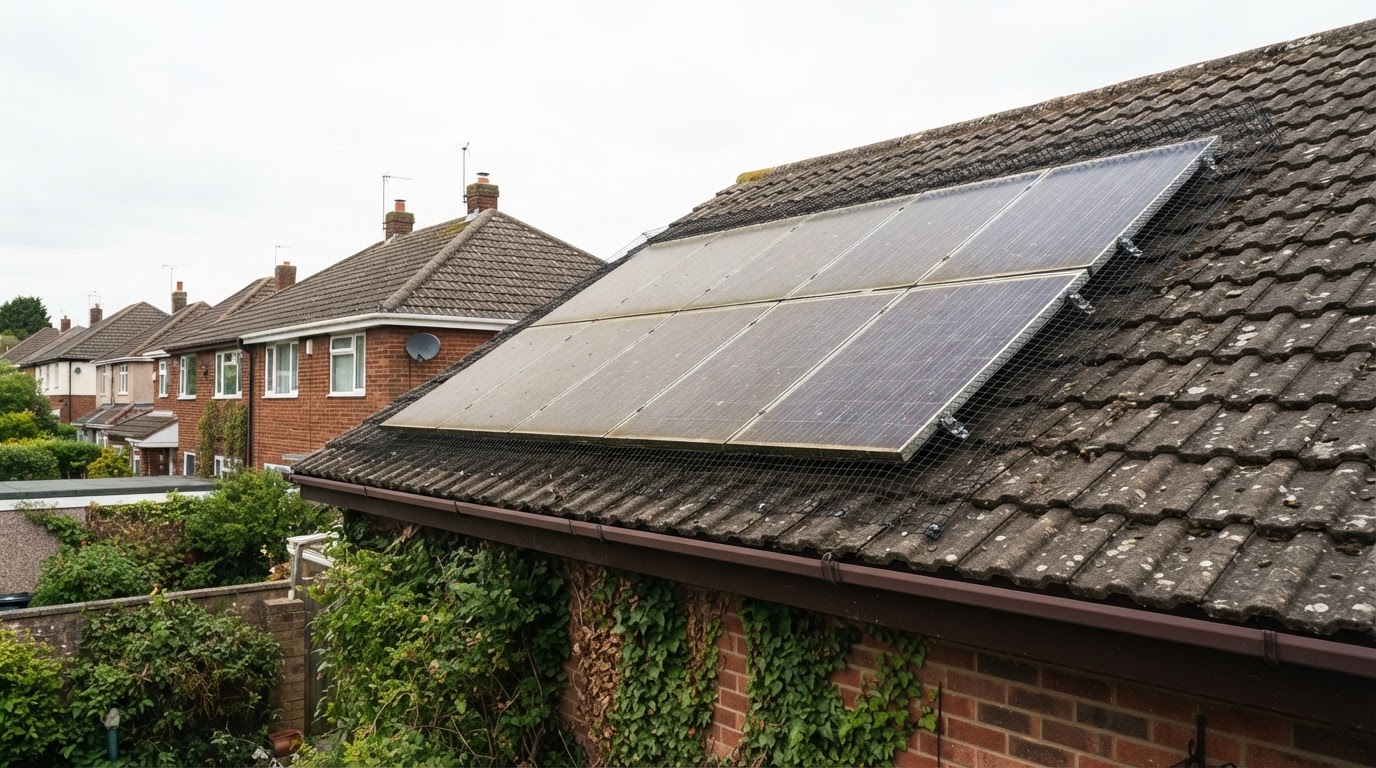
Solar panel bird proofing involves fitting a specialised mesh or barrier around the perimeter of a roof-mounted solar array to prevent birds — most commonly pigeons — from accessing the gap beneath the panels. The mesh is typically secured using clips or brackets that hold it firmly in place without drilling into the panels themselves or compromising the roof covering.
The aim is to deny birds the sheltered, warm space they seek for nesting, which in turn helps reduce the problems that nesting creates for the panels, the roof and the gutters.
What Affects How Long Bird Proofing Lasts?
Several factors influence how long a bird proofing system continues to perform effectively:
- Material quality — galvanised or UV-stabilised mesh resists corrosion and weathering far better than cheaper alternatives.
- Installation quality — poorly fitted mesh with gaps or loose edges allows birds to find a way back in.
- Environmental exposure — coastal properties, high winds and heavy rain all place greater demands on the system.
- Bird activity levels — persistent pigeon pressure means the mesh is constantly tested.
- Roof condition — moss growth, debris and blocked gutters can all affect the area around the proofing.
Manufacturers of bird proofing systems may provide product warranties and maintenance recommendations, which should always be followed to ensure the system performs as intended.
Does the Quality of Installation Matter?
Installation quality is one of the most significant factors in how long bird proofing lasts. Even the best mesh will fail if it is not fitted correctly. Common installation issues include:
- Leaving gaps at corners or along edges where birds can squeeze through.
- Using fixings that corrode or work loose over time.
- Fitting mesh too loosely, allowing birds to push underneath.
- Not accounting for panel frames that vary in height or shape.
Professional installation ensures the mesh follows the full perimeter of the array, is secured tightly enough to resist persistent birds and uses materials suited to the specific roof and panel configuration.
Can Weather Affect Bird Proofing?
Bird proofing is exposed to the same weather as the rest of the roof. Over time, strong winds, heavy rain, freezing temperatures and prolonged UV exposure can all take their toll. Coastal properties across Sussex and Surrey may experience salt-laden air that accelerates corrosion in lower-grade materials.
Quality mesh that is properly secured is designed to withstand typical UK weather conditions for many years, but extreme storms can occasionally dislodge or damage sections. This is why periodic inspections are recommended, particularly after severe weather.
Why Regular Roof Inspections Are Important
Bird proofing is not a fit-and-forget solution. Just as a roof or gutter system benefits from periodic inspection, so too does the mesh around your solar panels. A quick visual check during routine roof maintenance helps identify:
- Sections of mesh that have come loose.
- Corrosion or wear in the fixings.
- Gaps that have developed over time.
- New bird activity that suggests birds are testing the perimeter.
Catching these issues early means small repairs can be carried out before birds re-establish a nest beneath the panels.
Can Bird Proofing Be Repaired?
Yes. If a section of mesh becomes damaged or loose, it can usually be repaired without replacing the entire system. Repairs are typically straightforward when the original installation was carried out professionally and the rest of the system remains sound.
It is far more cost-effective to repair a small section of damaged mesh than to deal with the consequences of birds returning — which often means another full clean of the panels, gutter clearance and re-proofing.
How Bird Proofing Works Alongside Roof Maintenance
Bird proofing is most effective when it is viewed as part of a complete roof maintenance plan rather than a standalone fix. Pigeons are only one element of the maintenance challenges a roof faces. Moss growth, blocked gutters, roof debris and solar panel soiling all interact with one another.
For example, if birds are nesting beneath the panels, they drop feathers and nesting material into the gutters. Blocked gutters cause overflowing water, which in turn encourages moss and algae on the roof. Moss sheds spores onto the solar panels, reducing their performance. Addressing only one part of this cycle often leaves another unresolved.
This is why Skyhawk Exterior Cleaning provides bird proofing alongside solar panel cleaning, roof cleaning and gutter cleaning — so the whole roof system is maintained together.
Factors That Affect Bird Proofing Longevity
| Factor | Effect on Bird Proofing Longevity |
|---|---|
| Quality of installation | Poorly fitted mesh with gaps fails quickly; professional installation provides long-term protection. |
| Coastal weather | Salt-laden air can accelerate corrosion in lower-grade materials; UV-stabilised mesh is recommended. |
| Heavy bird activity | Persistent pigeons test the mesh constantly; tight, secure fitting is essential. |
| Storm damage | High winds can dislodge loose sections; inspect after severe weather. |
| Routine inspections | Regular checks catch minor issues early before birds can re-enter. |
Maintenance Tasks That Help Bird Proofing Last
| Maintenance Task | Why It Helps |
|---|---|
| Bird proofing inspection | Identifies loose mesh, gaps or corrosion before birds exploit them. |
| Solar panel cleaning | Removes droppings and debris that attract birds back to the roof. |
| Roof cleaning | Reduces moss and organic growth that would otherwise spread to the panels. |
| Gutter cleaning | Clears feathers and nesting material that cause blockages and overflow. |
| Roof health checks | Identifies wider issues affecting the area around the proofing system. |
Looking After the Whole Roof
Bird proofing should not be viewed in isolation. The most effective approach combines bird proofing with regular solar panel cleaning, roof cleaning and gutter maintenance to keep the entire roof system in good condition.
When all of these elements are maintained together, the roof stays cleaner, the panels perform better, the gutters flow freely and the bird proofing is subjected to less contamination and pressure. This coordinated approach reduces the frequency of future maintenance visits and helps protect your investment in the roof and the solar array.
If you are arranging bird proofing, it is often worth discussing whether the panels, roof or gutters would also benefit from attention at the same time. Combining services in a single visit is usually more efficient and more cost-effective.
Questions We Get Asked On Site
Will pigeons damage the mesh?
Quality mesh is designed to withstand persistent bird pressure. Pigeons may peck at the edges, but properly installed mesh is secured tightly enough that they cannot push through or dislodge it under normal conditions.
Does bird proofing need maintenance?
Not frequent maintenance, but periodic inspections are recommended — particularly after storms or alongside routine roof maintenance. A quick visual check ensures the mesh remains secure and gap-free.
Can the mesh be repaired?
Yes. If a section becomes damaged or loose, it can usually be repaired without replacing the entire system, provided the rest of the installation is still sound.
Will I still need solar panel cleaning?
Yes. Bird proofing prevents nesting, but airborne dust, pollen and atmospheric pollution will still settle on the panels over time. Periodic cleaning keeps the glass clear.
Should my gutters be checked too?
Yes. If birds were nesting before proofing was installed, the gutters often contain feathers and nesting material that should be cleared to prevent blockages.
Common Mistakes Homeowners Make
- Choosing the cheapest bird proofing without considering the quality of materials or installation — which often fails sooner.
- Ignoring damaged sections after storms — small gaps are all pigeons need to regain access.
- Never inspecting the roof after installation — bird proofing performs best with occasional visual checks.
- Cleaning the panels but forgetting the gutters — nesting material often remains in the gutters after the birds have gone.
- Waiting until birds return before taking action — repairing mesh early is far simpler than dealing with a new nest.
Key Takeaways
- A professionally installed bird proofing system is designed to provide long-term protection, but its lifespan depends on materials, installation and environment.
- Quality mesh and professional fitting are the most important factors in how long the system lasts.
- Periodic inspections — especially after storms — catch minor issues before birds can re-enter.
- Bird proofing works best as part of a complete roof maintenance plan that includes panel cleaning, roof cleaning and gutter clearing.
- Repairs are usually straightforward when carried out early, before birds re-establish a nest.
A Real Example From Sussex
A homeowner in Horsham had endured repeated pigeon nesting beneath their solar panels for three years. Each spring the birds returned, fouling the panels, dropping nesting material into the gutters and creating an ongoing cycle of cleaning and clearing. After the third nest was removed, they arranged professional bird proofing.
Because the proofing was installed using quality mesh and secured properly around the full perimeter, it continued to perform well in the years that followed. The key was that the homeowner also booked an annual roof maintenance visit — during which the mesh was visually inspected, the panels were cleaned, the gutters were cleared and the roof was checked for moss. By catching a small section of mesh that had loosened after a winter storm, the team repaired it before any birds could exploit the gap, and the system continued to protect the roof without further nesting issues.
This example shows that bird proofing lasts longest when it is not treated as a one-off installation but as part of an ongoing roof maintenance routine.
Frequently Asked Questions
How long does solar panel bird proofing last?
A professionally installed system is designed for long-term protection, but the exact lifespan depends on material quality, installation, weather exposure and bird activity. Periodic inspections help ensure it continues to perform effectively.
Does bird proofing require maintenance?
Not frequent maintenance, but occasional inspections are recommended — particularly after storms or as part of routine roof maintenance — to check that the mesh remains secure and gap-free.
Can bird proofing be repaired?
Yes. Damaged or loose sections can usually be repaired without replacing the entire system, provided the rest of the installation is still sound.
Will pigeons eventually get through?
Quality mesh that is properly installed is designed to resist persistent bird pressure. Pigeons may test the perimeter, but a secure system prevents them from gaining access.
Do I still need panel cleaning after bird proofing?
Yes. Bird proofing prevents nesting, but dust, pollen and atmospheric pollution still settle on the panels. Periodic cleaning keeps the glass clear and the panels performing as intended.
Should my gutters be inspected too?
Yes. If birds were nesting before proofing was installed, the gutters often contain feathers and nesting material that should be cleared to prevent blockages and overflow.
Can storms damage bird proofing?
Extreme weather can occasionally dislodge or damage sections of mesh. Inspecting the system after severe storms helps identify and repair any issues before birds return.
How do I know it needs replacing?
Signs include visible gaps, loose or corroded mesh, and any return of bird activity beneath the panels. A professional inspection can confirm whether repair or replacement is needed.
Is professional installation important?
Yes. Even the best mesh will fail if it is not fitted correctly. Professional installation ensures the full perimeter is secured without gaps that birds can exploit.
When should I arrange an inspection?
It is sensible to have the system inspected alongside routine roof maintenance, after severe storms, or if you notice any bird activity returning to the roof.
Final Conclusion
Solar panel bird proofing is a worthwhile investment for homes affected by pigeon nesting, but its longevity depends on far more than the mesh alone. Quality materials, professional installation and periodic inspections all play a part in how long the system continues to protect the roof.
By treating bird proofing as one element of a complete roof maintenance plan — alongside solar panel cleaning, roof cleaning and gutter clearing — homeowners across Sussex and Surrey can keep the whole roof in better condition, reduce the frequency of future maintenance and protect both their solar investment and their property.
If you would like honest advice about bird proofing, solar panel cleaning or wider roof maintenance, arrange a free video quotation and we will assess your property individually.