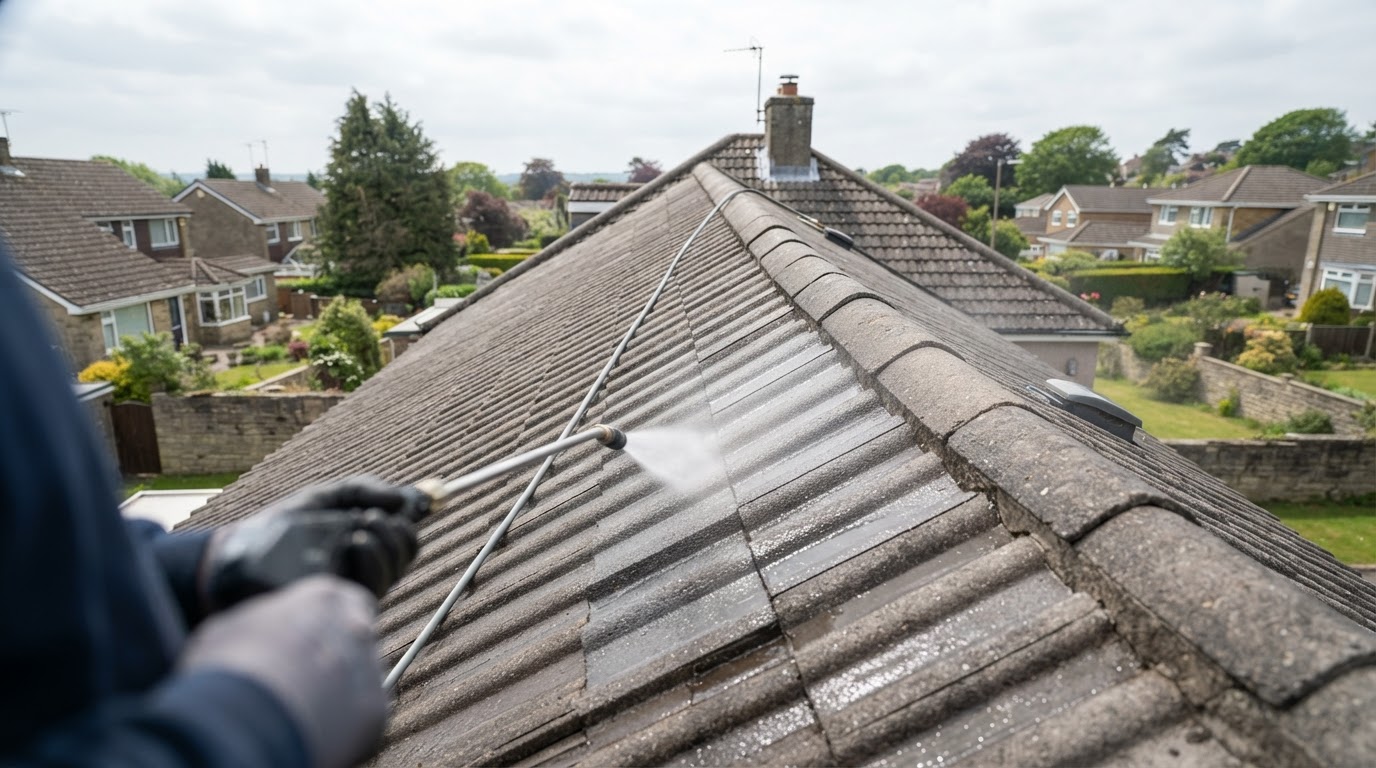
When homeowners across Sussex and Surrey invest in professional roof maintenance, they naturally expect long-lasting results. Whether your roof has been cleaned using waterless compressed air scraping or controlled low pressure roof cleaning, removing the visible green cushions of moss is a major visual milestone.
However, many property owners are surprised to learn that physical moss removal alone is only half the job. Without a specialized chemical finish, microscopic moss roots and algae spores left behind inside porous tiles will quickly reactivate in damp UK weather.
This raises a fundamental question for property owners: why should every roof clean include a biocide treatment?
Direct Answer:
Removing moss is only the first step in professional roof cleaning. A biocide treatment helps tackle remaining spores and organic growth, slowing regrowth and helping your roof stay cleaner for longer. Without biocide, invisible moss roots buried deep inside porous tile surfaces will cause moss to return within 12 to 18 months.
In this authoritative guide, we explain what a roof biocide treatment is, why physical scraping alone is insufficient, how biocides work at a cellular level, their safety for surrounding gardens, and why biocide application forms a vital part of every professional roof cleaning service delivered by Skyhawk Exterior Cleaning.
What Is a Roof Biocide Treatment?
A roof biocide is a specialized, professional-grade anti-microbial chemical formulation designed to eliminate organic growth such as moss, liverworts, green and black algae, lichen, and fungi on exterior building surfaces.
In the UK exterior cleaning industry, the most widely respected biocide ingredient is BAC50 (Benzalkonium Chloride). Unlike harsh household bleach (sodium hypochlorite) which can strip protective glazes or corrode metal flashings, BAC50 is a non-bleaching, surface-active cleansing agent specifically formulated for long-term masonry and tile preservation.
When applied gently to dry roof tiles after physical moss removal, the liquid biocide soaks deep into the microscopic pits and pores of clay, concrete, or slate tiles. It acts as a protective sanitizer that kills remaining root systems and leaves a lingering residual barrier against new airborne spores.
Why Moss Grows Back Quickly Without Biocide
To understand why a biocide roof treatment is essential, it helps to examine how moss attaches itself to roof surfaces.
Moss does not have deep roots like garden shrubs. Instead, it uses tiny anchor filaments called rhizoids to grip onto tile faces. Over years of growth, these rhizoids burrow deep into the microscopic pores of concrete and clay tiles, feeding on trapped moisture, airborne mineral dust, and organic debris from nearby trees.
When a roof is scraped or washed manually, hand blades or water sprays physically remove the bulky green cushions sitting on top of the tile. However, physical tools cannot reach inside the microscopic pores of the tile where the rhizoid roots and invisible spores reside.
If the cleaning process stops there, the warm, damp climate of Sussex and Surrey will reactivate those remaining root filaments within a few months. Rainwater hydrates the pores, and within 12 to 18 months, dense carpets of green moss will reappear across your roof slope.
How Biocides Work at a Cellular Level
Biocide treatments do not rely on aggressive water pressure or abrasive scraping force. Instead, they work through gentle chemical action at a cellular level.
When a specialized roof biocide treatment like BAC50 is sprayed onto dry tiles, it acts as a surfactant:
- Deep Pore Absorption: The liquid lowers surface tension, allowing it to penetrate several millimetres into porous concrete and clay tile bodies.
- Cell Membrane Disruption: Biocide molecules break down the protective outer cell membranes of microscopic moss rhizoids, lichen spores, and algae biofilms.
- Complete Sterilization: By neutralizing the organism at its root, the biocide sterilizes the tile surface, making it impossible for remaining biological growth to survive.
Because the chemical binds within the porous structure of the tile, it creates an invisible protective matrix that continues repelling new airborne moss spores long after the application day.
Why Scraping or Pressure Washing Alone Isn't Enough
Comparing physical cleaning to chemical biocide treatment is like weeding a garden: pulling off the top leaves of a weed leaves the root intact beneath the soil, guaranteeing it will sprout again after the next rain shower.
Here is why relying solely on physical methods falls short:
1. Manual Scraping Removes Volume, Not Spores
Manual roof scraping is an exceptional, tile-safe technique for removing 90% to 95% of thick, heavy moss carpets without using water pressure. However, scrapers cannot alter the microscopic biological environment inside the tile pores. Combining manual scraping with a biocide finish delivers the perfect balance: physical safety plus long-term chemical protection.
2. Water Sprays Leave Biofilms Intact
Even controlled low pressure soft washing only strips surface grime. Without biocide, water actually hydrates the microscopic algae spores left in tile joints, accelerating their regrowth once the sun comes out.
By pairing physical removal with a BAC50 biocide finish, homeowners receive a complete restoration that addresses both visible moss and hidden microscopic roots.
How Long Does a Biocide Treatment Continue Working?
Unlike pressure washing which produces a static result on day one and begins degrading immediately, a professional biocide treatment features an ongoing self-cleaning effect.
Once applied, the biocide remains active within the tile pores for 3 to 5 years depending on local environmental factors:
- Residual Repellency: As airborne moss spores and algae drift onto the roof from surrounding trees, the residual biocide prevents them from taking root.
- Progressive Self-Cleaning: Stubborn lichen spots ("white spot" or "black spot") that cannot be scraped without damaging tile glazes are killed by the biocide. Over the following 3 to 12 months, natural UK rainfall and wind weather away the dead lichen residue, leaving tiles cleaner and brighter over time.
Why Weather Continues Improving Results After Treatment
Homeowners are often delighted to observe their roof looking cleaner six months after a biocide clean than it did on the day the team left the site. This positive phenomenon is known as weather-activated self-cleaning.
When biocide neutralizes lichen, black algae, and microscopic moss roots, the dead organic matter loses its grip on the tile face. With every subsequent rainfall, water flows gently across the roof pitch, naturally washing away the microscopic dead particles down the slope into the guttering system.
This gentle, weather-assisted cleaning process restores the natural original warmth of terracotta clay or concrete tiles without subjecting the roof to harsh mechanical force.
Does Biocide Damage Roof Tiles or Mortar Pointing?
No. Professional quaternary ammonium biocide formulations like BAC50 are specifically chosen because they are entirely non-corrosive and non-acidic.
Unlike aggressive acids or sodium hypochlorite bleaches which can degrade cement pointing, corrode lead valley flashings, or strip tile glazes if used incorrectly, BAC50 biocide is completely neutral to roof building materials:
- Safe on handmade clay, machine clay, and concrete tiles
- Safe on natural slate and synthetic slate coverings
- Safe on mortar pointing along ridge tiles, hips, and verges
- Safe on lead flashings, copper valley gutters, and PVC window frames
Is Biocide Safe for Pets, Plants and Gardens?
At Skyhawk Exterior Cleaning, environmental safety and property protection are core priorities on every job site. When applied by trained professionals following strict health and safety protocols, biocide treatment is completely safe for surrounding gardens, pets, and family members.
Our application protocols include:
- Pre-Wetting Vegetation: Garden plants, shrubs, and lawns surrounding the roof perimeter are thoroughly pre-rinsed with fresh water before biocide application.
- Gutter Downpipe Isolation: Downpipes are temporarily isolated or diverted into catchment containers to prevent biocide runoff from entering garden water butts or soakaways.
- Controlled Low-Pressure Delivery: Biocide is applied using specialized low-pressure pumps equipped with directional fan nozzles, ensuring precise application directly onto tile surfaces without chemical overspray or mist drifting into neighbouring gardens.
- Pet Safety Measures: Homeowners are advised to keep pets indoors during application until the applied treatment has completely dried on the roof tiles.
How Often Should a Roof Be Retreated With Biocide?
When a roof undergoes a full professional clean—combining manual scraping or low-pressure washing, internal gutter cleaning, site clean-up, and a heavy BAC50 biocide application—it typically stays clear of heavy moss for 3 to 5 years.
To keep a roof permanently moss-free without ever needing major physical scraping again, many homeowners across Sussex and Surrey schedule a light biocide top-up treatment every 3 to 4 years.
A quick, low-cost biocide top-up spray takes only an hour or two from ground-level access poles or ladders. It refreshes the anti-microbial barrier within tile pores, preventing moss from ever re-establishing itself on your roof pitch.
Why Professional Application Matters
While biocide chemicals can sometimes be purchased online by DIY enthusiasts, professional application is critical to achieving safe, uniform, and long-lasting results:
- Correct Chemical Dilution: Professional exterior cleaners calculate exact dilution ratios based on tile porosity, moss density, and ambient moisture. Over-diluting renders the treatment ineffective, while under-diluting wastes product and increases runoff risks.
- Working Safely at Height: Spraying liquid on wet roof slopes without professional scaffolding towers, cherry pickers, or safety harnesses carries extreme personal fall risks.
- Specialist Delivery Equipment: Professional high-volume, low-pressure delivery pumps ensure deep absorption without blowing chemical overspray into surrounding atmospheres.
For more details on likely investment levels for your home, consult our complete roof cleaning cost guide for Surrey and Sussex homeowners.
Key Takeaways
- ✓ Physical Cleaning Is Only Step One: Scraping or washing removes bulk moss, but biocide is required to eliminate microscopic roots and spores inside tile pores.
- ✓ Prevents Rapid Regrowth: Without biocide, moss will return within 12 to 18 months. Including BAC50 delays regrowth for 3 to 5 years.
- ✓ Self-Cleaning Weather Effect: Biocide kills organic black algae and lichen, allowing natural rainfall to weather away dead residue over following months.
- ✓ Safe for Roof Materials: Professional biocide like BAC50 is non-corrosive, preserving clay, concrete, slate, leadwork, and mortar pointing.
- ✓ Low-Cost Maintenance Cycle: Periodic biocide top-up sprays every 3 to 4 years keep roofs permanently clean without ever needing heavy scraping again.
Frequently Asked Questions
What is a roof biocide?
A roof biocide is a specialist liquid anti-microbial chemical treatment (such as BAC50) applied to roof tiles after physical moss removal to kill remaining microscopic moss roots, lichen spores, and algae biofilms.
Does biocide kill moss?
Yes. Biocide works at a cellular level to destroy microscopic moss spores, algae, and lichens embedded inside porous clay and concrete tile surfaces that physical tools cannot reach.
How long does roof biocide last?
A professional biocide application penetrates deep into tile pores, providing residual protective action that prevents heavy moss and organic regrowth for 3 to 5 years.
Can moss return after treatment?
Moss will eventually return over time because airborne spores and organic debris continuously land on roofs from nearby trees. However, biocide significantly delays this process for up to 5 years.
Is roof biocide safe for tiles and mortar?
When applied by trained professionals using correct dilution rates, low-pressure delivery, and environmental safeguards, biocide is completely safe for roof tiles, gutters, and surrounding structures.
Can I apply roof biocide myself?
DIY application is discouraged due to fall hazards at height, lack of professional spray gear, incorrect chemical dilution risks, and potential runoff damage to garden lawns and flowerbeds.
Does biocide clean black stains and lichen?
Yes. Biocide breaks down organic black algae biofilms and stubborn lichen spots at the root. Over following months, natural rainfall continues washing away the dead residue.
Will rain wash biocide away immediately?
No. Once applied to dry tiles and allowed to absorb into the porous material, biocide binds within the tile structure and uses subsequent light rainfall to activate its ongoing self-cleaning effect.
When is the best time to apply a biocide?
Biocide can be applied year-round during dry, calm weather conditions. Spring, summer, and autumn are ideal, provided tiles are not frozen or subjected to immediate heavy downpours. Have a look at our frequently asked questions page for more answers.
Is a biocide treatment worth it?
Absolutely. Without biocide, moss roots left in tile pores will regrow within 12 to 18 months. Including biocide ensures your roof remains clean and protected for 3 to 5 years. Read our guide on whether roof cleaning extends roof lifespan.
Protect Your Home With Skyhawk Exterior Cleaning
At Skyhawk Exterior Cleaning, every single roof clean we perform—whether waterless compressed air scraping or low-pressure washing—includes a premium BAC50 biocide treatment, complete internal gutter clearing, fascia wipe down, full site clean-up, and our 2-year no-moss return guarantee as standard.
We serve over 130 locations across Sussex and Surrey, providing honest, expert exterior maintenance tailored to your property. To discuss your roof or receive a free, no-obligation quotation from the comfort of your home, book a video call quote with our team today or call us directly on 01293 922 243.
Skyhawk Exterior Cleaning Ltd
9 Hylands Close, Crawley, RH10 6RX
Phone: 01293 922 243
Website: skyhawkexteriorcleaning.co.uk
Serving 130+ locations across Surrey & Sussex
Skyhawk Exterior Cleaning – A Hawk Eye for Detail.