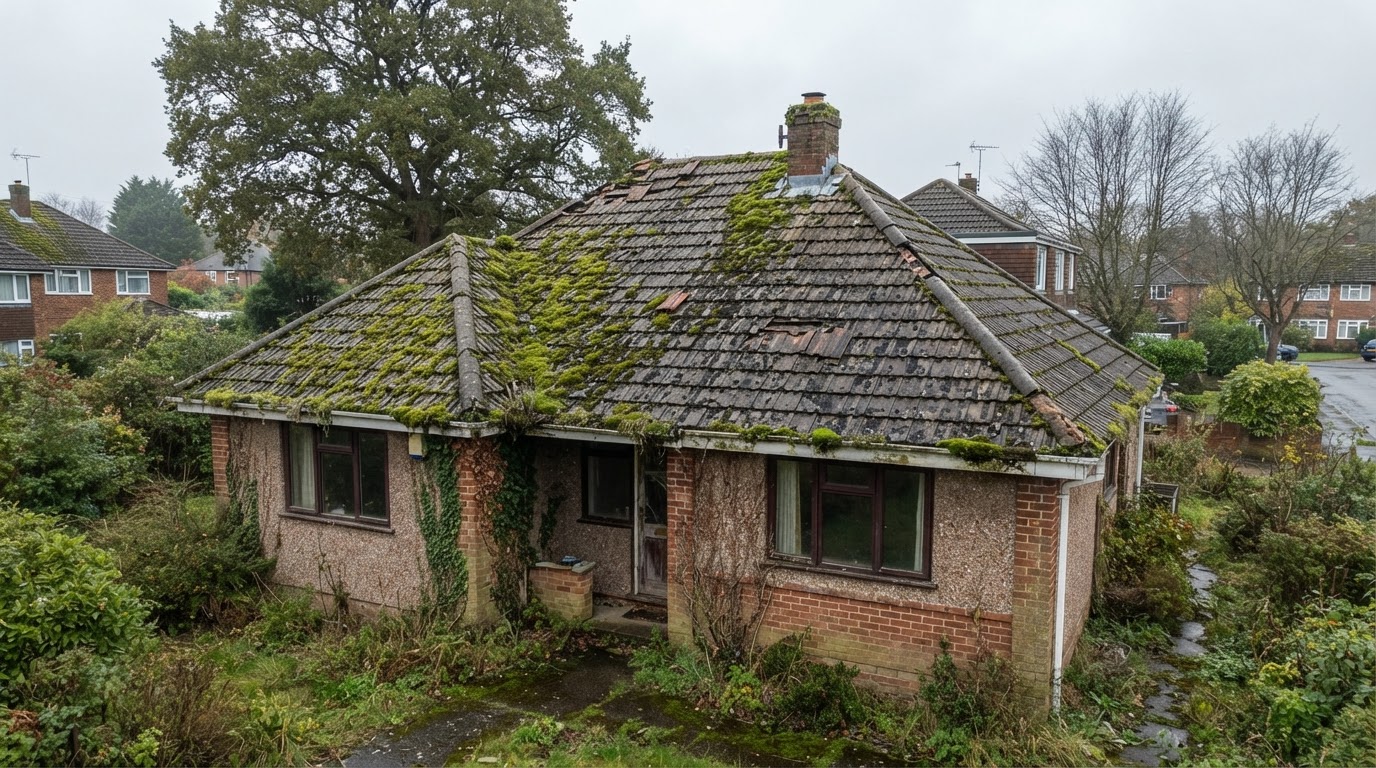
Your roof makes up to 40% of your property's exterior, protecting your home against everything the UK climate can throw at it. However, because we rarely look up at our roof tiles up close, early signs of organic growth and tile wear are easily missed.
Roof cleaning is not based on property age alone. Many homes across Sussex and Surrey benefit from professional roof cleaning long before any structural damage occurs. Recognising the warning signs early makes maintenance simpler, safer, and far more cost-effective.
So, how do you know if your roof needs professional attention? Here are the 10 key signs to look out for.
Direct Answer:
If you notice visible moss growth, overflowing gutters, black algae streaks, spreading lichen, or moss clumps dropping onto your driveway, your roof is ready for professional cleaning. Addressing organic growth early prevents tile moisture retention, frost damage, and costly emergency repairs.
Why Recognising the Signs Early Matters
Allowing moss, algae, and lichen to spread across roof tiles creates a compounding issue. Moss acts like a heavy, waterlogged sponge, holding rainwater directly against porous clay or concrete tiles. During winter in towns like Crawley, Horsham, Guildford, and Reigate, this trapped moisture expands during freeze-thaw cycles, leading to surface spalling, cracked tile glazes, and degraded ridge mortar.
Catching these warning signs early allows for gentle, non-destructive removal—such as waterless compressed air roof cleaning or manual scraping followed by a protective biocide treatment—before permanent tile degradation occurs.
1. Moss Is Visible Across Your Roof
The most obvious warning sign is visible green cushions or blanket coverage across your roof tiles. Moss thrives in damp, shaded conditions, particularly on north-facing slopes or roofs shaded by nearby mature trees.
Once established, moss absorbs up to ten times its dry weight in rainwater. This added weight puts unnecessary stress on roof timber structures while keeping tiles continuously damp. Rainwater will not wash established moss away; it only feeds its growth.
2. Your Gutters Regularly Overflow
If rainwater cascades over the sides of your guttering during moderate downpours, moss is almost certainly the culprit. As moss clumps expand on roof tiles, heavy wind and rain dislodge them, sending heavy green lumps sliding down into your gutter channels.
When these moss clumps collect in downpipe outlets, gutters overflow. Over time, overflowing gutters cause serious secondary issues, including saturated brickwork, ruined fascias and soffits, and damp penetration on exterior walls. Combining roof cleaning with thorough gutter clearing resolves the root cause immediately.
3. Black Streaks or Green Staining Are Appearing
Have you noticed dark, vertical black streaks or dark green shadows stretching down your roof tiles? This is typically caused by Gloeocapsa magma—a resilient species of airborne cyanobacteria (blue-green algae).
Algae feeds on the calcium carbonate present in limestone and concrete roof tiles. The dark pigment protects the algae from ultraviolet sunlight, creating unsightly dark stains that make entire properties look aged and neglected. While algae alone does not break tiles immediately, it creates the damp organic layer that allows moss and lichen to take root.
4. Lichen Is Spreading Across Roof Tiles
Lichen appears as circular, crusty white, yellow, or grey spots firmly attached to tile surfaces. Unlike moss, which sits on top of tiles, lichen secretes organic acids that chemically bond to the tile glaze.
Lichen is particularly difficult to remove with light rain or casual brushing. If left untreated, lichen roots penetrate tile pores, increasing tile porosity and making the surface increasingly vulnerable to frost damage. Professional treatment with an antimicrobial biocide breaks down lichen bonds safely without damaging the underlying tile.
5. Plants, Grass, or Weeds Are Growing in Your Gutters or Roof Valleys
If you see small green shoots, grass blades, or weeds growing in your roof valleys or along gutter lines, your roof has accumulated a significant layer of organic silt and decomposing moss compost.
Windblown seeds easily take root in damp, decomposing moss debris. This indicates that organic matter has been accumulating for several years and requires a comprehensive professional roof clean and gutter clearance to prevent structural blockages.
6. Your Roof Still Looks Dirty After Heavy Rainfall
Homeowners sometimes assume that heavy storms or prolonged winter rain will wash their roof tiles clean. In reality, rainwater only hydrates moss and algae, making them expand and grip the tiles tighter.
Rainwater cannot dissolve lichen, remove algae staining, or dislodge rooted moss. If your roof remains dull, dark, or green after days of continuous rain, professional intervention is necessary to restore the tiles' natural appearance.
7. Moss Clumps Are Falling Into Your Garden or Driveway
Finding heavy green moss balls scattered across your lawn, patio, car, or driveway after windy weather is a clear sign that moss growth on your roof has reached saturation point.
When moss cushions grow larger than a golf ball, wind uplift easily detaches them. If moss is falling around your property perimeter, thousands of smaller cushions remain on the roof, actively blocking gutters and retaining water.
8. Neighbours Have Recently Had Their Roofs Cleaned
Residential estates built during the same era across Sussex and Surrey—such as 1970s and 1980s developments in Maidenbower, Pound Hill, Horley, or Reigate—share identical roof tile materials and local microclimates.
If properties in your street are experiencing heavy moss growth or your neighbours are having their roofs cleaned, your roof tiles are likely in a similar condition and will benefit from a preventative assessment before issues escalate.
9. Your Roof Hasn't Been Cleaned for Many Years
If your property is more than 15 to 20 years old and the roof has never been professionally inspected or cleaned, a significant layer of invisible biofilm, algae, and moss spores will have accumulated.
Preventative maintenance is far more cost-effective than reactive repair work. Applying a self-cleansing biocide treatment before heavy moss cushions develop keeps tiles protected and extends the overall lifespan of your roof.
10. You're Preparing to Sell Your Home
First impressions are paramount when listing a property. Because the roof accounts for up to 40% of your home's visual elevation, a moss-covered or stained roof can instantly lower kerb appeal in listing photos and during buyer viewings.
Furthermore, mortgage surveyors frequently flag heavy roof moss on home condition reports, advising buyers to request specialist inspections or price reductions. Cleaning your roof before putting your property on the market instils buyer confidence and prevents conveyancing delays. Read our guide on surveyor-flagged roof moss for more details.
Can Every Roof Be Cleaned?
Not all roofs are cleaned using the exact same technique. Every property must be individually assessed to determine the safest, most effective cleaning method based on:
- Roof Age & Tile Material: Hand-made clay tiles, slate, concrete interlocking tiles, and Rosemary tiles each require tailored approaches.
- Under-Felt Condition: Older period properties without modern breathable membranes benefit from waterless compressed air cleaning or gentle manual scraping to eliminate water ingress risks.
- Moss Coverage Severity: Light algae requires different treatment concentrations compared to thick 3-inch moss blankets.
- Access & Safety: Skyhawk utilizes specialized tower scaffolding, mobile elevated work platforms (MEWPs), and long-reach equipment to ensure safe, non-destructive access.
Overview of Skyhawk's Safe Roof Cleaning Methods
| Method | How It Works | Best Suited For | Key Advantage |
|---|---|---|---|
| Waterless Air Cleaning | Compressed air & hand scraping tools | Delicate, clay, or period roof tiles | Zero water usage; zero risk of loft leaks |
| Manual Tile Scraping | Custom blade profiles matching tile shapes | Concrete interlocking & slate tiles | Gentle, precise moss removal without tile wear |
| Low-Pressure Washing | Controlled, low-bar steam/water flow | Sturdy modern concrete tiles with intact felt | Instant visual refresh for heavy staining |
| Biocide Treatment | Softwash application of BAC50 chemical solution | Every roof cleaned by Skyhawk | Kills microscopic spores & prevents regrowth |
Key Takeaways
- ✓ Look for Early Warning Signs: Overflowing gutters, falling moss lumps, and black algae streaks indicate your roof needs attention before tile damage occurs.
- ✓ Rainwater Won't Clean Roofs: Rain feeds moss and hydrates algae rather than washing it away.
- ✓ Tailored Methods Matter: Different tiles require specific techniques—from waterless air scraping on delicate roofs to low-pressure cleaning on sturdy tiles.
- ✓ Always Include Biocide: Professional application of BAC50 biocide ensures remaining microscopic spores are destroyed, keeping tiles moss-free for years.
Frequently Asked Questions
How do I know if my roof needs cleaning?
You can identify whether your roof needs cleaning by looking for visible green moss cushions, black vertical algae streaks, white lichen spots, moss falling onto ground surfaces, or rainwater spilling over your gutters during rainfall.
Does moss always mean my roof needs cleaning?
While a tiny spot of moss is not an emergency, any noticeable moss coverage holds moisture against tiles and will wash into gutters. Having moss removed early prevents tile freeze-thaw damage and gutter blockages.
Can black stains be removed from roof tiles?
Yes. Black streaks caused by Gloeocapsa magma algae are effectively treated and removed using professional biocide treatments, restoring the original colour of your roof tiles.
Will rain clean my roof naturally?
No. Rainwater hydrates organic moss and algae, encouraging faster growth. Rain cannot remove lichen, dissolve algae staining, or dislodge rooted moss cushions.
Can roof cleaning prevent blocked gutters?
Yes, absolutely. Removing roof moss eliminates the main source of gutter blockages. Skyhawk includes complete internal gutter clearing and downpipe flushing with every roof cleaning service.
Does every roof clean need a biocide treatment?
Yes. Physical scraping or washing removes bulk moss, but microscopic spores remain in tile pores. Applying a professional biocide treatment destroys remaining spores and prevents rapid moss regrowth.
Can I inspect my roof safely from the ground?
Yes. You can inspect your roof safely using binoculars or a smartphone camera from ground level. Look for moss coverage, tile alignment, and gutter condition without using ladders.
Should I wait until moss gets worse before cleaning?
No. Waiting allows moss roots to penetrate deeper into tile glazes, retain more water during winter freezes, and cause severe gutter overflows. Early maintenance is always safer and cheaper.
Can professional roof cleaning improve kerb appeal?
Yes significantly. The roof makes up to 40% of your property's front profile. Removing decades of moss and staining instantly refreshes the appearance of your entire home.
How often should my roof be inspected?
We recommend conducting a visual ground-level inspection twice a year—typically in spring and autumn—to monitor moss levels, gutter flow, and tile condition. Check our roof cleaning longevity guide for more details.
Arrange Your Free Roof Cleaning Quote Today
If you've noticed any of these 10 warning signs on your property across Sussex or Surrey, Skyhawk Exterior Cleaning is here to help. Every service includes safe, non-destructive moss removal (waterless compressed air scraping, manual scraping, or controlled low-pressure washing), premium BAC50 biocide treatment, full internal gutter clearing, fascia wipe down, full site clean-up, and our 2-year no-moss return guarantee as standard.
Book a free video call quotation with our team today or call us directly on 01293 922 243 for expert, no-obligation advice.