
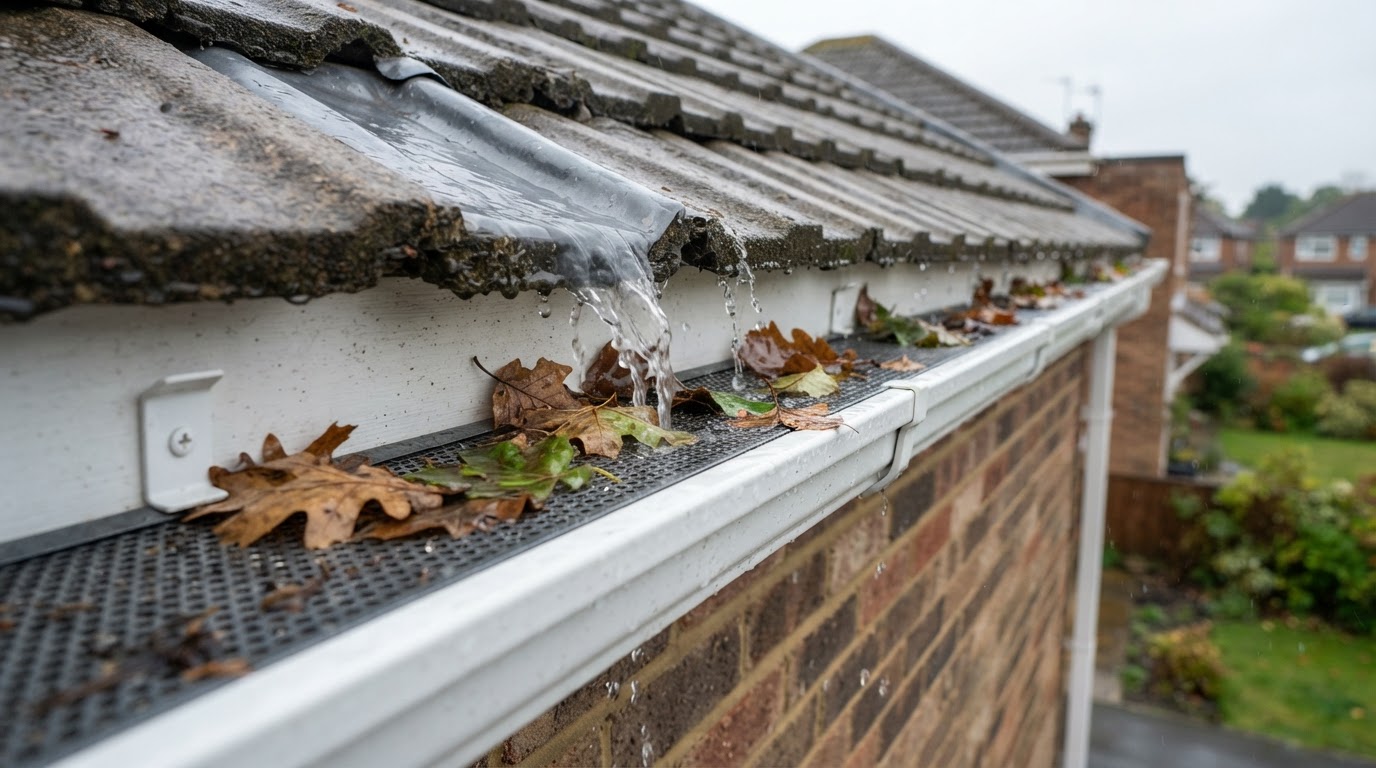
Yes—but not in every situation. Gutter guards can help reduce the amount of leaves and larger debris entering your gutters, but they are not maintenance-free and they don't eliminate the need for periodic inspections and cleaning.
For homeowners across Sussex and Surrey, keeping rainwater drainage clear is a fundamental part of property maintenance. Overflowing gutters can quickly lead to saturated brickwork, fascia decay, or water pooling near foundations. In an effort to reduce the chore or cost of routine clearing, many property owners consider installing gutter guards, leaf mesh, or brush inserts.
However, product marketing often promises a "set-and-forget" solution that completely eliminates gutter maintenance forever. In reality, gutter protection systems vary significantly in performance depending on product design, roof tile type, tree species, and local environmental conditions. Understanding what gutter guards can and cannot do allows homeowners to make informed decisions for their properties.
What Are Gutter Guards?
Gutter guards (also known as leaf guards, gutter mesh, or gutter protection systems) are physical barriers fitted over or inside uPVC and cast iron gutter channels. Their primary function is to allow rainwater to filter into the gutter trough while deflecting leaves, twigs, and large debris away from the channel.
While the concept is straightforward, rainwater carries more than just large autumn leaves. Fine silt, moss fragments, pine needles, roof tile granules, and pollen also wash down roof slopes during storms. How well a protection system copes with these varied materials determines its overall effectiveness.
The Different Types of Gutter Guards Available
Gutter guards come in several distinct designs, each engineered for specific types of debris and property setups:
1. Hedgehog Brushes (Bottle-Brush Inserts)
Flexible polypropylene wire brushes with stiff bristles that sit directly inside the gutter channel. Water flows through the core while bristles trap leaves on top, allowing wind to blow dry leaves away.
- Pros: Quick to install, affordable, prevents large leaves from lodging in downpipe drops.
- Cons: Small twigs and pine needles become tangled in the bristles, and roof moss grows straight through the brush fibers over time.
2. Gutter Mesh & Plastic Grates
Perforated plastic or uPVC strips that clip onto the front lip of the guttering and lie flat beneath the roof tile overhang.
- Pros: Keeps out large oak and horse chestnut leaves; inexpensive materials.
- Cons: Plastic can warp under heavy sun or frost, and fine organic debris drops through the mesh holes to decompose underneath.
3. Stainless Steel Micro-Mesh Guards
Fine stainless steel wire mesh bonded to an aluminum frame that sits across the gutter trough.
- Pros: Blocks tiny pine needles, shingle grit, and seeds while permitting high water flow.
- Cons: Higher installation cost, and micro-mesh can freeze over in winter or become blinded by heavy algae film.
4. Foam Insert Guards
Porous triangular foam blocks fitted directly inside the gutter channel.
- Pros: Extremely easy DIY installation and prevents mosquitoes or wasps from nesting in stagnant water.
- Cons: Soaks up fine mud, seeds germinate inside the foam, and foam deteriorates rapidly under UV exposure.
5. Surface Tension (Reverse-Curve) Systems
Solid metal or plastic covers that curve over the gutter edge. Water clings to the curved nose via surface tension and flows into a narrow slit, while leaves spill off the edge.
- Pros: Durable and highly effective against heavy leaf drops.
- Cons: Expensive, requires professional installation, and can cause heavy rainwater to overshoot during intense downpours.
The Benefits of Gutter Guards
When chosen appropriately for the local environment, quality gutter guards offer clear practical advantages:
- Reduced Frequency of Heavy Leaf Blockages: Homes underneath deciduous oak, beech, or sycamore trees experience fewer sudden downpipe clogs during autumn leaf fall.
- Prevention of Pest Nesting: Physical covers discourage birds, squirrels, and wasps from building nests inside protected gutter troughs.
- Extended Water Flow During Heavy Rain: Keeping the main channel open prevents standing water from weighting down uPVC brackets.
- Prevents Large Debris Entering Downpipes: Stops tennis balls, twigs, and large leaf clumps from clogging underground soakaways.
The Limitations of Gutter Guards
Despite manufacturer marketing claims, no gutter guard system is entirely maintenance-free. Understanding their realistic limitations prevents unpleasant surprises:
- They Do Not Block Fine Silt or Algae: Dust, pollen, decomposed leaves, and moss spores pass through mesh holes or settle into brush bristles, accumulating as dense mud along the gutter bottom.
- Roof Moss Can Grow on Top of Mesh: Dislodged roof moss caught on mesh grates or brushes stays damp, providing an ideal seedbed for fresh moss, weeds, and grass.
- They Make Manual Cleaning More Complex: When mud eventually collects beneath guards, the guards must be unclipped or removed before the gutter trough can be cleared—increasing maintenance time.
- Risk of Water Overshooting in Storms: Solid or fine-mesh covers can cause fast-flowing rainwater during summer downpours to sheet straight over the front edge.
Do Gutter Guards Stop Roof Moss?
No. Gutter guards do not prevent moss from growing on your roof, nor do they stop dislodged moss from causing drainage issues. When heavy moss clumps fall from roof tiles, they land directly on top of the gutter guards.
Because the moss remains exposed to rain on top of the mesh or brush bristles, it retains moisture and forms a damp mat. Water then cascades over the edge of the gutter instead of flowing through it. If your primary concern is moss accumulation, investing in professional roof moss removal and a biocide treatment is far more effective than installing gutter mesh.
Gutter Guards vs Property Types: A Comparison Scenario
To illustrate why gutter guard performance varies so dramatically, consider two typical Sussex and Surrey property scenarios:
Scenario A: Detached Home in Wooded Reigate (Surrey)
Environment: Surrounded by mature deciduous oak trees and overhanging pine branches; heavy moss on older clay tiles.
Gutter Guard Experience: Standard mesh or hedgehog brushes catch large oak leaves, but pine needles and moss clumps quickly lodge in the bristles. Within 18 months, mud collects underneath the mesh, requiring guards to be manually removed for clearing. Verdict: Partial benefit against leaves, but periodic maintenance remains essential.
Scenario B: Modern Semi-Detached in Crawley (West Sussex)
Environment: Minimal nearby tree cover, modern concrete tiles with minor moss, open sunny exposure.
Gutter Guard Experience: Gutter guards are largely unnecessary because leaf fall is minimal. Dust and light silt pass through without clogging downpipes. Verdict: Low benefit; routine annual gutter cleaning without guards is simpler and more cost-effective.
Are Gutter Guards Worth the Investment?
Gutter guards can be a worthwhile investment if you live directly beneath heavy leaf-dropping trees and want to prevent emergency autumn downpipe blockages between routine professional visits. However, they should be viewed as a leaf filter that extends inspection intervals rather than a permanent replacement for professional maintenance.
Before spending hundreds of pounds on supply and installation, consider whether annual or biennial professional gutter clearing using high-reach vacuum equipment offers a cleaner, simpler, and more reliable long-term solution.
Why Skyhawk Provides Honest Advice on Gutter Guards
At Skyhawk Exterior Cleaning, we don't push unnecessary products or universal claims. During routine gutter inspections or roof cleaning projects across Crawley, Horsham, Guildford, Reigate, and surrounding areas, our team evaluates your property's specific tree cover, roof condition, and drainage layout.
If gutter guards will genuinely benefit your property, we'll explain which type is most suitable. If your money would be better spent on routine clearing or roof moss removal, we'll provide straightforward, transparent guidance.
Key Takeaways
- Not Maintenance-Free: Gutter guards filter large leaves but do not eliminate fine silt, mud, or moss accumulation.
- Debris Varies by Guard Type: Mesh, hedgehog brushes, and reverse-curve guards each cope differently with oak leaves, pine needles, and roof moss.
- Moss Can Grow On Top: Dislodged roof moss sitting on mesh can trap water and cause rainwater overshooting.
- Increased Cleaning Complexity: When mud eventually accumulates underneath, guards must be unclipped before vacuum clearing can occur.
- Professional Assessment Matters: Honest advice tailored to your property's surroundings is essential before investing in protection systems.
Frequently Asked Questions
Do gutter guards really work?
Yes, for deflecting large leaves and preventing bird nesting. However, fine dust, seeds, and roof moss still pass through or settle on top, meaning gutters still require periodic inspection.
Do hedgehog gutter brushes stop leaves?
Hedgehog brushes work well against broad deciduous leaves. However, small twigs, pine needles, and dislodged roof moss become tangled in the bristles, requiring occasional removal and washing.
Can moss still block gutters fitted with guards?
Yes. Heavy moss dislodged from roof tiles lands on top of mesh grates or brush bristles, forming a wet mat that blocks rainwater from filtering into the trough. Check our guide on whether roof moss damages roof tiles.
Do gutter guards eliminate the need for gutter cleaning?
No system eliminates maintenance completely. Fine silt and organic sludge decompose beneath guards, requiring clearing every 2 to 4 years depending on tree cover. Read our guide on how often gutters should be cleaned.
Are gutter guards worth the money?
They are worth considering for properties situated directly beneath dense, overhanging oak or beech trees. For homes with low tree cover, routine annual professional gutter clearing is often more cost-effective.
Can birds nest in gutter guards?
Quality mesh grates and fitted covers prevent birds from entering the trough. However, foam inserts or damaged plastic mesh can sometimes be pulled apart by nest-building birds.
How long do gutter guards last?
Stainless steel micro-mesh and aluminum guards last 10 to 15 years, while plastic clip-on mesh or foam inserts typically require replacement within 3 to 7 years due to UV degradation.
Do gutter guards work in heavy rain?
Quality perforated mesh handles heavy UK rainfall well. However, solid reverse-curve guards or micro-mesh coated in algae film can cause fast-moving storm water to sheet over the front edge. Learn more in our article on why gutters overflow in rain.
Which type of gutter guard is best?
Stainless steel micro-mesh offers the best balance of water flow and debris filtration, while hedgehog brushes offer a budget-friendly option for large leaf protection.
Should I install gutter guards on my home?
If your gutters fill with leaves multiple times every autumn, guards can help extend interval times between cleans. A quick free video consultation with Skyhawk can help evaluate your property's setup.
Arrange Your Free Gutter Inspection & Quote
Need honest advice or professional gutter maintenance for your home? Skyhawk Exterior Cleaning provides expert gutter clearing, high-reach vacuum removal, downpipe unblocking, and roof maintenance across Sussex and Surrey.
Book a free video call survey today, call our team on 01293 922 243, visit our gutter cleaning service page, or see our gutter cleaning cost guide for pricing from £85 + VAT.