Both waterless roof cleaning and low pressure washing are effective professional roof cleaning methods when used appropriately. The right approach depends on your roof covering, its condition, the amount of moss present and the overall objective of the clean. There is no single method that suits every property, which is why a professional roof assessment is essential before any work begins.
Across Sussex and Surrey, homes vary enormously — from modern concrete-tiled estates to period properties with delicate clay tiles and no modern under-felt. At Skyhawk Exterior Cleaning, we offer both waterless and low pressure roof cleaning because different roofs genuinely require different approaches. This guide explains how each method works, what they are best suited to and how we decide which is right for your home.
What Is Waterless Roof Cleaning?
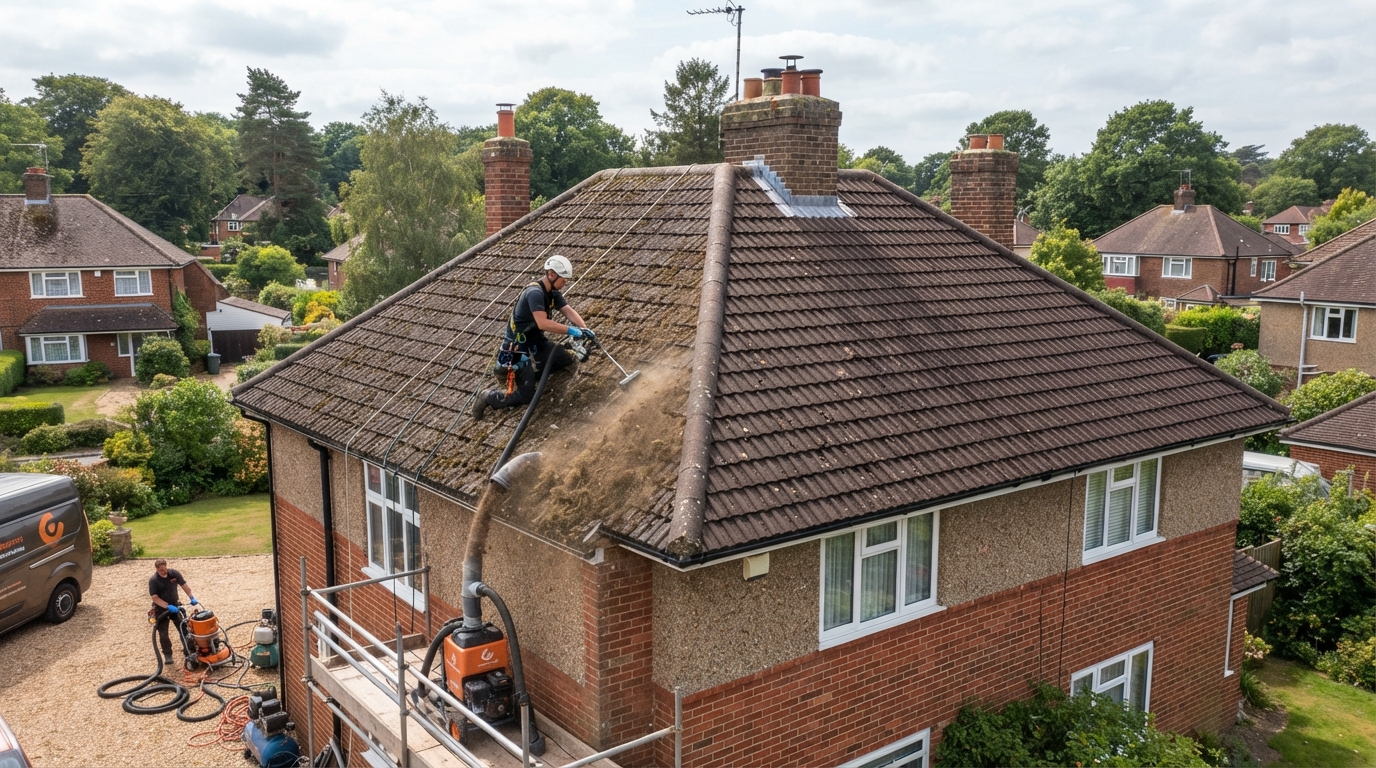
Waterless roof cleaning is a specialist method that removes moss, lichen and organic debris from the roof surface without introducing water. Using custom-profiled manual scrapers and compressed air systems, moss is physically lifted from the tiles and cleared away. This approach is particularly effective on heavily moss-covered roofs where the growth is thick and established.
Because no water is used, there is no risk of water ingress through gaps, cracked tiles or degraded under-felt. This makes waterless cleaning especially suitable for older properties, heritage buildings and roofs where the membrane is absent or damaged. The process is more labour-intensive, but it is widely considered the safest way to clean delicate or older roof coverings.
Waterless roof cleaning generally offers:
- Minimal water usage — ideal where water ingress is a concern
- Excellent moss removal — thick, established growth is physically removed
- Reduced mess — no large volumes of water running down the property
- Ideal for heavily moss-covered roofs — particularly older or delicate coverings
What Is Low Pressure Roof Cleaning?
Low pressure roof cleaning uses a controlled flow of water — far lower than a standard pressure washer — combined with specialist cleaning products to lift algae, dirt and organic staining from the tile surface. This method is not the same as high-pressure jet washing, which we do not recommend for roof tiles. The pressure is carefully managed to clean the surface without forcing water beneath the tiles or damaging the covering.
Low pressure cleaning is often appropriate for modern roof coverings with intact under-felt, where a controlled rinse helps remove remaining organic staining after the bulk of moss has been cleared. It can produce a visibly brighter, more uniform finish on certain tile types.
Low pressure roof cleaning may be appropriate for:
- Certain roof coverings — particularly modern concrete tiles with intact membranes
- Removing remaining organic staining — algae and dirt that remain after moss removal
- Roofs where controlled rinsing is beneficial — where a brighter finish is desired and the covering can tolerate it
How Each Method Removes Moss
The way moss is removed differs significantly between the two methods. Waterless cleaning physically lifts moss from the tile surface using scrapers and compressed air. This is highly effective on thick, established growth where the moss has rooted into the tile joints and surface. The moss is removed dry, which means it can be collected and cleared without washing down the property.
Low pressure cleaning, by contrast, uses a controlled water flow to rinse the surface. This is effective for lighter contamination and for removing the staining that remains after moss has been removed. In many cases, the best results come from combining approaches — physically removing heavy moss first, then using a controlled rinse where appropriate.
Regardless of which method is used, every roof clean should be finished with a professional biocide treatment. This penetrates the tile surface and addresses the microscopic spores that cause regrowth, helping the roof stay cleaner for longer.
Which Roofs Suit Waterless Cleaning?
Waterless roof cleaning is typically recommended for:
- Older properties with no modern under-felt
- Heritage buildings with delicate clay or slate tiles
- Roofs with heavy, established moss growth
- Properties where water ingress is a concern
- Roofs with cracked or damaged tiles where water could penetrate
For many period properties across Sussex and Surrey — particularly in towns like Brighton, Lewes and Reigate — waterless cleaning is the safest and most appropriate option because it eliminates the risk of introducing water into the roof structure.
Which Roofs Suit Low Pressure Washing?
Low pressure washing may be recommended for:
- Modern concrete-tiled roofs with intact under-felt
- Roofs with lighter moss contamination
- Properties where organic staining is the main concern
- Roofs where a controlled rinse will produce a brighter, more uniform finish
Even where low pressure washing is suitable, the pressure is carefully controlled. This is fundamentally different from domestic pressure washing, which can force water beneath tiles, damage pointing and degrade the tile surface.
Does Either Method Damage Roof Tiles?
When carried out correctly by trained professionals, neither method should damage roof tiles. However, the key is selecting the right method for the right roof. Waterless cleaning is inherently low-risk because it does not introduce water, making it difficult to cause ingress. Low pressure cleaning, when used on appropriate roofs with controlled pressure, is also safe.
Damage typically occurs when the wrong method is used on the wrong roof — for example, applying pressure washing to an older roof with no membrane, or using excessive pressure on delicate tiles. This is why we never recommend a method without first assessing the roof.
Comparison: Waterless vs Low Pressure
| Feature | Waterless Roof Cleaning | Low Pressure Washing |
|---|---|---|
| Water usage | None — completely dry process | Controlled, low-pressure rinse |
| Moss removal | Excellent for heavy, established growth | Good for lighter contamination |
| Organic staining | Removed via biocide over time | Rinsed for immediate visual improvement |
| Mess | Minimal — dry moss collected | Water runs down the property |
| Typical suitability | Older, delicate or heritage roofs | Modern roofs with intact membrane |
Why a Professional Roof Assessment Matters
Every roof should be individually assessed before a cleaning method is recommended. The assessment considers the roof covering, its age, the condition of the tiles, the presence and condition of under-felt, the amount of moss present and the type of contamination. Without this assessment, it is impossible to know whether waterless or low pressure cleaning is the safer option.
At Skyhawk, we do not believe in a one-size-fits-all approach. We offer both methods because different roofs genuinely require different solutions. When we visit a property, we inspect the roof and explain which method we recommend and why.
Roof Condition and Typical Recommendations
| Roof Condition | Typical Recommendation |
|---|---|
| Heavy moss | Waterless cleaning to physically remove growth |
| Light moss | Either method, depending on tile type and membrane |
| Older roof | Waterless — no risk of water ingress |
| Newer roof | Low pressure suitable if membrane is intact |
| Mixed contamination | Often a combined approach with biocide finish |
How Gutters Fit Into the Process
Whichever cleaning method is used, moss and debris will end up in the gutters. This is why gutter cleaning should always be carried out alongside or immediately after roof cleaning. Clearing the gutters ensures that the removed moss is washed away properly and that rainwater can flow freely once the roof is clean.
Leaving gutters full of moss after a roof clean can lead to blockages, overflowing water and staining on render and fascias — undoing much of the good work of the roof clean itself. We always recommend addressing the gutters as part of the same visit.
Looking After the Complete Roof
Roof cleaning is most effective when it is part of a wider maintenance plan. The complete roof system includes:
- Roof tiles — cleaned and treated with biocide
- Gutters — cleared of moss and debris
- Valleys — checked and cleared to ensure water flows freely
- Solar panels — cleaned to maximise exposure to sunlight
- Bird proofing — installed where pigeons are nesting beneath panels
By maintaining these elements together, the roof stays in better condition for longer and the results of cleaning last. Treating the roof as one complete system rather than a collection of separate jobs produces better long-term results.
Questions We Get Asked On Site
Which method is safer?
Both are safe when used on the right roof. Waterless cleaning carries the lowest risk of water ingress, while low pressure washing is safe on modern roofs with intact membranes.
Will either method damage my roof?
Not when carried out by professionals who assess the roof first. Damage usually occurs when the wrong method is applied to the wrong roof covering.
Which lasts longer?
Longevity depends more on the biocide treatment and environmental conditions than on the cleaning method. Both approaches should deliver long-lasting results when finished correctly.
Do gutters need cleaning afterwards?
Yes. Moss and debris will enter the gutters during cleaning, so gutter clearance should always be carried out as part of the same visit.
Can every roof be cleaned the same way?
No. Every roof should be assessed individually to determine the safest and most effective cleaning method.
Common Mistakes Homeowners Make
- Assuming one method suits every roof. Different coverings require different approaches.
- Choosing purely on price. The cheapest quote may use a method that is not appropriate for your roof.
- Ignoring gutter maintenance. Cleaning the roof without clearing the gutters leaves the job incomplete.
- Cleaning moss without applying appropriate aftercare. A biocide treatment is essential to address spores and prevent rapid regrowth.
- Hiring companies that never inspect the roof first. A professional assessment is the only way to know which method is safe.
Key Takeaways
- Both waterless and low pressure cleaning are effective when used on the right roof.
- Waterless cleaning is ideal for older, delicate or heavily moss-covered roofs.
- Low pressure washing suits modern roofs with intact under-felt.
- Every roof should be individually assessed before a method is recommended.
- A biocide treatment should always follow cleaning to prevent regrowth.
- Gutter cleaning should be carried out alongside roof cleaning.
- The complete roof system — tiles, gutters, solar panels and bird proofing — should be maintained together.
A Real Example From Sussex
A homeowner in Horsham contacted us about a heavily moss-covered concrete tile roof. The moss was thick and established, and the property was an older building with no modern under-felt. After inspecting the roof, we recommended waterless roof cleaning to physically remove the moss without introducing water. The process cleared the roof completely and eliminated any risk of ingress. The gutters were cleared in the same visit and a biocide treatment was applied to address remaining spores.
The following month, we visited a property in Crawley — a newer build with concrete tiles and an intact membrane. The roof had lighter moss growth and some algae staining. After assessment, we recommended a controlled low pressure clean followed by biocide. The rinse removed the organic staining and left the tiles looking bright and uniform. Both roofs were cleaned safely, but the methods were different because the roofs were different.
Frequently Asked Questions
What is the difference between waterless and low pressure roof cleaning?
Waterless cleaning removes moss without water using scrapers and compressed air. Low pressure cleaning uses a controlled water flow to rinse the surface. The right method depends on the roof.
Is waterless roof cleaning better than low pressure washing?
Neither is universally better. Waterless is safer for older roofs with no membrane, while low pressure can produce a brighter finish on suitable modern roofs.
Can low pressure washing damage my roof?
When carried out at the correct pressure on an appropriate roof, it is safe. Damage occurs when excessive pressure is used or the wrong roof is cleaned.
Which method removes more moss?
Waterless cleaning is particularly effective on heavy, established moss. Low pressure rinsing is better suited to lighter contamination and staining.
Do both methods include a biocide treatment?
Yes. Every professional roof clean should be finished with a biocide treatment to address spores and help prevent regrowth.
How do I know which method my roof needs?
A professional roof assessment is the only way to know. The covering, condition, membrane and level of moss all influence the recommendation.
Will waterless cleaning leave my roof looking clean?
Yes. Heavy moss is removed and the biocide continues to work over the following weeks, restoring the tile colour.
Should gutters be cleaned at the same time?
Yes. Moss and debris will enter the gutters during cleaning, so gutter clearance should always be part of the same visit.
Can every roof be cleaned?
Most roofs can be cleaned safely, but some very fragile or severely damaged roofs may require repair first. An assessment will confirm this.
How long do the results last?
Results typically last several years, depending on the environment, nearby trees and whether the biocide treatment was applied correctly.
Conclusion
Waterless roof cleaning and low pressure washing are both valuable methods when used on the right roof. The key is understanding that no single approach suits every property. Older, delicate roofs benefit from the dry, low-risk nature of waterless cleaning, while modern roofs with intact membranes may benefit from a controlled low pressure rinse.
At Skyhawk Exterior Cleaning, we assess every roof individually before recommending the most appropriate method. We do not default to one approach because we recognise that every roof is different. If you would like to know which method is right for your roof, arrange a free video quotation and we will inspect your property and provide honest, professional advice.