
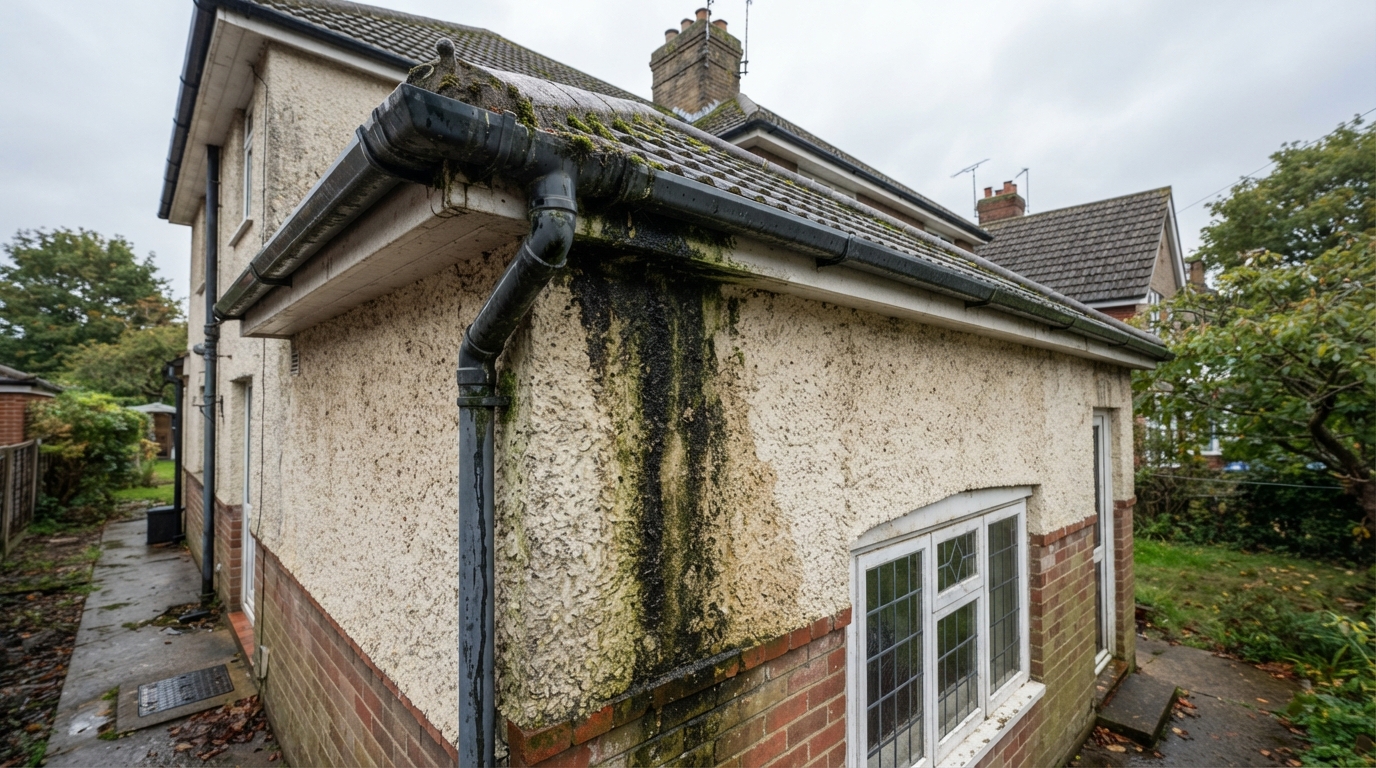
Yes, blocked gutters can contribute to damp problems around a property by preventing rainwater from draining correctly. Overflowing water may repeatedly run down walls, soak masonry and increase moisture around vulnerable areas. However, damp can have several causes, so professional investigation may sometimes be required.
Gutters and downpipes play a critical role in directing thousands of litres of rainwater safely away from your home's roof, walls, and foundations each year. Across Sussex and Surrey, damp issues in residential properties are among the most frustrating problems homeowners encounter. While interior lifestyle factors or structural defects can cause damp, blocked rainwater goods are frequently one of the simplest external causes to identify and rectify.
How Gutters Are Designed to Protect Your Home
Your guttering system acts as a protective shield for your home's outer envelope. Under normal conditions, rainwater shedding off roof tiles channels cleanly into horizontal uPVC, aluminum, or cast-iron gutter runs, flowing toward vertical downpipes that discharge into surface water drains or soakaways.
When this drainage network functions correctly, the external walls remain dry during rainfall, preserving the weatherproofing integrity of brickwork, stone, mortar, and render. However, when debris obstructs the channel, rainwater has nowhere else to go but over the edges of the guttering.
What Happens When Gutters Become Blocked?
Gutter blockages accumulate gradually over time. Roof moss dislodged by heavy rain, falling autumn leaves, twigs, silt, and nesting materials gather in the gutter trough and particularly in the narrow swan-neck bends of downpipes.
When an obstruction occurs, rainwater backs up in the channel. A single linear metre of uPVC guttering filled with trapped rainwater and saturated moss can weigh over 10–15 kilograms. This weight causes brackets to sag, joints to pull apart, and water to cascade continuously down external elevations during rainstorms.
How Overflowing Gutters Can Contribute to Damp
When water repeatedly overflows from a blocked gutter, it interacts with external building materials in several ways:
- Penetrating Damp Through Brickwork and Mortar: Facing bricks, stone, and lime or cement mortar joints are porous materials. When subjected to continuous deluge rather than intermittent rain, bricks become saturated. Moisture migrates through the brickwork to interior plaster, causing tide marks, peeling wallpaper, and bubbling paint.
- Saturated Render and Micro-Cracks: Modern rendered properties across areas like Reigate, Guildford, and Horsham can develop hairline cracks over time. Overflowing water forces its way into these cracks, trapping moisture behind the render coat and leading to hollow render or internal damp patches.
- Fascia and Soffit Timber Rot: Trapped water backing up behind the rear edge of the guttering directly contacts timber fascia boards and soffits. Prolonged dampness causes timber rot, allowing moisture into the roof void and timber rafter feet.
- Splashback at Ground Level: Water cascading from second-storey gutters hits hard ground surfaces—such as concrete paths, driveways, or patios—with considerable force. The resulting heavy splashback repeatedly drenches lower brickwork above the damp-proof course (DPC), potentially bridging the DPC and causing rising damp symptoms.
- Foundation Soil Saturation: Concentrated volumes of water discharging directly adjacent to footings can saturate the surrounding soil. In clay-heavy Sussex soils, localized soil saturation can destabilize ground conditions around shallow foundations.
Signs Your Gutters May Be Causing Moisture Problems
If you suspect damp in your home may be related to your drainage system, look out for these external and internal indicators:
- External Staining and Green Algae: Dark water marks or green algae streaks running vertically down exterior walls directly below gutter joints or middle runs.
- Internal Damp Patches Near Ceilings: Damp spots, dark patches, or cold wall surfaces appearing high up on perimeter walls near ceiling level.
- Efflorescence (White Powder Marks): White crystalline salt deposits appearing on external brickwork or internal plasterwork as trapped water evaporates.
- Musty Odours Indoors: A persistent earthy or musty smell in upper-floor bedrooms, lofts, or chimney breasts adjacent to external walls.
- Peeling Paint or Lifting Wallpaper: Interior decorative coatings coming away from perimeter walls, particularly near external corners or under window sills.
Can Blocked Downpipes Make the Problem Worse?
Yes. While a blocked horizontal gutter run often overflows along its length, a blocked vertical downpipe causes concentrated water backup. Rainwater fills the entire vertical pipe, creating hydraulic pressure at upper joints and forcing water through downpipe seals, wall brackets, and hopper heads directly against wall masonry.
Furthermore, downpipe blockages near ground level can overflow around gully grates, drenching lower wall brickwork and flooding adjacent patio or block paving areas.
Other Possible Causes of Damp to Consider
While clearing blocked gutters is one of the most effective first steps in addressing damp, it is important to remember that damp can have multiple underlying causes. Homeowners should also consider:
- Condensation: Inadequate ventilation, lack of trickle vents, or indoor drying of laundry causing air moisture to condense on cold perimeter walls.
- Bridged Damp-Proof Course (DPC): Raised garden beds, accumulated soil, or high paving slabs covering the DPC line.
- Roof Tile Defects: Cracked, slipped, or missing tiles, broken ridge mortar, or deteriorated valley leadwork allowing water entry.
- Defective Window Flashings: Worn mastic seals or failed lead flashings around dormer windows and window frames.
How Professional Gutter Cleaning Helps
Regular professional gutter cleaning eliminates the primary cause of external water overflow. Professional exterior cleaning teams utilize specialized equipment to ensure complete system clearance:
- High-Reach Gutter Vacuum Systems: Industrial-grade vacuum technology with lightweight carbon-fibre poles removes leaves, moss, silt, and debris safely from ground level up to 4 storeys.
- Downpipe Clearance & Testing: Downpipe runs, swan necks, and gully connections are thoroughly checked and cleared using flexible rods or water flushing.
- Visual & Camera Inspection: High-definition inspection cameras verify that all debris has been extracted and that gutter channels are clear.
- Gutter Maintenance Integration: Professional clearing can be paired with joint seal checks, bracket repairs, or combined with professional roof cleaning and waterless roof moss removal to eliminate the source of moss falling into the gutters.
Why Prevention Is Better Than Waiting for Problems
Addressing gutter blockages proactively costs a fraction of repairing interior damp damage, replastering walls, or redecorating rooms. Scheduling annual gutter maintenance—especially after autumn leaf fall or heavy moss growth—ensures that rainwater flows safely away from your property year-round.
Key Takeaways
- Gutters Protect Masonry: Functional gutters prevent thousands of litres of rainwater from running down external brickwork and render.
- Blockages Cause Overflows: Trapped moss and leaves back up water, causing heavy overflow that saturates walls and fascias.
- Look for External Signs: Vertical algae streaks, tide marks, and water spilling during rain are key warning signs.
- Check Downpipes: Obstructions in swan-neck bends or lower gullies can cause severe water pressure issues at roof level.
- Annual Clearing Saves Money: Proactive gutter maintenance costs significantly less than repairing structural damp or replastering interiors.
Frequently Asked Questions
Can blocked gutters cause internal damp?
Yes. When water overflows from gutters, it can saturate external brickwork and penetrate through to interior surfaces, resulting in damp patches, mould, and peeling wallpaper.
How do I know if my gutters are causing damp?
Common signs include water marks or algae streaks on exterior walls directly below gutters, damp patches high up on internal walls, and water spilling over the gutter edge during rain.
Will gutter cleaning stop damp?
If the damp is caused by overflowing rainwater saturating your walls, then professional gutter cleaning will stop the source of the problem. However, if the damp is caused by condensation or a bridged DPC, you may need additional investigation.
Can blocked downpipes cause damp?
Absolutely. A blocked downpipe causes water to back up, creating pressure that forces water out of joints and hopper heads directly against the masonry of your home.
Does moss from the roof cause damp via the gutters?
Indirectly, yes. Moss dislodged from the roof tiles is one of the most common causes of gutter blockages. When this moss clogs the drainage system, it leads to the overflows that cause damp issues.
How often should I clean my gutters to prevent damp?
We recommend a professional clear at least once a year, ideally in late autumn. If your property is surrounded by trees, bi-annual cleaning is advisable to prevent blockages.
Can overflowing gutters damage brickwork?
Yes. Continuous exposure to cascading water can erode mortar joints and cause efflorescence (salt deposits) on the surface of the bricks.
Can I inspect my gutters from the ground?
Yes, you can safely check for signs of overflow or visible debris from ground level during or after rainfall. For a detailed assessment, you can book a free video survey with Skyhawk.
Is gutter cleaning expensive compared to damp repairs?
Gutter cleaning is very cost-effective. The price of a professional clear is a tiny fraction of the cost required for replastering, damp-proofing, or decorative repairs.
Should I clean my gutters after a roof clean?
Yes. Every Skyhawk roof clean includes a full gutter clearance at the end to ensure no moss from the cleaning process remains in your drainage system.
Arrange Your Free Gutter Cleaning Survey
If you're concerned about damp or have noticed your gutters aren't performing as they should, our team is here to help. Skyhawk Exterior Cleaning provides safe, effective, and fully insured gutter clearing across Crawley, Horsham, Guildford, Reigate, and throughout Sussex and Surrey.
Book a free video call quotation today, call us on 01293 922 243, visit our gutter cleaning service page, or see our gutter cleaning cost guide for transparent pricing from £85 + VAT.